Clear Sky Science · en
Independent association of indirect self-destructiveness with suicidal behaviors in young adults
Why everyday habits matter
Suicide is one of the leading causes of death among young people, yet warning signs are not always dramatic or obvious. This study looks beyond clear crises and diagnoses to ask a quieter question: can seemingly ordinary patterns of neglect and risky choices act as a slow-moving threat? By examining young adults who do not have diagnosed mental illnesses, the researchers explore how subtle self-harming lifestyles may independently raise the likelihood of suicidal thoughts and actions.
Hidden risks in day-to-day life
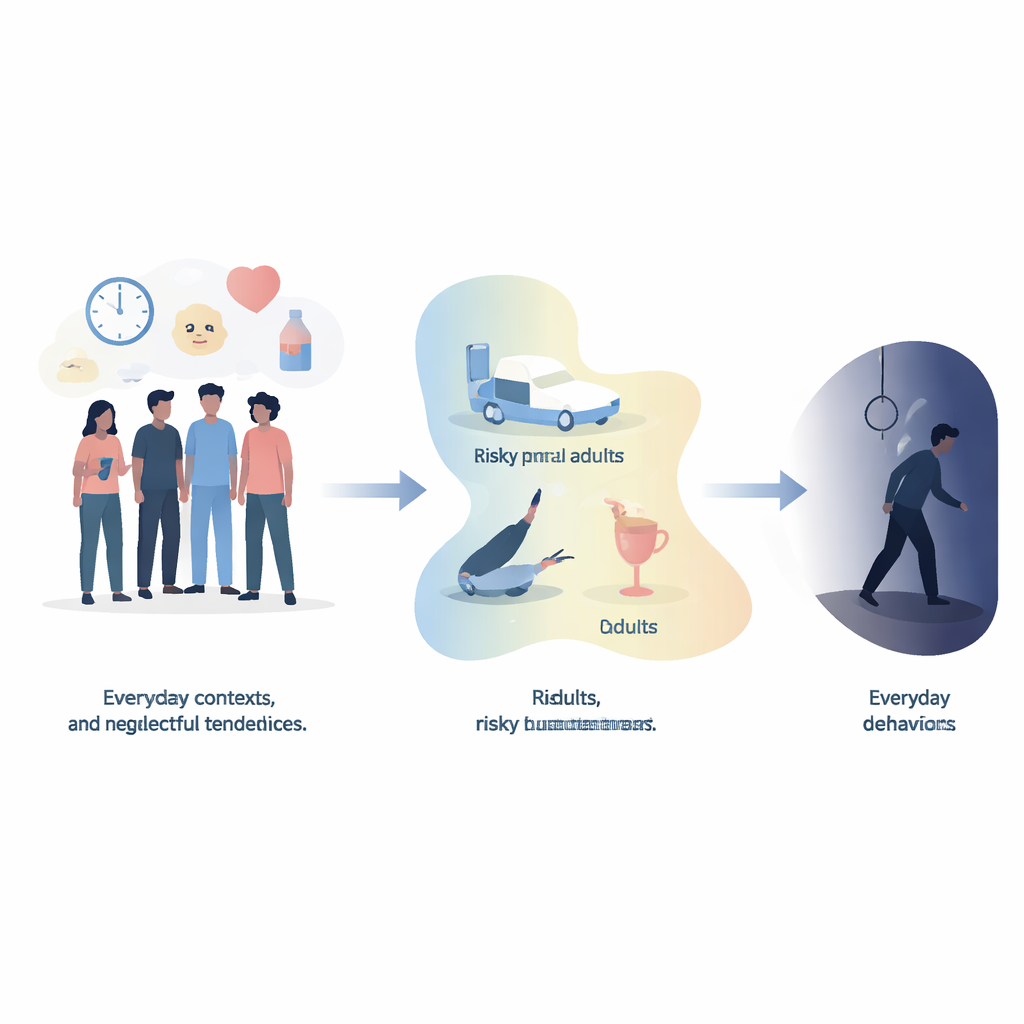
The authors focus on what they call indirect self-destructiveness: a long-term pattern of behavior that quietly undermines health and safety. Instead of a single, desperate act, this might look like ignoring medical checkups, constantly running on too little sleep, taking unnecessary risks, or regularly using alcohol and other substances in ways that chip away at well-being. Such patterns can appear in people who seem outwardly healthy and functional, which makes them easy to miss in everyday life—and in routine clinical assessments.
How the study was done
The research team surveyed 304 young adults under 30 years old who reported no diagnosed mental health disorder. Participants completed several questionnaires: one on indirect self-destructive tendencies, one on suicidal thoughts and behaviors (including past and possible future attempts), one on general mental health problems like anxiety and low mood, and tools capturing sleep–wake preferences and social jetlag—the mismatch between the body’s internal clock and social schedules. They also reported their use of alcohol, cigarettes, and other psychoactive substances. Using statistical models, the researchers then tested which of these factors best predicted suicidal behaviors.
What stood out most strongly
The results showed that higher levels of indirect self-destructive behavior were clearly linked with more severe suicidal thoughts and behaviors. Crucially, this link remained even after taking into account overall mental health, substance use, age, and sex. In other words, even among people with similar levels of psychological distress, those who more often neglected their own safety or engaged in risky habits were more likely to report suicidality. General mental health problems also predicted suicidal behavior, but once indirect self-destructiveness was considered, the added impact of alcohol and other substances became less important, suggesting that substance use may be one expression of a broader self-undermining style.

What did not matter as much
The researchers also examined biological and social timing—whether someone is more of a morning or evening person, how they feel in the first hours after waking, and how misaligned their sleep schedule is with daily obligations. While chronotype and social jetlag have been linked to depression and other health problems in earlier work, they played only a minor role here. Morning cheerfulness, preferred time of day, and circadian misalignment showed little or no independent power to predict suicidal behavior once general mental health and indirect self-destructiveness were included. Even when participants were grouped into six different daily alertness types, the differences in suicide risk and mental health between these groups were small and inconsistent.
Why these findings matter
The study suggests that slow-burning patterns of self-neglect and everyday risk-taking may be more than just “bad habits” or side effects of feeling low—they can be an important, independent warning sign of suicidal danger in young adults. Because these behaviors can appear long before a crisis or a formal psychiatric diagnosis, regularly asking about them in schools, clinics, and primary care could help identify people who might otherwise slip under the radar. For a layperson, the takeaway is clear: paying attention to how consistently you care for your own health and safety—and seeking help when you notice a long-term pattern of giving up on yourself—may be a vital step in preventing the most serious outcomes.
Citation: Nowakowska-Domagała, K., Juraś-Darowny, M., Koprowicz, J. et al. Independent association of indirect self-destructiveness with suicidal behaviors in young adults. Sci Rep 16, 13617 (2026). https://doi.org/10.1038/s41598-026-42114-w
Keywords: suicidal behavior, self-destructiveness, young adults, chronotype, mental health