Clear Sky Science · en
Exploring the burden of diarrheal disease and associated WASH practices in rural West Bengal, India: an explanatory sequential mixed-method approach
Why Dirty Water Still Matters
For many families in rural India, diarrhea is more than a passing stomach bug—it can mean missed school, lost wages, and dangerous illness for young children. This study looks closely at one rural block in West Bengal to understand how everyday realities like water sources, toilets, and handwashing habits combine to keep diarrheal disease stubbornly common, even after large national programs have tried to improve sanitation and drinking water. By listening both to thousands of households and to mothers and health workers, the researchers show why progress on paper does not always translate into safer lives on the ground.
Looking Closely at Village Life
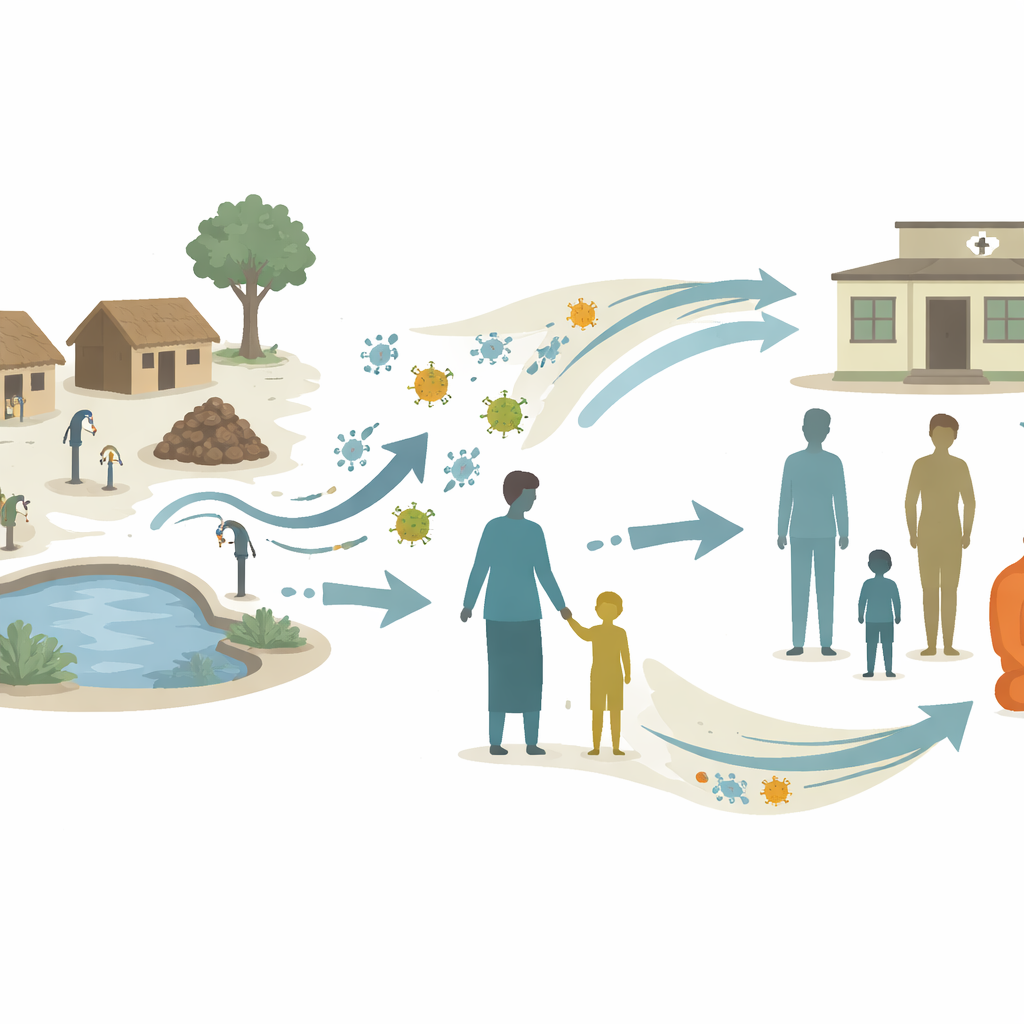
The research took place in Bishnupur-II, a rural block in South 24 Parganas, a coastal district known for repeated outbreaks of waterborne disease, especially during the monsoon. Instead of sampling just a small group, the team attempted a full census of over 12,000 households and analyzed complete data from 10,000 families. They asked about recent episodes of diarrhea over a six‑month period, where people get their drinking water, what kind of toilets they use, and how often they wash their hands with soap at key moments such as after defecation or before eating. To dig deeper into the reasons behind these behaviors, they then conducted in‑depth interviews with mothers of young children and with local frontline health workers such as nurses and community health activists.
How Common Is Diarrhea and Who Gets Sick
The survey revealed that in just six months, about one in six households (16.9%) reported at least one episode of diarrhea in a family member—a sizable burden when spread across an entire community. Most homes had improved toilets, and open defecation was reported by only a small minority, yet important gaps remained. Nearly one in four households relied on water delivered by local vendors in barrels or containers, often untreated, and almost four in five households did not disinfect their drinking water at all. Many people reported washing their hands after defecation, but handwashing with soap before eating or preparing food was far less consistent. Most families turned to government facilities when they sought formal treatment, especially for children, but many also managed illness at home or with informal providers.
Everyday Habits and Risky Water
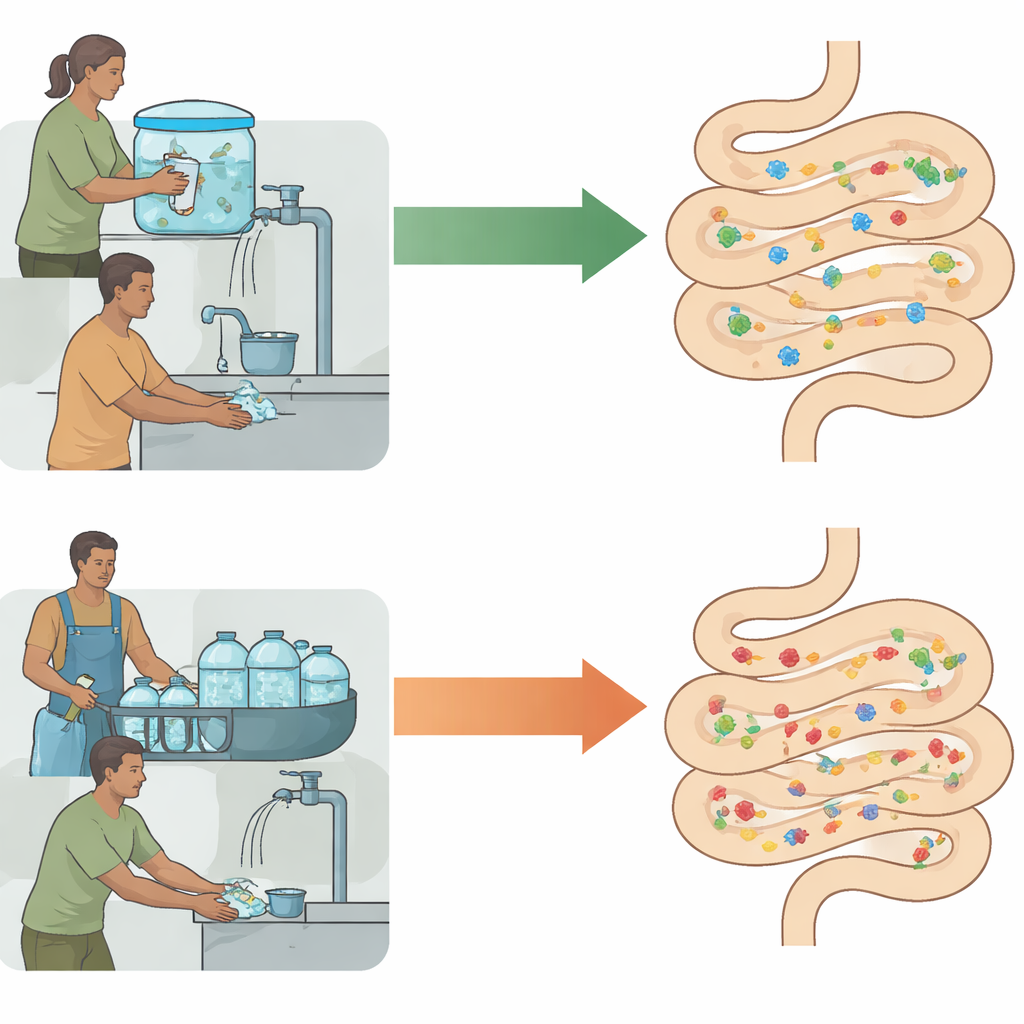
By comparing households with and without recent diarrhea, the researchers were able to estimate how strongly different practices were linked to illness. Families that used vendor-supplied water had nearly three times the odds of reporting diarrhea compared with those using their own piped taps, even after accounting for income, family size, and housing. Households that did not treat their water had higher odds of diarrhea than those who boiled it. When it came to hygiene, simply rinsing hands with water instead of using soap was associated with roughly threefold higher odds of diarrheal disease, and not washing hands with soap before handling food also raised risk. These patterns held up in additional sensitivity analyses, suggesting that unsafe water and incomplete handwashing are key drivers of illness in this community.
Voices from Homes and Clinics
The interviews brought the numbers to life. Many mothers recognized that dirty surroundings and contaminated water can cause diarrhea, yet they also described powerful barriers: the cost of fuel to boil water, broken hand pumps, and the belief that cheap vendor water is “good enough.” Soap was not always available and was often reserved for what people saw as the most important moments, like after defecation, rather than before cooking or feeding children. Some families continued to dispose of children’s stool in open spaces out of habit or lack of convenient options. Both mothers and nurses described a familiar pattern of first trying home remedies or over-the-counter pills, then visiting an informal “quack,” and only later turning to government health centers—often delayed by distance, lost work time, and crowded facilities. Frontline workers also reported slow change in handwashing habits and growing vaccine hesitancy shaped by experiences during the COVID‑19 pandemic.
What Needs to Change
Taken together, the survey numbers and personal stories show that diarrhea in this part of rural West Bengal is not just about germs; it is about fragile infrastructure, tight household budgets, and competing priorities in busy lives. National missions have expanded toilets and water connections, but pockets of unsafe vendor water, untreated household supplies, and inconsistent soap use still create fertile ground for disease. The authors argue that lasting progress will require more than hardware: communities need reliable safe water, practical ways to disinfect what they drink, steady promotion of handwashing with soap, and strong support for local health workers who already serve as trusted links to the system. Tailored, community‑based efforts of this kind, they suggest, can help move rural areas closer to global goals for good health and clean water—and, most importantly, to fewer families losing time and health to preventable diarrheal disease.
Citation: Kanungo, S., Pahari, S., Paul, A. et al. Exploring the burden of diarrheal disease and associated WASH practices in rural West Bengal, India: an explanatory sequential mixed-method approach. Sci Rep 16, 11771 (2026). https://doi.org/10.1038/s41598-026-42042-9
Keywords: diarrheal disease, rural health, water sanitation hygiene, West Bengal India, handwashing with soap