Clear Sky Science · en
Association of pre-endoscopic fresh frozen plasma transfusion with clinical outcomes in patients with acute upper gastrointestinal bleeding and mild coagulopathy: a two-center retrospective cohort study
Why this matters for people with stomach bleeding
Severe bleeding from the upper digestive tract is a common reason for emergency hospital visits and can quickly become life-threatening. Doctors often give blood products before using an endoscope to find and stop the source of bleeding, hoping to make clotting safer and more effective. One of these products, fresh frozen plasma, is meant to correct blood “thinness,” but its real-world benefits in people with only mildly abnormal clotting tests have been uncertain. This study asks a straightforward but important question: in such patients, does giving plasma before the scope actually help, or might it do more harm than good?
Who the researchers studied
The investigators reviewed the records of 244 adults treated for sudden upper gastrointestinal bleeding at two large hospitals in Thailand between 2016 and 2020. All patients had a mildly prolonged blood-clotting test, called the international normalized ratio (INR), in the range that commonly triggers concern but not outright panic (1.5 to 2.5). Everyone went on to have an upper endoscopy during the same hospital stay. The patients were divided into two groups based on what actually happened in practice: those who received fresh frozen plasma before the procedure and those who did not. The team collected details on each person’s vital signs, lab tests, underlying illnesses such as liver cirrhosis, and how aggressively they needed red blood cell transfusions and other treatments.
How plasma use fit into real-world care
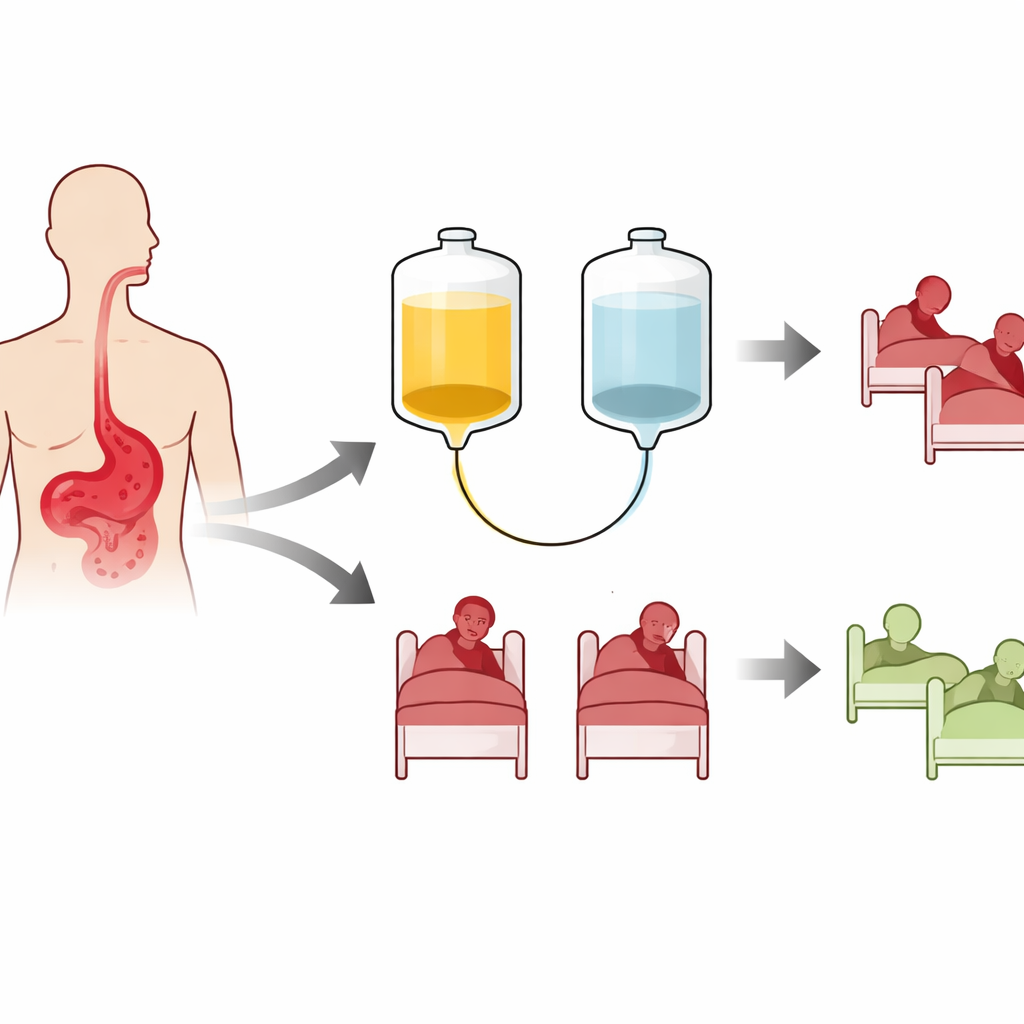
In these hospitals, doctors followed usual guideline-based care for acute stomach and esophagus bleeding, but there was no strict rule about when to give plasma. Instead, each physician decided case by case, often aiming to “correct” the INR before doing endoscopy. Compared with those who did not receive plasma, patients who did were clearly sicker when they first arrived: they had lower hemoglobin, slightly higher INR, higher bleeding risk scores, and they needed more red blood cell transfusions before endoscopy. Many had bleeding from enlarged veins in the esophagus or stomach (varices), a problem closely tied to advanced liver disease. This pattern suggests that clinicians tended to reserve plasma for the patients who looked most unstable or fragile at the bedside.
What happened to patients who received plasma
The researchers examined several outcomes: death during the hospital stay, death within 30 days, repeat bleeding, lung fluid buildup (pulmonary edema), and overall serious complications. On simple comparisons, the plasma group fared noticeably worse. They had higher rates of in-hospital death (about one in four versus one in fourteen), more lung problems, and more of the combined “major adverse events” measure, along with longer hospital stays. Thirty-day death rates were also roughly doubled. Because the plasma recipients started out sicker, the team used statistical models to adjust for age, kidney disease, severity scores, signs of shock, how much red blood they received before endoscopy, and whether the bleeding came from varices or other causes. Even after this careful adjustment, plasma use before endoscopy was still linked to a substantially higher chance of serious complications, lung fluid buildup, and both in-hospital and 30-day death.
Why variceal bleeding stood out
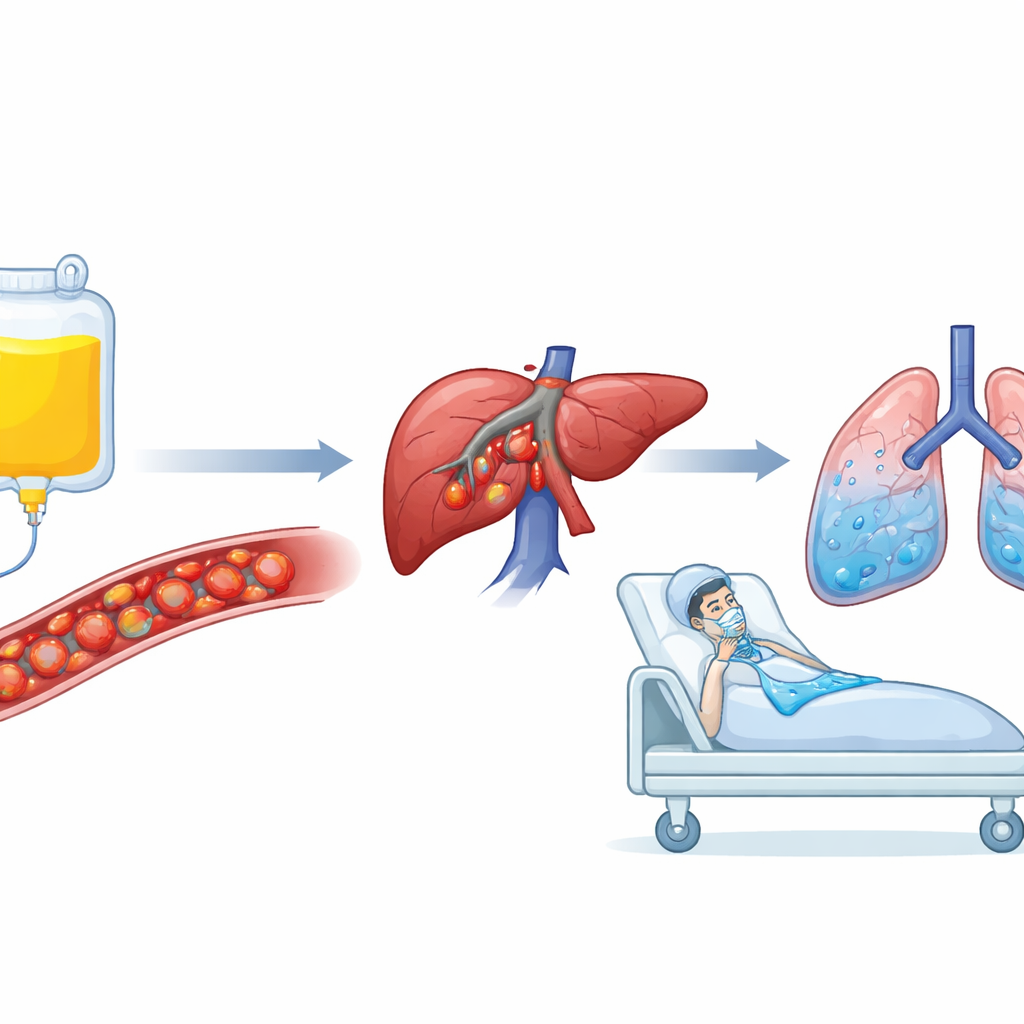
When the researchers looked at different types of bleeding separately, a clearer pattern emerged. In people whose bleeding came from varices—swollen veins related to cirrhosis—plasma use before endoscopy showed a consistent association with worse outcomes, including higher death rates and more lung complications. In those with non-variceal causes, such as ulcers, the signals were weaker and less certain, in part because there were fewer patients and events. The authors note that cirrhosis creates a fragile balance between bleeding and clotting that standard tests like INR do not capture well. Adding large volumes of plasma may raise pressure in the vein system draining the gut and overload the heart and lungs, which could plausibly worsen outcomes in these already vulnerable patients.
What this means for patients and doctors
The study does not prove that plasma itself directly causes harm, because it is observational and the sickest patients were more likely to receive it. Still, the consistent link between pre-endoscopic plasma use and higher mortality and lung problems—especially in variceal bleeding—adds to growing evidence that routine plasma transfusion for mildly abnormal clotting tests may be unhelpful or even risky. For patients, this work supports the idea that “more blood products” are not always safer, and that care should focus on timely endoscopy and thoughtful, individualized use of transfusions rather than automatic correction of lab numbers. For clinicians and guideline makers, the findings argue for a more selective, context-based approach to plasma in upper gastrointestinal bleeding and underscore the need for prospective trials to define when, if ever, mild INR abnormalities truly need to be fixed before endoscopy.
Citation: Bunnag, K., Chang, A., Nuyim, T. et al. Association of pre-endoscopic fresh frozen plasma transfusion with clinical outcomes in patients with acute upper gastrointestinal bleeding and mild coagulopathy: a two-center retrospective cohort study. Sci Rep 16, 11454 (2026). https://doi.org/10.1038/s41598-026-41863-y
Keywords: upper gastrointestinal bleeding, fresh frozen plasma, cirrhosis, variceal bleeding, transfusion strategy