Clear Sky Science · en
Quality valuation and hydrogeochemical features of groundwater in university campus and its surroundings, south-west Nigeria
Why the Water Under a Campus Matters
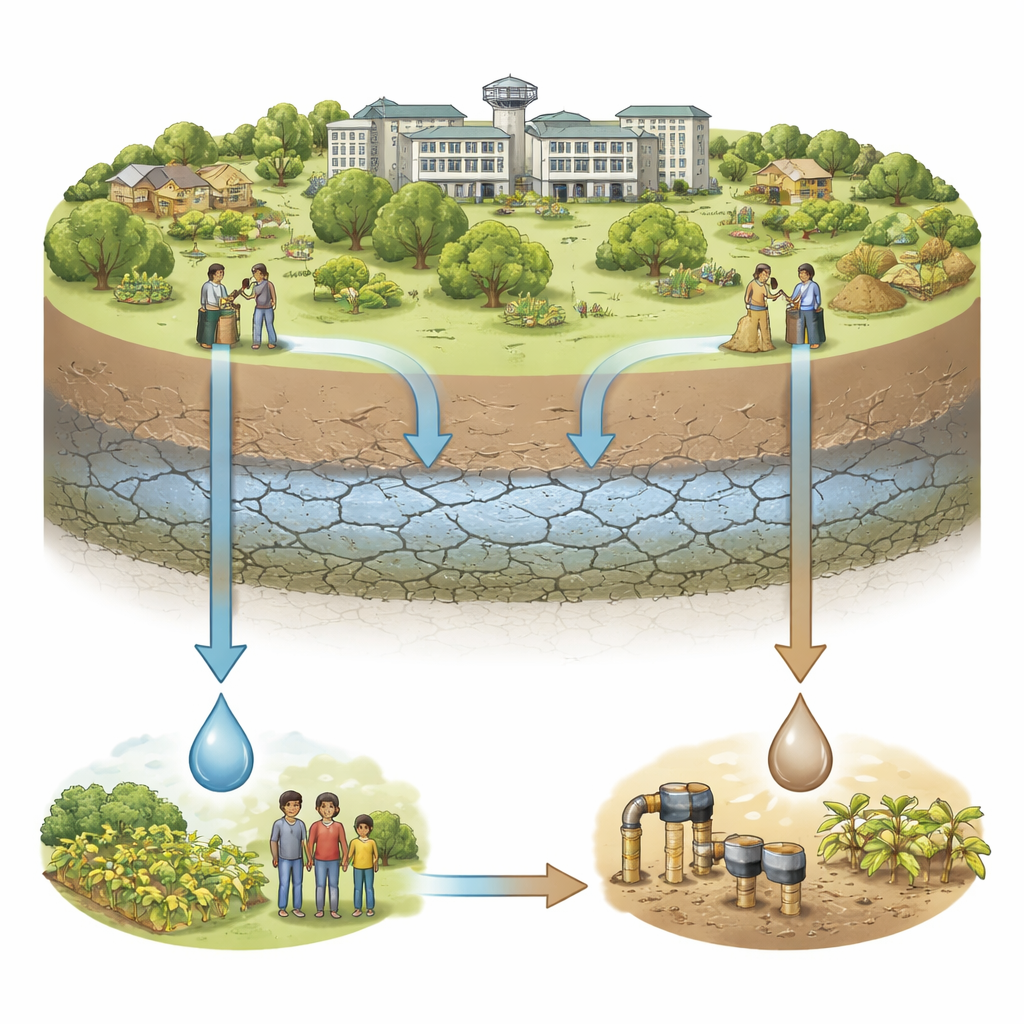
On many university campuses across Africa, the water that students drink, cook with and use to grow food comes straight from shallow hand-dug wells. Yet few people know what is really in that water, or how the rocks and human activities around them may slowly change its quality. This study looks closely at groundwater beneath the Federal University of Agriculture, Abeokuta in south‑west Nigeria and nearby communities, asking a simple but vital question: is this everyday water safe to drink, to irrigate crops and to run through pipes and equipment?
Looking Beneath the Surface
The researchers began by mapping the campus and its surroundings, an area sitting on hard ancient rocks that store water mainly in their cracked and weathered upper layers. Thirty wells scattered across student hostels, staff quarters, farms and nearby neighborhoods were sampled during the dry season. In the lab, the team measured common water quality traits such as acidity, dissolved salts, cloudiness and oxygen, as well as major dissolved ingredients like sodium, potassium, calcium, magnesium, chloride, sulphate, nitrate and bicarbonate. They then compared these results with national and World Health Organization guidelines and used established index scores to translate a long list of measurements into simple ratings for drinking, irrigation and industrial use.
What the Wells Reveal
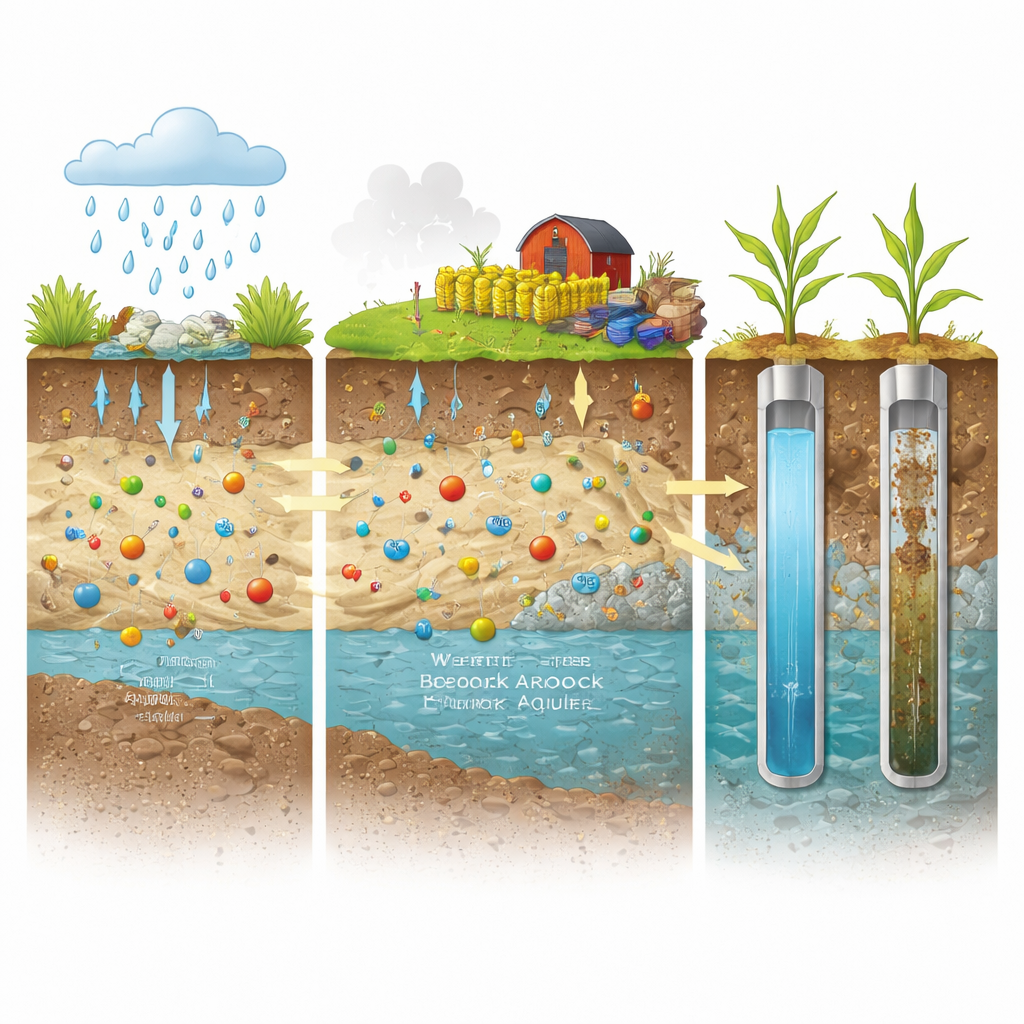
Most of the groundwater turned out to be fresh, clear and only slightly mineralized. The water was generally neutral to mildly alkaline, with levels of dissolved salts and key metals comfortably below health limits. Sodium and bicarbonate were the most abundant ingredients, with typical patterns of sodium plus potassium dominating over calcium and magnesium, and bicarbonate exceeding chloride, sulphate and nitrate. These chemical signatures, together with specialized diagrams used by hydrogeologists, point to natural interactions between rainwater and the surrounding silicate‑rich rocks as the main shapers of water quality, rather than heavy pollution. However, a few wells stood out: one showed excessive cloudiness, and another near a small dumping area had much higher potassium, hinting at local human influence.
Subtle Human Footprints and Farming Risks
To untangle the roles of nature and people, the team applied statistical tools that group similar samples and track how different chemicals rise and fall together. The patterns suggest that rock weathering and ion swapping between water and minerals dominate, with only mild current contributions from fertilizers, household waste and sewage. When the authors translated chemistry into practical farming advice using several irrigation indices, the picture became more nuanced. More than half of the samples were acceptable for watering crops, but many carried enough sodium to slowly damage soil structure if used over many seasons. High sodium and related measures can cause soils to become compacted and less permeable, making it harder for roots to access air and water, even when the water itself looks clean.
Hidden Threat Inside Pipes
The study also asked how kind this groundwater would be to pipes, storage tanks and industrial equipment. Here the news was less reassuring. A suite of corrosion and scaling indices showed that while the water contained relatively low levels of salts, its balance of ingredients makes it prone to dissolving minerals from pipe walls rather than depositing protective scale. All samples were judged strongly corrosive, with a high likelihood of attacking metal pipes and creating leaks, rust and potential release of metals into the water over time. Indices that compare chloride and sulphate to protective bicarbonate likewise indicated a strong tendency toward galvanic corrosion, especially in mixed-metal plumbing systems common in many Nigerian settings.
What It Means for Campus Life
Overall, the wells around this agricultural university are delivering water that is largely safe to drink today: about 97 percent of samples fell into "good" or "excellent" categories for human consumption, with just one requiring treatment because of elevated sodium and potassium. For farmers and groundskeepers, the water is usable but calls for caution; prolonged irrigation with some of these sources could gradually undermine soil health unless managed carefully. The most immediate concern lies in what happens inside pipes and storage systems, where the same seemingly gentle water can aggressively corrode metals. The authors conclude that regular monitoring, basic treatment for the few poorer‑quality wells and the use of corrosion‑resistant materials or inhibitors would help secure this vital resource for the thousands of people who rely on it every day.
Citation: Ganiyu, S.A., Bamisebi, O.T., Omole, B.D. et al. Quality valuation and hydrogeochemical features of groundwater in university campus and its surroundings, south-west Nigeria. Sci Rep 16, 12967 (2026). https://doi.org/10.1038/s41598-026-41764-0
Keywords: groundwater quality, Nigeria campus wells, drinking water safety, irrigation water, water corrosion risk