Clear Sky Science · en
Investigation of varenicline and tropisetron in latent inhibition and novel object recognition in mice
Why this research matters for thinking problems
People with schizophrenia often struggle with attention, memory, and problem‑solving, and there are currently no approved medicines that reliably improve these thinking problems. This study explores whether two existing drugs, originally developed for other uses, might work together to boost specific kinds of learning and memory in mice. Because both drugs already have a track record in humans, the findings could help guide future treatments for cognitive impairment in schizophrenia and related disorders.
Two medicines with a shared brain target
The researchers focused on varenicline and tropisetron, drugs better known for helping people stop smoking or for preventing nausea. Both act on a particular family of brain receptors that respond to the chemical messenger acetylcholine, which plays a central role in attention and memory. These receptors, called nicotinic receptors, are found in high concentrations in brain areas important for thinking, such as the hippocampus and prefrontal cortex, and their function is altered in schizophrenia. Earlier work in animals and people suggested that activating these receptors can sharpen certain mental abilities, prompting the team to ask whether varenicline and tropisetron might improve cognition on their own or in combination.
Testing attention to what matters
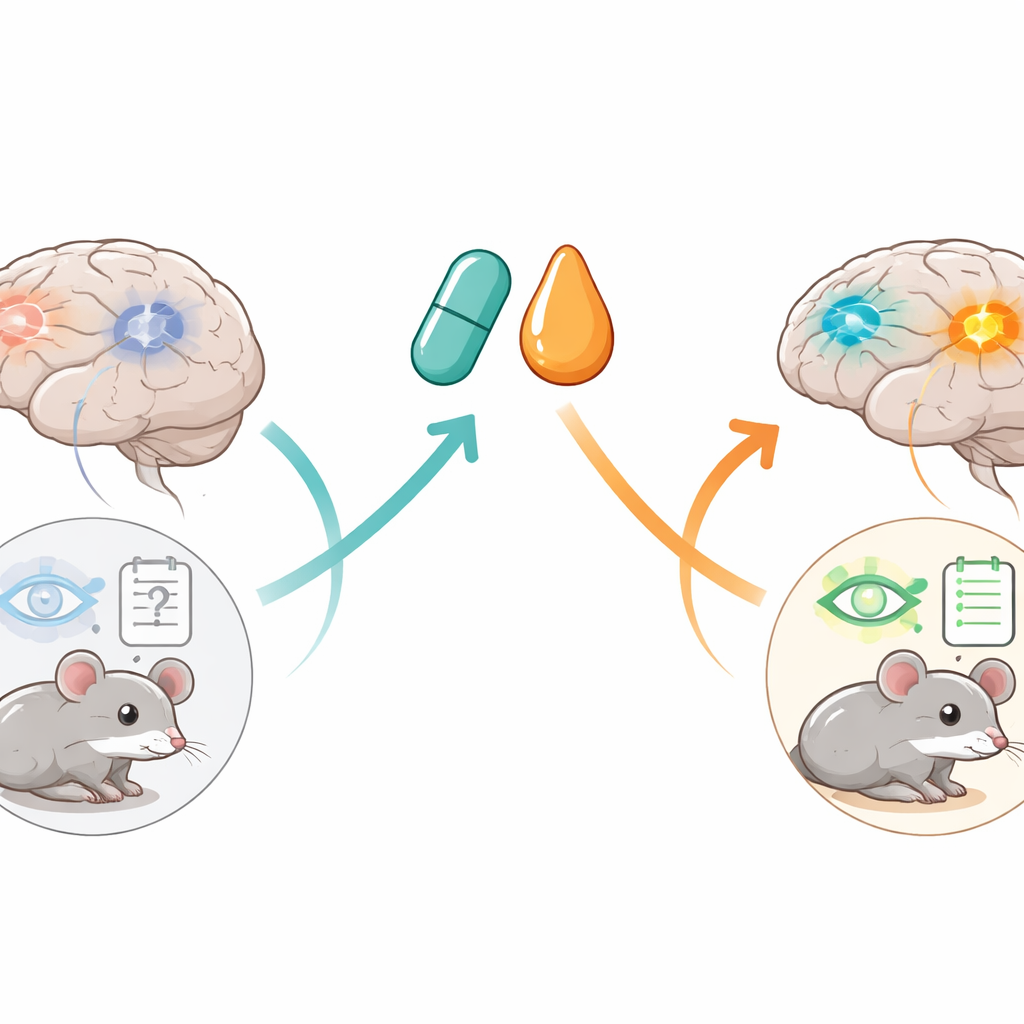
One of the key mental skills affected in schizophrenia is the ability to ignore irrelevant information. The scientists modelled this in mice using a learning phenomenon called latent inhibition. Mice first experience a sound that has no consequence; later, that same sound is paired with a mild footshock, and the animals learn to anticipate it by pausing their drinking when the sound is played. Normally, prior harmless exposure to the sound slows this learning, because the animals have learned to treat it as unimportant. This slowdown is the latent inhibition effect. In the study, tropisetron alone did not change this pattern. Varenicline, however, strengthened latent inhibition under conditions where it was weak in control mice, suggesting an improvement in selective attention. Surprisingly, when the two drugs were given together, this beneficial effect of varenicline on latent inhibition disappeared, indicating a complex interaction between them in how the brain filters out irrelevant cues.
Probing memory for new things
The team next examined recognition memory—the ability to tell a familiar object from a new one—using a widely used test in which mice explore two objects in an arena. After a delay of 24 hours, one object is replaced with a new one. Animals with good memory naturally spend more time investigating the novel object. Under the particular conditions used here, control mice showed only modest discrimination, leaving room to detect improvement. When given alone, neither varenicline nor tropisetron significantly boosted performance: the mice still recognized the new object, but not better than untreated animals. Importantly, the drugs did not change how much time the mice spent exploring overall, so the results were not explained by changes in basic activity or curiosity.
Working better together for memory
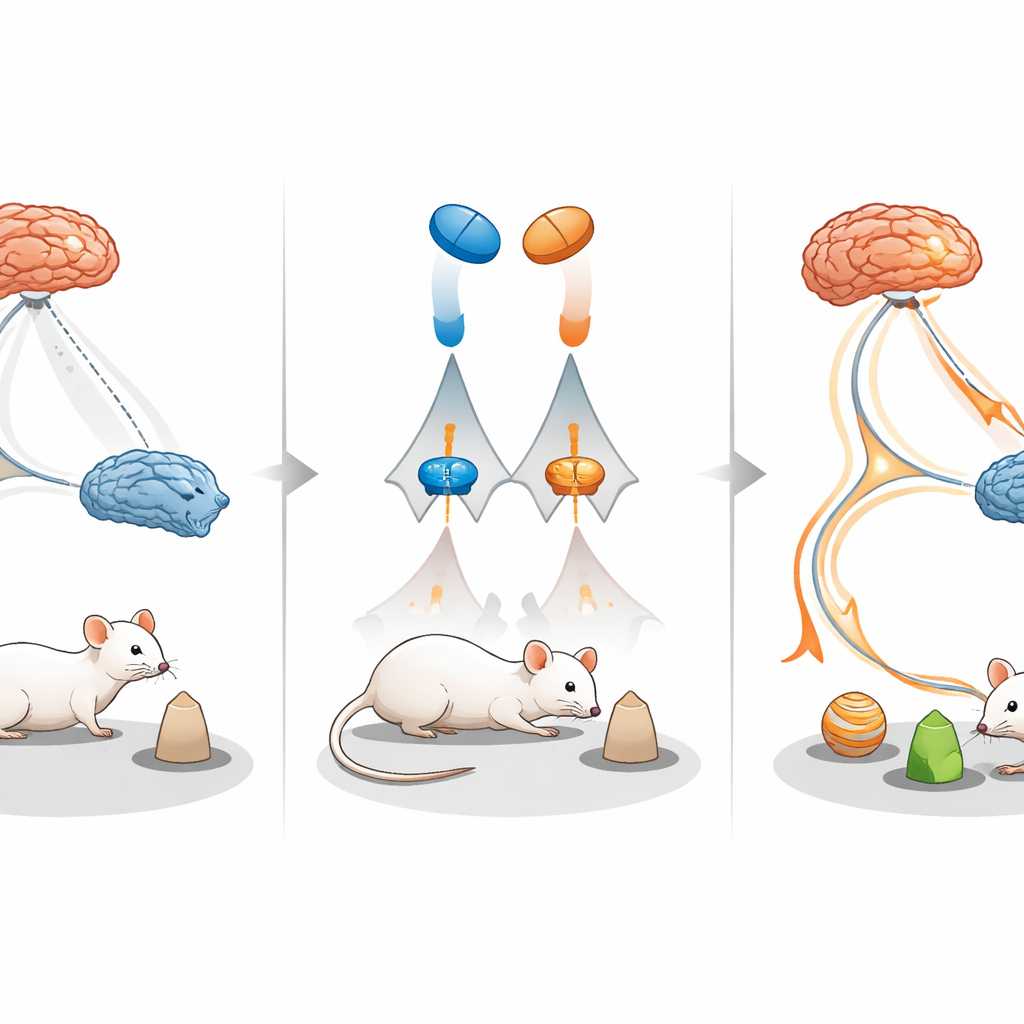
When varenicline and tropisetron were administered together, the picture changed. Mice receiving the combination showed a markedly higher tendency to explore the new object, at all tested dose pairings, compared with control animals. Their total exploration time and general activity remained similar to controls, pointing to a specific enhancement in recognition memory rather than a general arousal effect. Analyses suggested that the improvement was larger than would be expected from simply adding the modest individual effects of each drug, hinting at a synergistic interaction in the brain circuits that support memory.
What this could mean for future treatments
To a non‑specialist, the take‑home message is that the same two drugs can help one kind of thinking process while interfering with another, depending on how they are combined and what is being measured. Varenicline alone improved the ability of mice to ignore previously harmless, irrelevant sounds, a function that is often disrupted in schizophrenia. Yet tropisetron appeared to block this benefit when the two were given together. In contrast, the combination clearly improved memory for new objects, even though each drug alone did little in this task. Because both medicines already have known side‑effects linked to another brain system (the 5‑HT3 receptor), combining them might also allow side‑effects to offset each other. Overall, the study suggests that carefully tuned combinations targeting nicotinic receptors could one day form part of treatments for the cognitive problems that make daily life so difficult for many people with schizophrenia, while also illustrating how subtle the balance of brain chemistry must be to support healthy thinking.
Citation: Lizarraga-Valderrama, L.R., Williams, S., Watson, D.J.G. et al. Investigation of varenicline and tropisetron in latent inhibition and novel object recognition in mice. Sci Rep 16, 11823 (2026). https://doi.org/10.1038/s41598-026-41544-w
Keywords: schizophrenia cognition, nicotinic receptors, varenicline, tropisetron, novel object recognition