Clear Sky Science · en
The diversity and abundance of chytrids on the Greenland Ice Sheet
Hidden Life on a Melting Ice Sheet
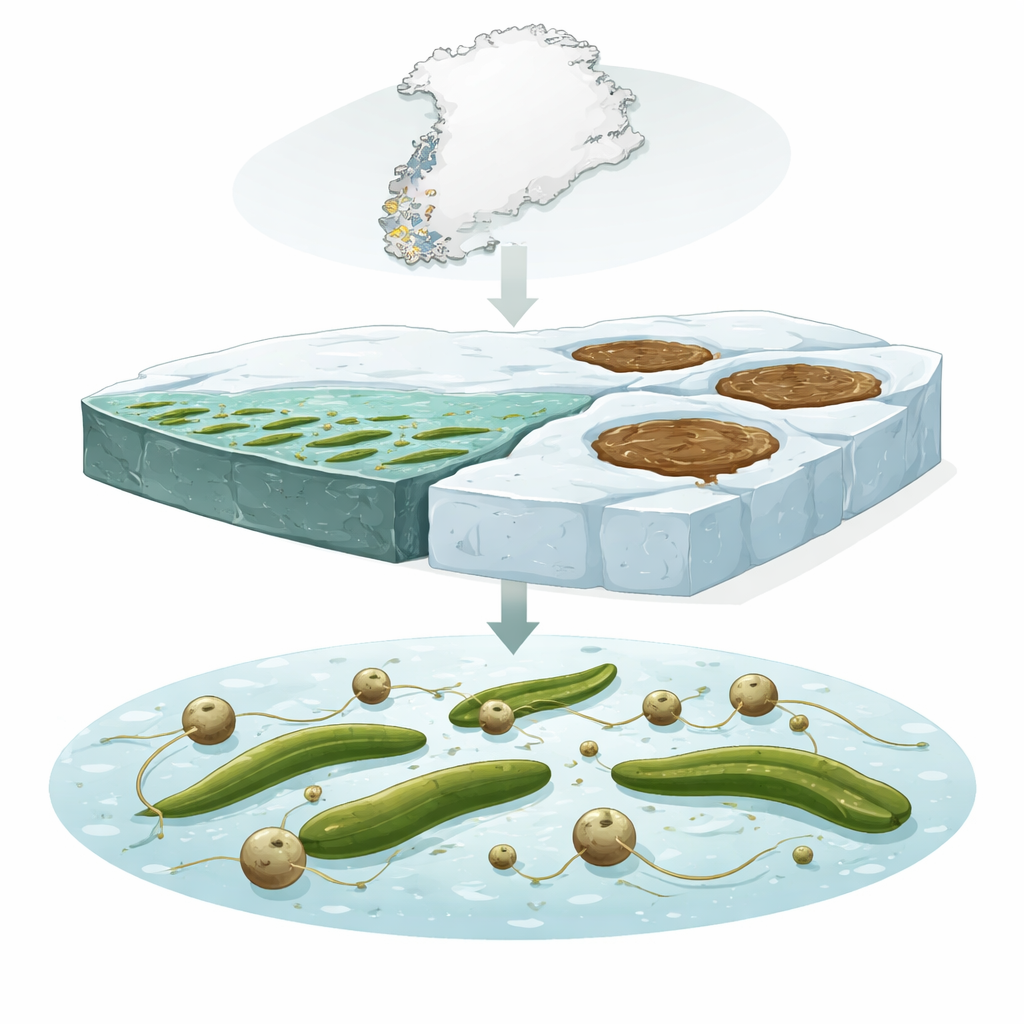
The surface of the Greenland Ice Sheet might look like a frozen desert, but it is in fact home to a bustling microscopic world. Dark blooms of ice algae help speed up melting by absorbing sunlight, and this study explores their little-known fungal enemies: tiny swimming fungi called chytrids. By tracking where these fungi live, how abundant they are, and how diverse their lineages are, the researchers reveal an unseen web of life that may influence how fast Greenland’s ice disappears in a warming climate.
Tiny Fungi with a Big Role
Chytrids are simple fungi that produce microscopic, tailed spores able to swim through water. Around the world, many chytrids attack algae, piercing their cells and feeding on them, while others recycle dead material. On Greenland’s ice, dark pigmented algae of the genus Ancylonema coat the surface in summer, helping to darken the ice and increase melt. Previous observations hinted that chytrids infect these algae, but no one had measured how many are present or how many different kinds there are across the ice sheet.
Sampling the Living Skin of the Ice
The team collected samples from four regions of Greenland between 2019 and 2023, spanning south to north and east to west. They focused on three main types of surface habitat: “dark ice,” the upper centimeters of sunlit, algae-rich ice; brightly colored patches of red and green snow; and water-filled pits called cryoconite holes, which contain dark sediment and dense microbial communities. They froze and filtered the material, then extracted genetic material to read out the small-subunit ribosomal RNA genes that act as barcodes for different organisms. In a concentrated 2022 campaign, they repeatedly sampled the same dark-ice patches and nearby cryoconite holes over three weeks, and used a DNA-counting method called qPCR to estimate how many copies of chytrid genes were present through time.
A Forest of New Fungal Branches
When the researchers assembled and compared the fungal gene sequences, they recovered 99 full-length sequences belonging to early-branching fungal groups, including the chytrids. By placing these sequences on detailed evolutionary trees, they showed that most of the lineages belonged to four main chytrid orders, with a smaller share from two related fungal groups. Strikingly, only two sequences clearly matched known species; the rest were distinct from any described fungi. Depending on the similarity threshold used, the team identified between 63 and 81 potentially new lineages. Many of these were found in both dark ice and colored snow, and often closely resembled uncultured fungi previously detected in other cold environments such as alpine soils, sea ice, and glacial ice elsewhere in the world. This suggests that a widespread, but largely unnamed, radiation of chytrid fungi thrives in icy habitats.
Watching Fungal Populations Rise and Fall
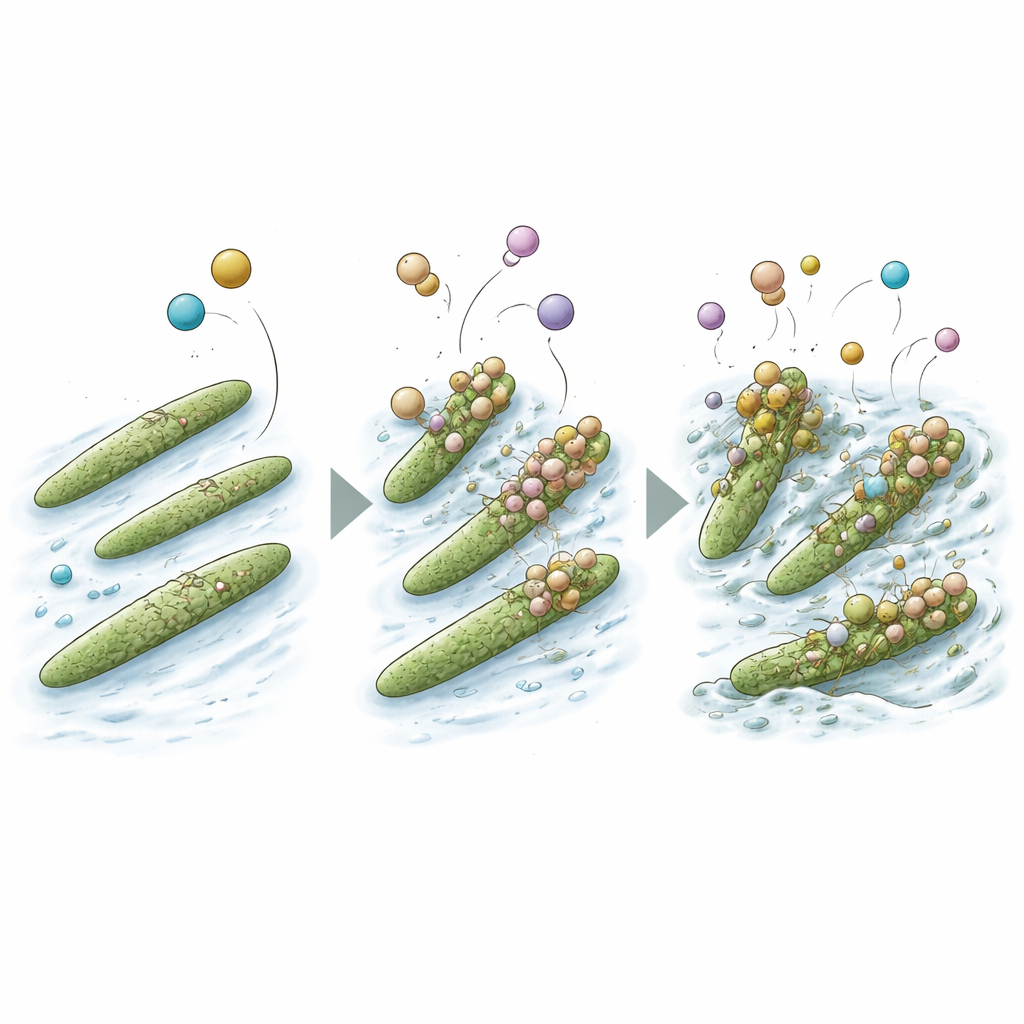
The qPCR measurements from the 2022 melt season reveal that chytrids are far more abundant in dark ice than in cryoconite holes—roughly an order of magnitude higher. Over 21 days, chytrid gene copies in dark-ice samples swung substantially, while levels in cryoconite remained relatively stable. When the team compared chytrid signals to the total community of microbes, they found that chytrids made up on average about 2.6% of active organisms in dark ice but only about 0.5% in cryoconite. Within dark ice, one group, the Mesochytriales, stood out as especially active. Some of these lineages are closely related to chytrids known to infect snow algae, hinting that they may be parasites of both snow and glacier ice algae on Greenland.
What These Microbes May Mean for Melting
Although the study does not directly measure infection of individual algal cells, the combination of high chytrid diversity, strong presence in algae-rich ice, and links to known algal parasites suggests that these fungi could help regulate algal blooms that darken the ice sheet. If chytrids reduce algal biomass at key times, they may slightly slow the darkening of the surface; if they recycle organic matter efficiently, they may instead fuel more microbial growth. The authors argue that pinpointing which chytrid species infect which algae, and how their populations track through the melt season, will be crucial for understanding this hidden “top-down” control. Their work provides the first quantitative and evolutionary map of chytrids across Greenland’s ice, setting the stage for future research on how microscopic parasites may subtly influence the fate of a giant ice sheet.
Citation: Perini, L., Zervas, A., Feld, L. et al. The diversity and abundance of chytrids on the Greenland Ice Sheet. Sci Rep 16, 11175 (2026). https://doi.org/10.1038/s41598-026-41468-5
Keywords: Greenland Ice Sheet, glacier ice algae, chytrid fungi, supraglacial ecosystems, microbial diversity