Clear Sky Science · en
Brain structural correlates of individual differences in heartbeat counting and discrimination: A voxel-based morphometry study
Listening to Your Heart
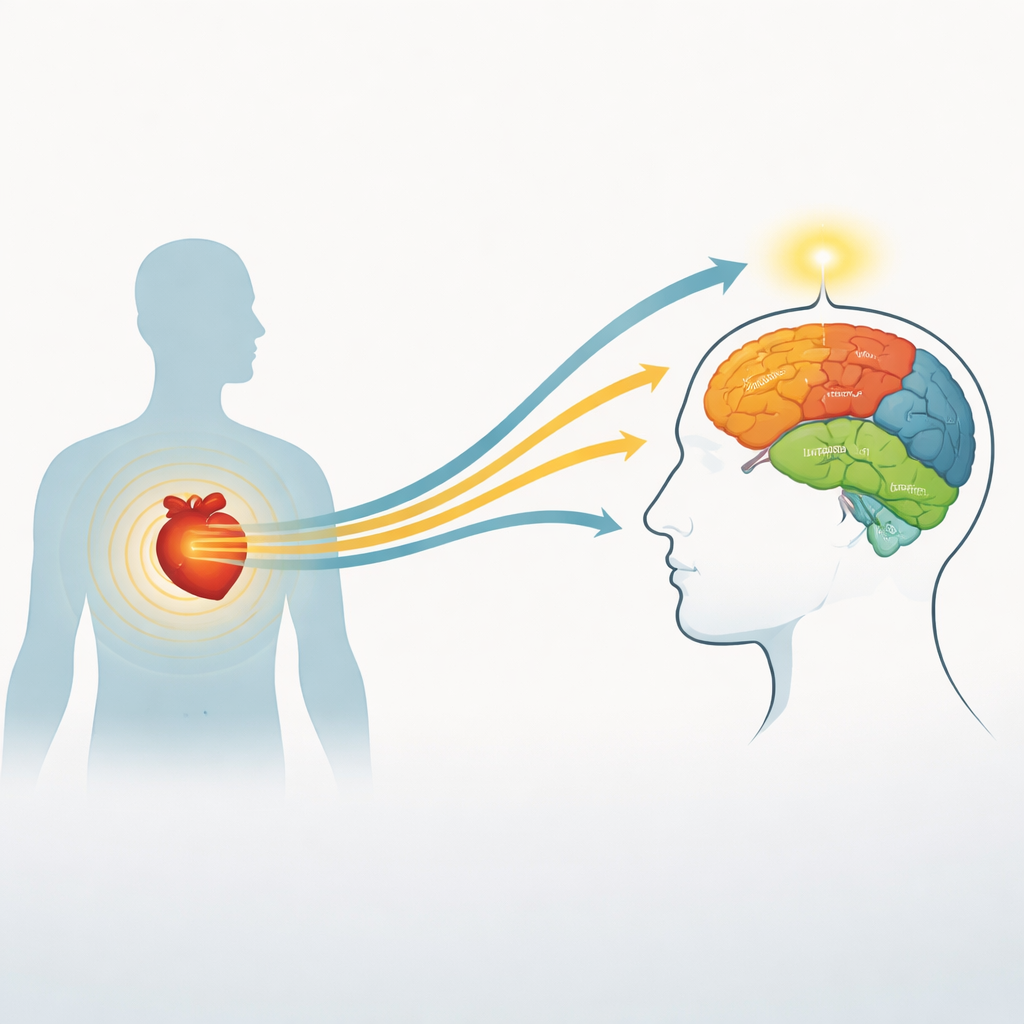
Most of us have had moments when our heart suddenly pounds – before an exam, on a first date, or in a scary movie. Some people notice these inner signals very clearly, while others barely feel them. This ability to sense what is happening inside the body, called interoception, is increasingly linked to emotions, stress, sleep, and mental health. The study described here asks a simple but powerful question: how are differences in people’s ability to feel their own heartbeat reflected in the structure of their brains?
Two Ways to Feel a Heartbeat
Researchers have developed two common laboratory tasks to test how well people perceive their heartbeats. In the heartbeat counting task, volunteers quietly focus on their body and estimate how many times their heart beats over several short periods, without taking their pulse. Performance on this task is often taken to show how accurately people can track internal bodily signals. In the heartbeat discrimination task, tones are played with carefully timed delays after each heartbeat, and participants decide whether each series of tones feels in sync with their heart. This second task is more like matching what you feel in your chest with what you hear, reducing the chance of simply guessing based on general knowledge about heart rate.
Scanning Brains at Rest
In this study, 138 healthy young adults completed both heartbeat tasks and then had high-resolution brain scans that measure local gray matter volume – essentially how much brain tissue is present in different regions. The researchers focused on areas already suspected to be important for sensing the body’s internal state, especially a network involving the frontal lobes and the insula, a folded region buried deep within the brain. Using a technique called voxel-based morphometry, they statistically tested which brain regions were thicker or more voluminous in people who performed better, or showed more reliable responses, on each heartbeat measure.
Different Tasks, Different Brain Spots
The two tasks turned out to be related but clearly not identical. People who were better at counting their own heartbeats tended to show more gray matter in the frontal pole, a frontmost region of the brain thought to help with high-level planning and monitoring. By contrast, a key measure from the discrimination task – how consistently someone judged a particular delay as a true “match” between heart and tone – was linked to larger tissue volume in the orbitofrontal cortex, the back part of the insula, and a nearby middle frontal area. These regions are known to help integrate bodily signals with information from the outside world and to support flexible evaluation and decision-making based on how the body feels.
Awareness of Feeling Versus Feeling Itself
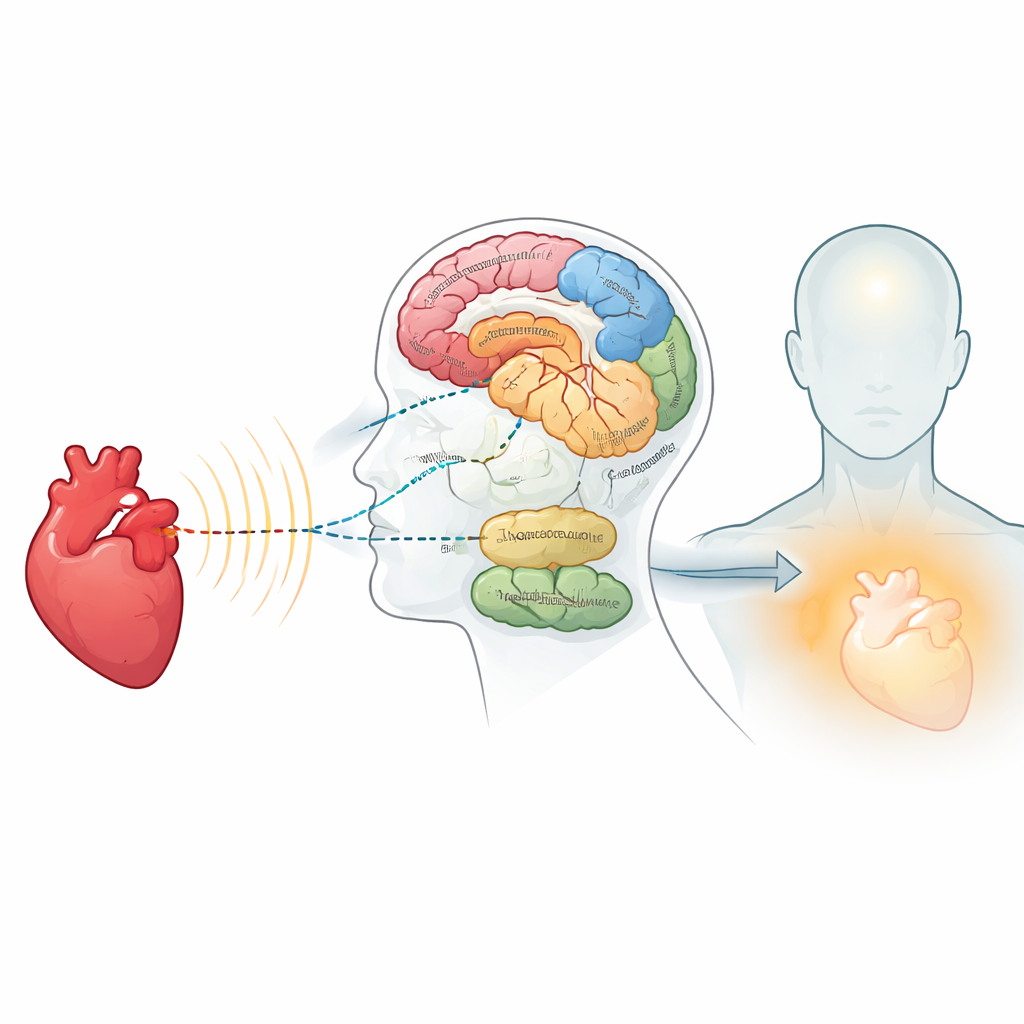
The researchers also looked beyond raw performance to a more reflective measure: how closely a person’s reported confidence in their heartbeat counts matched their actual accuracy. This “awareness of awareness” was tied not to the frontal pole, but to structures that help combine many streams of information, including the back part of the insula, both sides of the thalamus (a relay hub deep in the brain), and the parahippocampal region near the memory system. Another timing-related measure from the discrimination task pointed to the cerebellum and parts of the frontal and orbitofrontal cortex, areas known for fine-tuning timing and coordinating sensory signals. Together, these findings suggest that sensing the heart, judging whether heartbeats match outside events, and knowing how good you are at these things rely on overlapping but distinct brain circuitry.
Why This Matters for Mind and Body
This work shows that subtle differences in how people sense their own heartbeats leave a structural imprint on specific brain regions. It supports the idea that there is no single “interoception center”; instead, a distributed network links basic bodily signals, timing and prediction, and higher-order reflection. Because problems in sensing internal states have been tied to anxiety, depression, eating disorders, sleep problems, and stress vulnerability, mapping these brain differences may eventually help tailor interventions. In simple terms, the study suggests that how well you can listen to your heart – and how accurately you know that ability – is shaped by the size and organization of particular brain regions that bridge body and mind.
Citation: Sasaoka, T., Maekawa, T. & Yamawaki, S. Brain structural correlates of individual differences in heartbeat counting and discrimination: A voxel-based morphometry study. Sci Rep 16, 11408 (2026). https://doi.org/10.1038/s41598-026-41447-w
Keywords: interoception, heartbeat perception, brain structure, insula, emotion and mental health