Clear Sky Science · en
Advanced hybrid 3DCNN-SGAN framework for high-precision gas mixture analysis with sensor arrays
Why Smarter Gas Sensing Matters
Invisible gases in the air around us can signal everything from a gas leak in a factory to early signs of disease in human breath. Yet, in real life these gases almost never appear alone; they come as tangled mixtures that are hard to untie. This paper introduces a new artificial intelligence framework that helps electronic “noses” read these complex mixtures far more accurately, even when only a small amount of labeled training data is available. The advance could sharpen air‑quality monitoring, industrial safety systems, and medical diagnostics.
From Simple Noses to Smart Noses
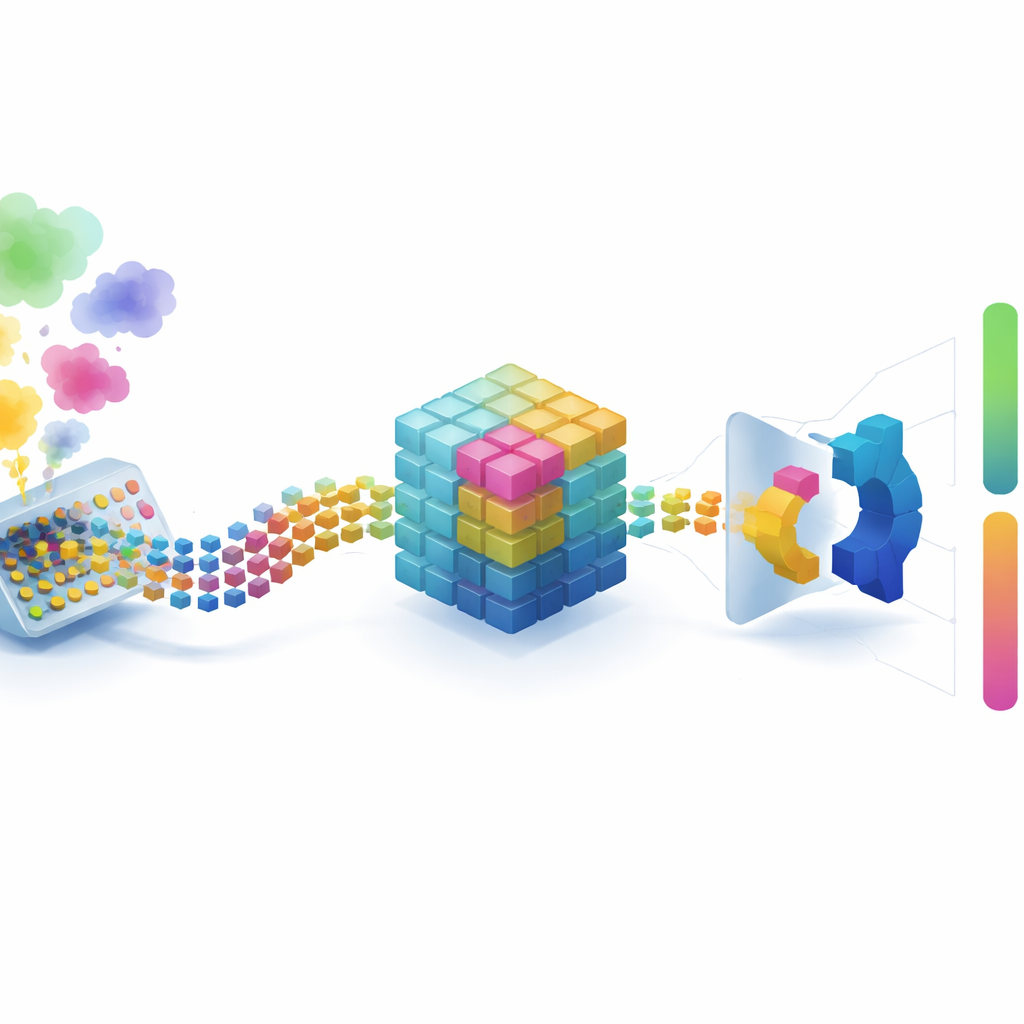
Electronic nose systems try to mimic our sense of smell using arrays of tiny gas sensors. Each sensor reacts differently to chemicals in the air, and together their combined responses create a kind of “smell pattern.” In practice, however, current E‑nose systems struggle when multiple gases are present at once. Similar gases can trigger overlapping responses, and the same sensor may react to several substances. Classical machine‑learning tools such as support vector machines or basic neural networks can recognize some patterns, but they often stumble when signals are noisy, mixtures are complex, or the amount of labeled data is limited. As a result, many commercial E‑nose devices are not yet as reliable or robust as imaging or audio systems.
Teaching Machines to Read Space and Time
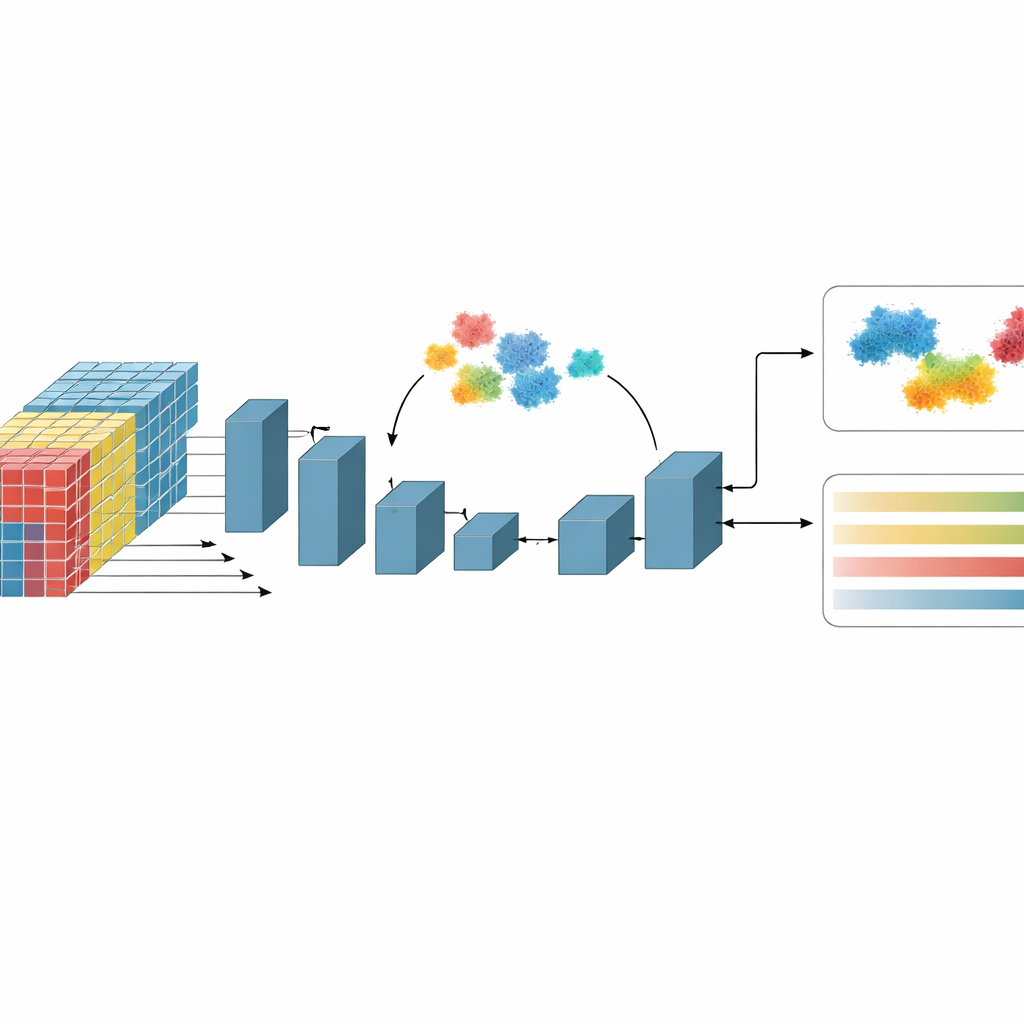
The authors tackle these weaknesses by combining two powerful AI ideas. The first is a three‑dimensional convolutional neural network, or 3D‑CNN. Instead of flattening sensor readings into a simple table, this network treats them like a small block that varies across sensors, over time, and in signal strength. By sliding 3D filters through this block, the model learns how gas mixtures change both across the sensor array and over time. This captures subtle, time‑evolving patterns that are missed when data are squeezed into two dimensions, such as how different gases rise and fall together or how long each sensor takes to respond and recover.
Making the Most of Sparse Labels
The second idea is a semi‑supervised generative adversarial network. Here, one part of the model learns to create realistic synthetic sensor patterns that resemble genuine gas mixtures, while another part learns to tell real from fake and to classify gas types and estimate their concentrations. By training these two components in opposition, the system gradually sharpens its understanding of what realistic mixtures look like. Crucially, this setup can use both labeled and unlabeled data: the labeled samples teach it the correct gas identities and concentrations, while the unlabeled and synthetic samples help carve out clearer boundaries between mixture types. This allows the model to generalize well even when only a fraction of the data has been carefully annotated.
Putting the New Nose to the Test
To evaluate the framework, the researchers used a widely studied public dataset collected from an array of 16 commercial metal‑oxide sensors exposed to mixtures of ethylene with either carbon monoxide or methane. The gases were varied continuously over hours under controlled lab conditions, producing millions of time‑stamped measurements. The team reshaped these raw signals into 3D blocks and trained their hybrid 3D‑CNN–GAN system to both identify which mixture was present and estimate each gas’s concentration. Across several train‑test splits and five‑fold cross‑validation, the approach reached a classification accuracy of about 99 percent, outperforming traditional methods such as support vector machines, k‑nearest neighbors, and shallow neural networks by up to seven percentage points. Visualizations of the learned feature space showed that mixture types that previously overlapped now formed tight, well‑separated clusters.
What This Means for Everyday Air
In plain terms, the study shows that teaching an electronic nose to understand how sensor signals evolve in space and time, and letting it “imagine” realistic extra examples, makes it much better at untangling complex gas mixtures. While the work was demonstrated in a controlled laboratory setting and still faces challenges such as sensor aging and changing environmental conditions, it points toward more precise, data‑efficient gas monitoring tools. Such systems could ultimately enhance industrial safety, improve urban air‑quality surveillance, and support medical tests based on breath analysis, all by giving machines a sharper, more reliable sense of smell.
Citation: Ansari, G., Singh, R., Kumar, S. et al. Advanced hybrid 3DCNN-SGAN framework for high-precision gas mixture analysis with sensor arrays. Sci Rep 16, 12141 (2026). https://doi.org/10.1038/s41598-026-41434-1
Keywords: electronic nose, gas mixture sensing, deep learning, convolutional neural networks, generative adversarial networks