Clear Sky Science · en
Clinical and hemodynamic evaluation of schistosomiasis-associated pulmonary arterial hypertension from Egyptian pulmonary hypertension centers: epidemiology, risk factors, and survival determinants
Why this matters to everyday health
In many tropical regions, a parasite carried in fresh water can quietly damage the lungs and heart years after the initial infection. This study from Egyptian hospitals looks at how a worm infection called schistosomiasis can lead to a dangerous rise in blood pressure in the arteries of the lungs. By comparing these patients with people who develop this lung vessel disease for no clear reason, the researchers identify who is most at risk and which heart measurements best predict survival. Their findings could guide earlier diagnosis and better follow-up for millions who have been exposed to this parasite. 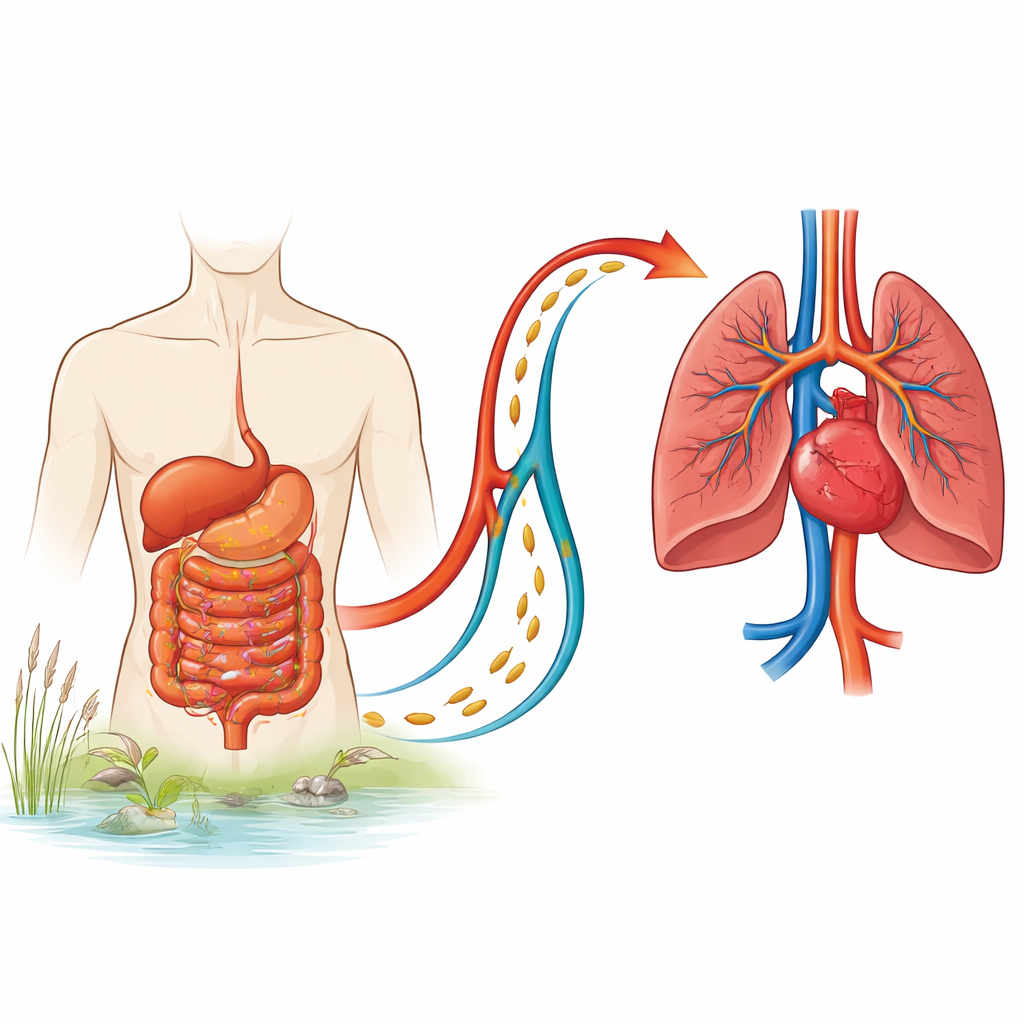
From river parasite to lung blood vessel disease
Schistosomiasis is picked up when bare skin contacts infested fresh water. The parasites can live in the body for years, mainly affecting the liver and spleen. In a subset of people, tiny eggs or immune reactions linked to them ultimately injure the lung’s blood vessels. This condition, schistosomiasis-associated pulmonary arterial hypertension (Sch-PAH), belongs to a broader group of disorders in which the lung arteries become narrowed and stiff, forcing the right side of the heart to pump much harder. Globally, schistosomiasis infects about 230 million people, mostly in sub-Saharan Africa, and is now appearing more often in non-endemic countries through migration. Yet the features and outcomes of Sch-PAH, especially in low- and middle-income countries, remain poorly described.
Who is most affected in this study?
The researchers reviewed five years of records from three major pulmonary hypertension centers in Egypt, including 83 adults: 41 with Sch-PAH and 42 with idiopathic pulmonary arterial hypertension (IPAH), the form with no identifiable cause. Patients with Sch-PAH were, on average, about 16 years older than those with IPAH (around 50 versus 34 years) and were much more likely to be men. They also had more additional health problems, especially chronic lung and liver diseases. At the time of diagnosis, more Sch-PAH patients were in the most advanced symptom class, meaning they became short of breath with minimal activity or even at rest. Imaging showed that their left upper heart chamber and the main lung artery were enlarged more often than in people with IPAH, hinting at added strain on both the heart and the great vessels.
What the scans and heart catheter tests reveal
Despite these differences, the direct pressure measurements taken during right heart catheterization—a key test for confirming pulmonary arterial hypertension—were broadly similar in Sch-PAH and IPAH. Both groups had markedly raised pressure in the lung arteries and increased resistance to blood flow. However, detailed imaging told a different story. In the schistosomiasis group, the main lung artery was not just under high pressure; it was often stretched and dilated, sometimes to an aneurysm-like size. Only about one quarter of Sch-PAH patients had obvious high pressure in the portal vein system of the liver, suggesting that mechanisms beyond classic “liver-to-lung” shunting, such as direct immune-driven injury in the lungs, are likely involved. 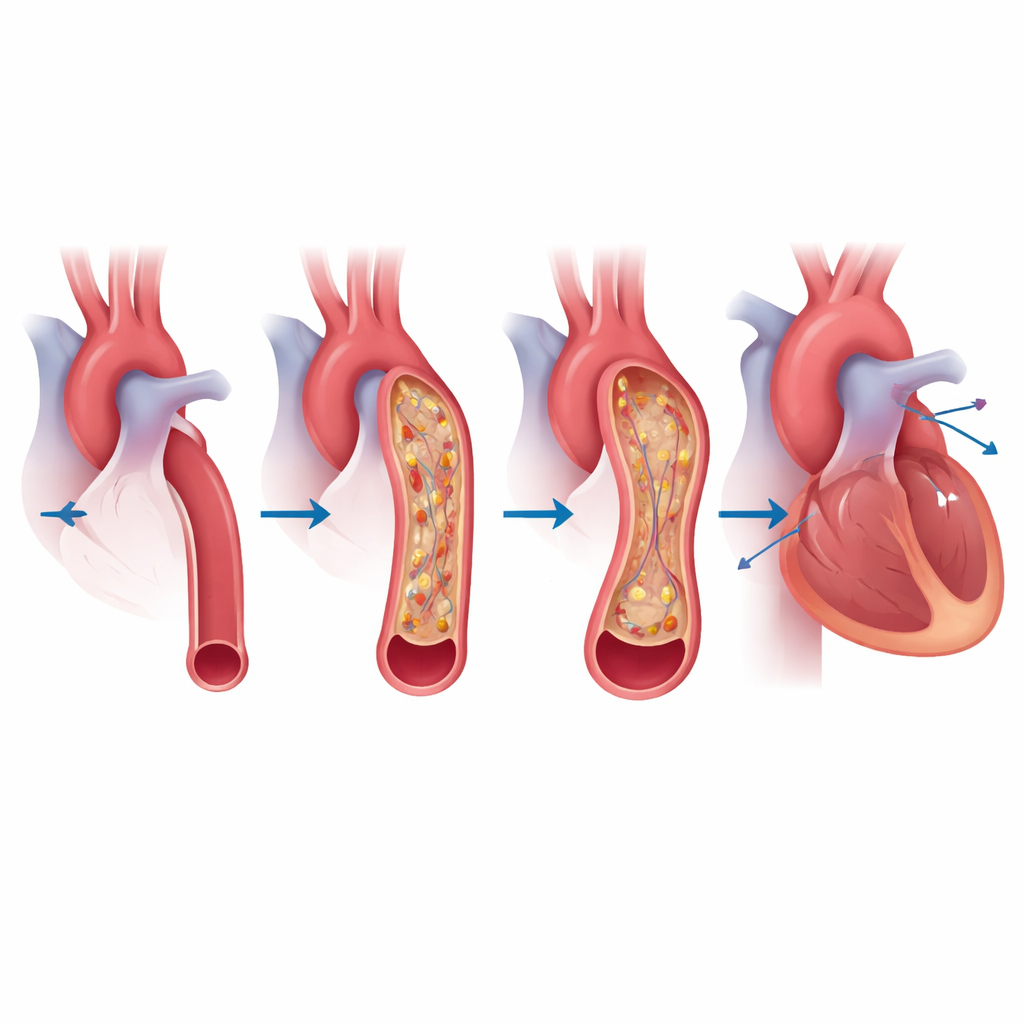
Hidden insights from the heart’s pumping strength
The team then asked which factors best predicted who survived and who did not among the Sch-PAH patients. Surprisingly, drug choice—whether patients received one or two standard lung vessel drugs—did not clearly change survival, likely reflecting limited access and small numbers. Instead, several structural features stood out: patients without marked lung artery enlargement and without portal hypertension fared better. Most striking was a common ultrasound measure called ejection fraction (EF), which estimates how much blood the left side of the heart pumps out with each beat. An EF below 66% strongly predicted survival, while values above that threshold were associated with a higher chance of death, even after accounting for age, sex, and other illnesses.
Why “stronger” pumping can signal trouble
On the surface, a high EF sounds good—it is usually taken as a sign of a vigorous left heart. In Sch-PAH, however, the situation is more complex. Many patients also have liver-related high blood flow states that push the heart to pump harder and faster. As pressure in the lung arteries climbs, the right ventricle enlarges and pushes the wall between the two heart chambers toward the left, reducing the left ventricle’s filling volume. This can make the EF look deceptively high, not because the heart is healthier, but because it is squeezing a smaller chamber. The study suggests that, in this specific setting, an EF above 66% may actually flag a more advanced, stressed circulation and a worse outlook.
What this means for patients and doctors
Overall, the authors show that Sch-PAH in Egypt mainly affects older men with multiple other illnesses and more severe symptoms at diagnosis than those with IPAH, yet with broadly similar survival over the follow-up period. The combination of lung artery enlargement, changes in the left heart chamber size, and an unusually high ejection fraction appears to mark those at greatest risk. For clinicians in regions where schistosomiasis is or was common, these simple imaging findings could prompt closer follow-up and earlier, more aggressive treatment. For public health planners, the work reinforces that a seemingly distant childhood water exposure can echo decades later in the heart and lungs—making long-term surveillance and access to specialized care crucial in endemic communities.
Citation: Soliman, Y.M.A., El-Kassas, M., ElAziz, A.A. et al. Clinical and hemodynamic evaluation of schistosomiasis-associated pulmonary arterial hypertension from Egyptian pulmonary hypertension centers: epidemiology, risk factors, and survival determinants. Sci Rep 16, 9668 (2026). https://doi.org/10.1038/s41598-026-41412-7
Keywords: schistosomiasis, pulmonary arterial hypertension, tropical cardiology, Egypt, parasitic lung disease