Clear Sky Science · en
Dietary effects of duckweed on performance, carcass characteristics, hematology, immunity, sensory traits, and fatty acid profile of meat in broilers
Why a tiny pond plant matters for your dinner plate
As the world looks for ways to feed more people without exhausting land and water, even the smallest plants are getting a second look. This study explores whether duckweed—a tiny green plant that carpets ponds—can replace part of the corn and soy in chicken feed. The authors ask a simple but important question: can we raise healthy meat chickens using this fast-growing water plant without sacrificing growth, health, or taste?
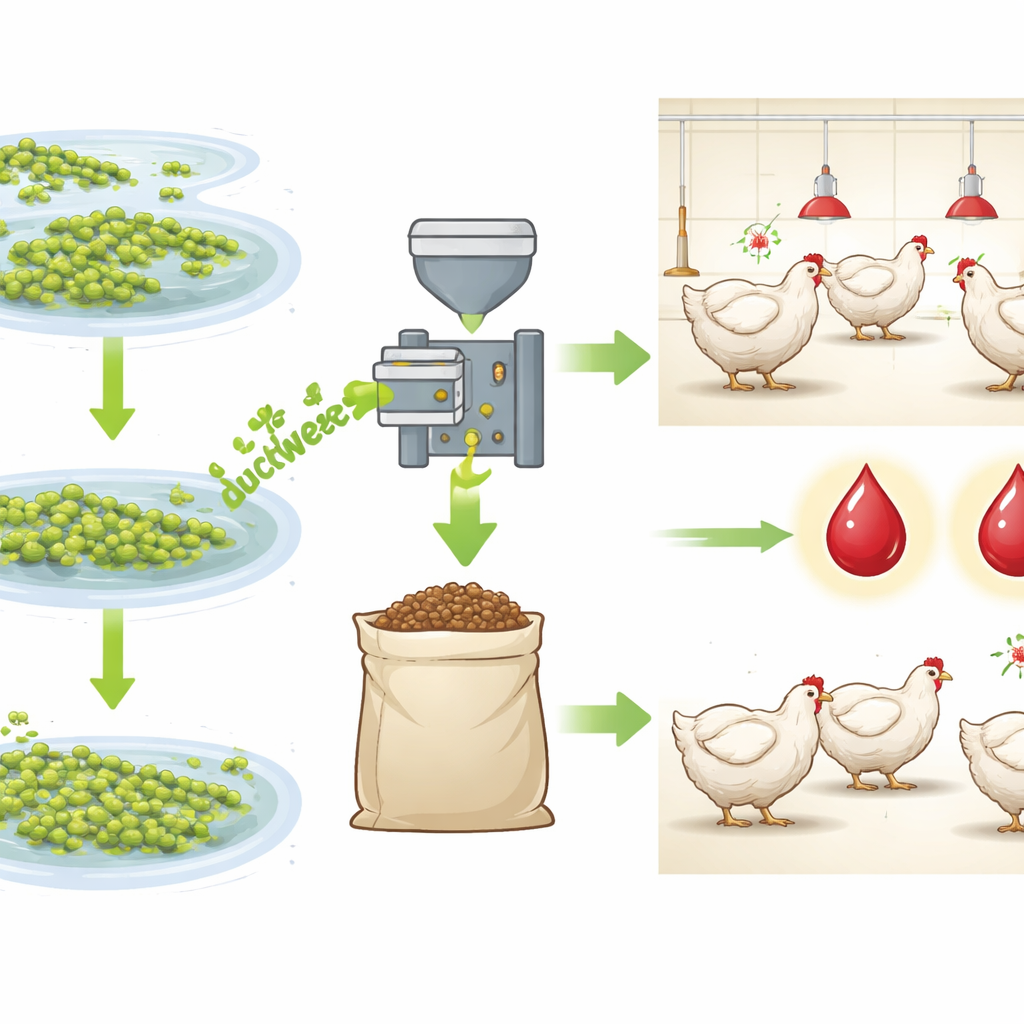
A small plant with big potential
Duckweed (Lemna minor) is a miniature floating plant that can grow on clean or dirty water, purifying it while producing surprising amounts of protein, minerals, vitamins, and natural protective compounds. Because it thrives in shallow ponds rather than on farmland, it does not compete with crops grown for people. Previous work has suggested duckweed could help support food security on Earth and even in space, but its full value in poultry diets—especially for meat birds—had not been thoroughly tested.
Putting duckweed into chicken feed
The researchers worked with 150 fast-growing broiler chickens of a common commercial strain, dividing them into three groups. One group received a standard corn–soy diet, while the other two groups had 3% or 4% of that diet replaced with powdered duckweed. Birds were raised from hatch to market weight in three typical phases (starter, grower, and finisher), with identical housing, lighting, and veterinary care. Throughout the trial, the team measured how much the birds ate, how quickly they gained weight, and how efficiently they turned feed into meat.
Growth, bodies, and blood health
From a farmer’s perspective, the first concern is whether birds fed duckweed will grow as well as those on conventional feed. Across all ages, the duckweed-fed chickens ate similar amounts, gained similar weight, and showed similar feed efficiency to the control group; small trends toward lower feed intake and weight gain at higher duckweed levels did not reach clear statistical importance. Carcass measurements—such as breast and thigh weights and most internal organs—were also essentially unchanged, aside from a modest uptick in belly fat as duckweed levels rose. Inside the bloodstream, however, notable differences appeared. Birds eating duckweed had lower levels of sugars and certain blood fats linked to heart risk, and higher levels of “good” fat carriers, blood proteins, minerals, and overall antioxidant capacity. At the same time, markers of liver strain and fat damage dropped, suggesting that duckweed’s natural vitamin E–like and plant sterol compounds were boosting the birds’ internal defenses.
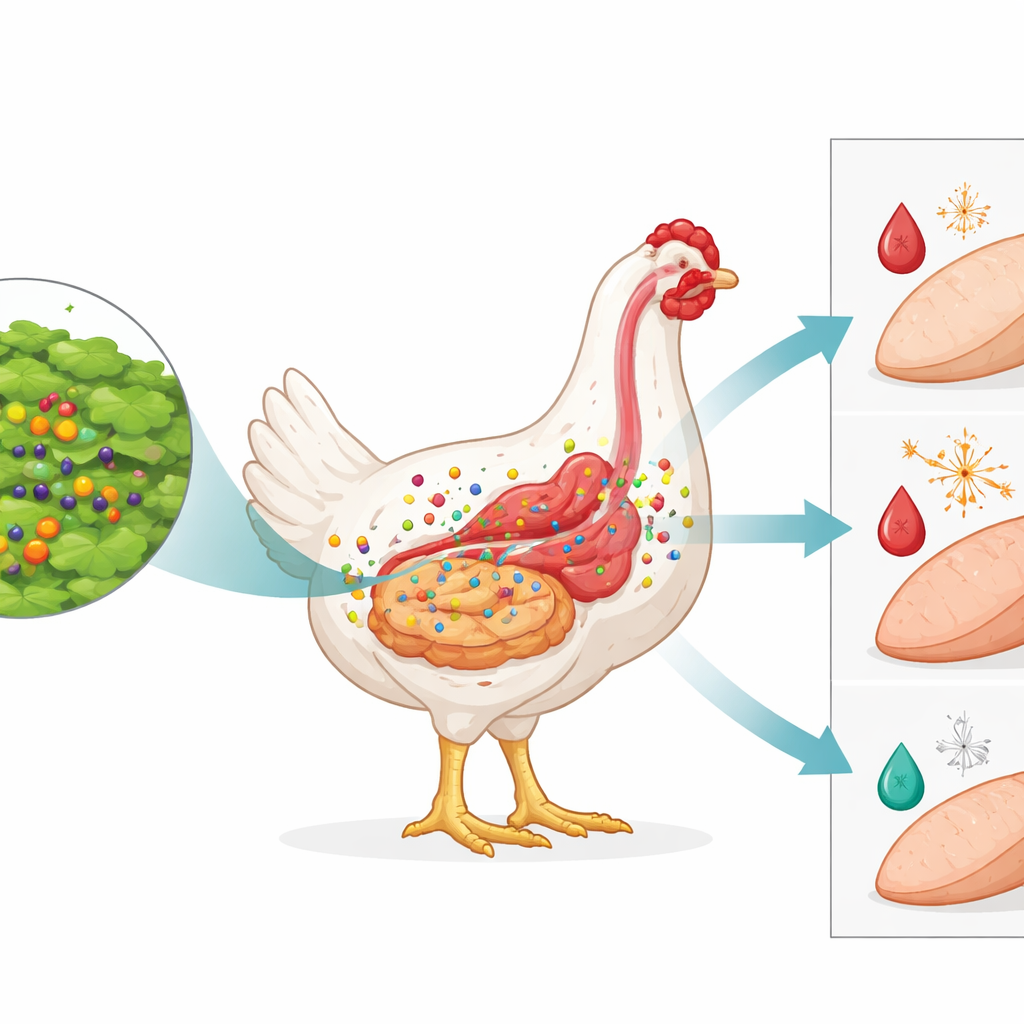
Immunity, flavor, and fat quality of the meat
The study also examined the immune organs and response of the birds, finding no meaningful changes except for a heavier bursa of Fabricius—a key immune organ—in the highest duckweed group, hinting at possible immune support. Human taste-testers evaluated cooked breast meat from each group. Color, texture, and overall liking remained high across all treatments, but the smell of the meat clearly shifted: as the duckweed level in the feed increased, the meat’s odor became stronger and somewhat different from that of the control birds. Finally, when the researchers analyzed the fat in the breast meat, they found balanced mixes of saturated and unsaturated fats and health-related indices that were broadly compatible with nutritious meat, though these detailed measurements were reported for description rather than firm statistical comparison.
What this means for future chicken diets
To non-specialists, the takeaway is straightforward: modest amounts of duckweed can be added to broiler chicken diets without harming growth or meat yield, while improving many blood measures linked to health and antioxidant protection. The main trade-off is a noticeable change in meat smell at higher inclusion levels, which would require quality control and consumer testing before large-scale adoption. If managed well, duckweed could ease pressure on corn and soy, make better use of water resources, and support bird health with a natural, plant-based supplement—offering one small but promising step toward more sustainable and resilient poultry production.
Citation: Saei, S., Seidavi, A. & Nosrati, M. Dietary effects of duckweed on performance, carcass characteristics, hematology, immunity, sensory traits, and fatty acid profile of meat in broilers. Sci Rep 16, 10405 (2026). https://doi.org/10.1038/s41598-026-41286-9
Keywords: duckweed feed, broiler chicken health, sustainable poultry, meat quality, functional animal diets