Clear Sky Science · en
Mutational profiles of spontaneous and radiation-related mammary carcinomas in a rat model of Brca1 haploinsufficiency
Why this research matters to families
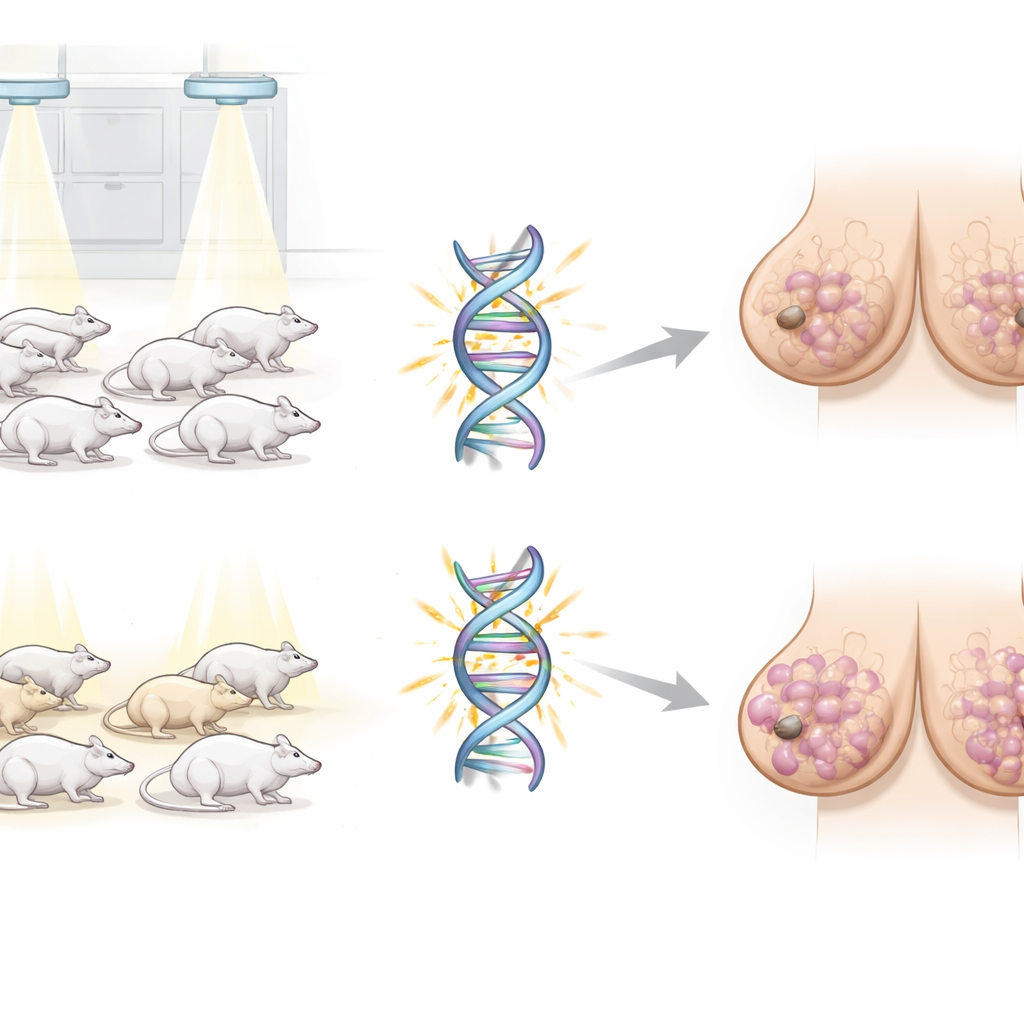
People who inherit a change in the BRCA1 gene live with a greatly increased risk of breast cancer, and many also face decisions about screening and preventive surgery at a young age. Yet scientists still do not fully understand how carrying just one faulty copy of this gene sets the stage for cancer, especially after exposure to medical radiation. This study uses a specially engineered rat model to look inside tumors at the DNA level, asking a deceptively simple question: what actually goes wrong in the cancer cells of BRCA1 carriers?
Setting the scene: a subtle gene defect and radiation
BRCA1 is best known as a guardian of the genome, helping cells repair dangerous breaks in their DNA. For decades, researchers assumed that cancer appears only after both copies of BRCA1 are knocked out in a cell. However, newer work suggests that having just one working copy—a state called “haploinsufficiency”—may already tilt tissues toward cancer. To probe this early stage, the authors used rats that carry one normal and one truncated Brca1 gene, closely mimicking human BRCA1 carriers. Some of these rats, and normal rats for comparison, were exposed to a single dose of radiation in youth, similar in kind (though not in amount) to certain medical exposures that can damage DNA in breast tissue.
Looking inside tumors: counting DNA changes
The team collected mammary (breast) tumors that arose either spontaneously or after radiation, then performed whole-exome sequencing, a technique that reads nearly all gene-coding regions of the genome. They counted different kinds of DNA changes: single-letter substitutions, small insertions and deletions, and gains or losses of larger DNA segments. Surprisingly, tumors from carrier rats and from normal rats contained similar overall numbers and patterns of these mutations, whether or not the animals had been irradiated. Classic signs of BRCA1 failure seen in advanced human cancers—a heavy burden of certain mutation “signatures”—were not strongly enriched in the carrier rats, reinforcing the idea that those hallmarks belong to later stages when the gene is completely lost.
A distinctive fingerprint, but not more chaos
When the researchers dug deeper into the detailed “mutational signatures” that describe how DNA damage accumulates, they found one notable difference. A particular pattern involving paired base changes, known from large human cancer datasets but not yet well understood, appeared only in tumors from the carrier rats. This hints that partial loss of BRCA1 may nudge cells toward a specific, subtle mode of genome alteration rather than causing a simple explosion of random damage. At the same time, the overall level of mutations and large DNA copy changes remained comparable between groups, arguing against the common picture that BRCA1 carriers inevitably progress through a phase of rampant genetic instability as measured by standard sequencing.
Fewer classic “driver” hits in carrier tumors
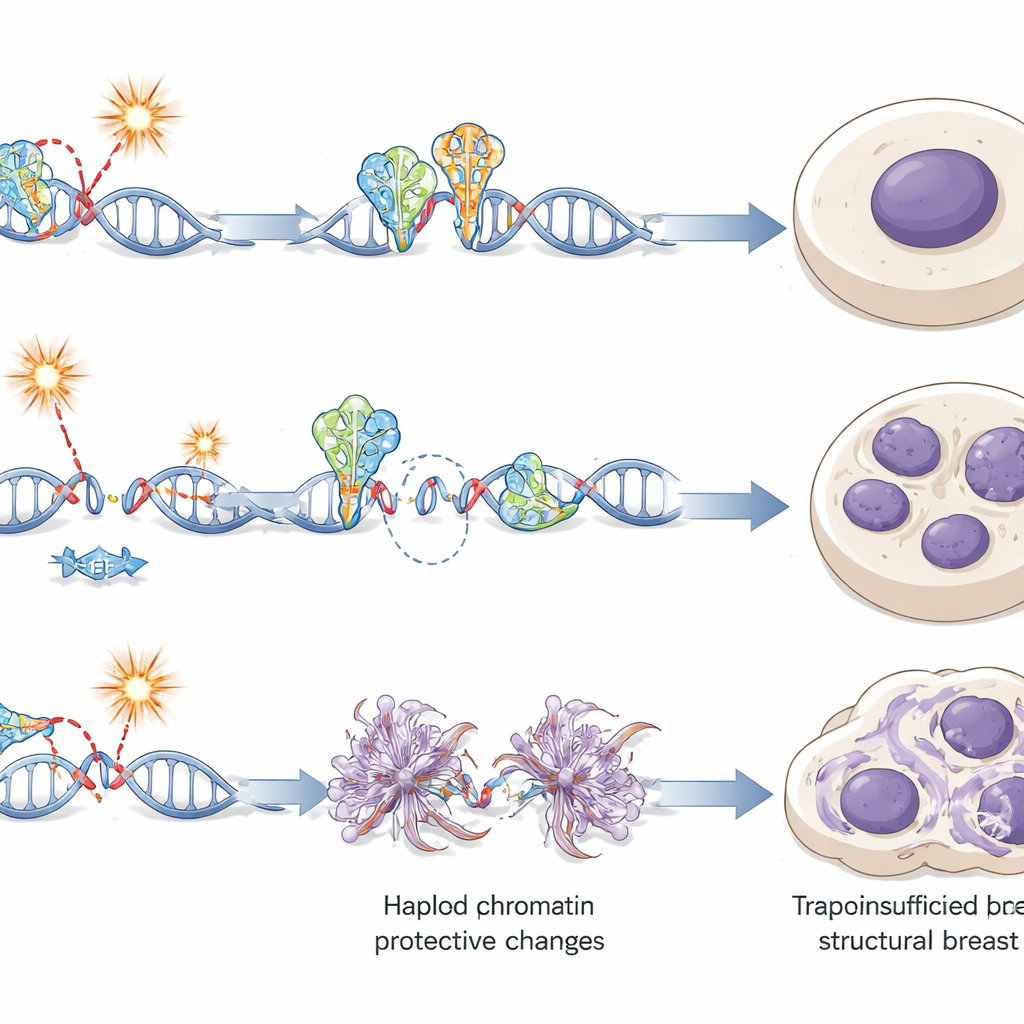
The most unexpected result emerged when the team focused on “driver” mutations—DNA changes in well-known cancer genes that are thought to actively push cells toward malignancy. In radiation-related tumors from normal rats, such driver mutations were relatively common. In contrast, radiation-related tumors from the Brca1 carrier rats contained significantly fewer of these recognized driver hits, and more tumors showed no obvious driver mutation at all in the exome. This suggests that in the context of partial BRCA1 loss, radiation may promote breast cancer through routes that do not leave a strong footprint in protein-coding genes, such as large structural rearrangements, chemical tags on DNA that alter gene activity, or long-term changes in the surrounding tissue environment.
What this means for understanding BRCA1 risk
To a lay reader, the central message is counterintuitive but important: in this animal model, carrying one damaged copy of BRCA1 does not simply cause more point-by-point DNA errors inside tumors. Instead, it appears to let breast cancers arise while sidestepping many of the classic genetic “engine failures” usually seen in tumors. The authors propose that BRCA1 haploinsufficiency may open alternative paths to cancer, possibly involving large-scale DNA rearrangements, epigenetic shifts, or changes in supporting cells around the tumor—processes that standard gene-focused tests can miss. Understanding these hidden routes will be crucial for designing better early detection, safer radiation use, and targeted prevention strategies for people who inherit BRCA1 variants.
Citation: Nakamura, Y., Daino, K., Ishikawa, A. et al. Mutational profiles of spontaneous and radiation-related mammary carcinomas in a rat model of Brca1 haploinsufficiency. Sci Rep 16, 10291 (2026). https://doi.org/10.1038/s41598-026-41240-9
Keywords: BRCA1, breast cancer risk, radiation exposure, tumor genetics, DNA repair