Clear Sky Science · en
The role of review structure in perceived helpfulness
Why the Way Reviews Unfold Matters
When you shop online, you probably skim product reviews to decide what to buy. You might notice whether a review is mostly positive or negative, but pay less attention to how the writer moves from praise to criticism, or vice versa. This study shows that the order of good and bad points within a single review can change how helpful other shoppers find it. In other words, it is not just what reviewers say, but how their story unfolds from beginning to end that shapes whether readers trust and use their feedback.

Looking Beyond Thumbs-Up or Thumbs-Down
Most past research has treated reviews as either positive or negative overall, sometimes adjusting for how strong the emotion is. That approach collapses a rich story into a single score. In real life, reviews often mix both praise and criticism. A buyer might love a laptop’s speed but dislike its battery life, or enjoy a snack’s flavor but complain about its price. The authors argue that we should think about reviews as a kind of public feedback message, with a beginning, middle, and end. They call the pattern created by the sequence of positive and negative content the “review structure,” and they ask whether this structure affects perceived helpfulness above and beyond the review’s average tone.
Nine Ways a Review Can Tell Its Story
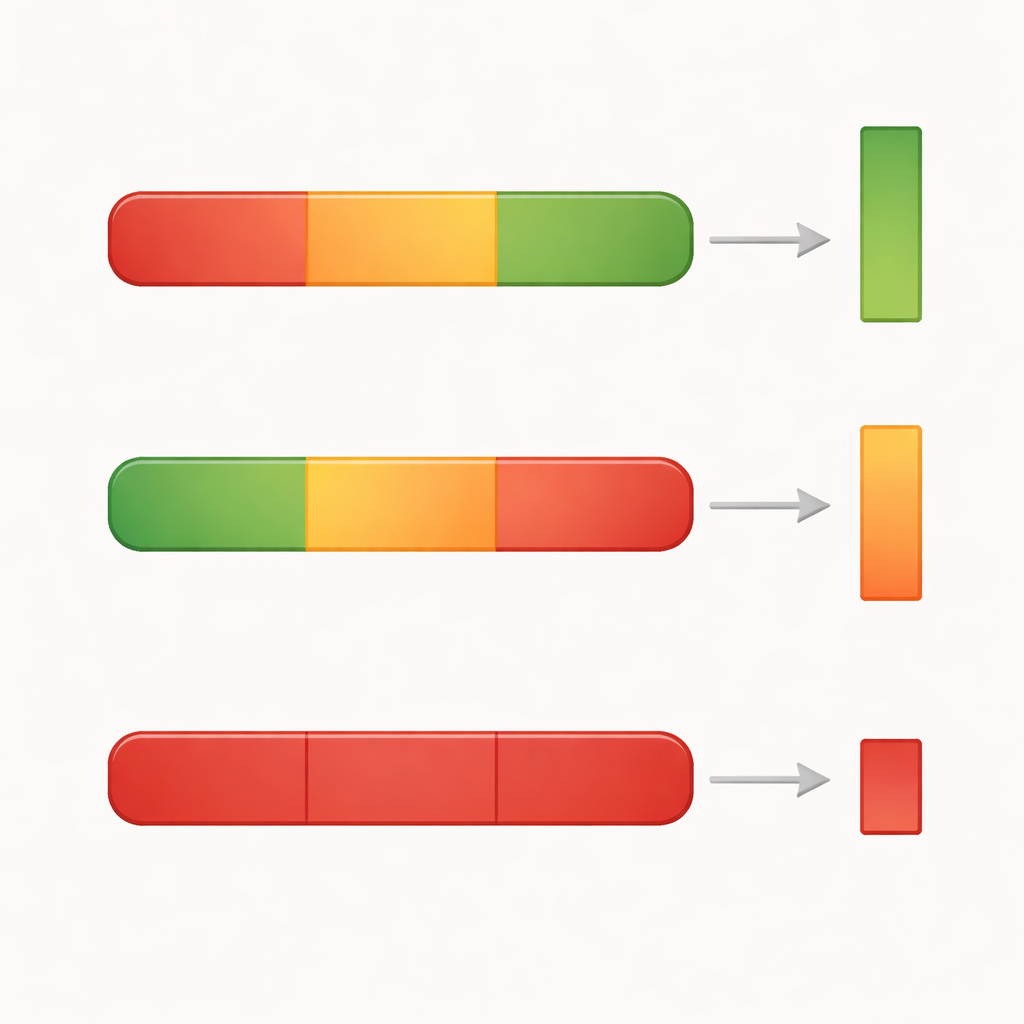
To study structure, the researchers analyzed 195,675 Amazon reviews across thousands of products. They split each review into three equal parts—opening, middle, and ending—and used a standard language tool to score how positive or negative each part was. Based on two simple features—the tone at the beginning (positive, neutral, or negative) and whether the tone grew more positive, more negative, or stayed steady—they defined nine possible structures. For instance, one pattern starts positive and becomes even more upbeat over time; another begins neutral and turns sharply negative; a third opens negative and slowly warms up. This allowed them to compare reviews that expressed similar overall opinions but told their stories in different ways.
Different Products, Different Helpful Patterns
The team then asked how these nine structures relate to helpfulness votes, separately for products with high, average, and low star ratings. For highly rated products, readers favored reviews that moved toward a more positive ending. Even when such reviews opened with some criticism, finishing on a strong positive note came across as balanced and credible. By contrast, reviews that grew more negative over time were seen as least helpful, especially if they started downbeat and sank further, which clashed with the generally good rating of the product. For average-rated products, the pattern flipped. Here, reviews that became more negative across the three parts were judged most helpful, no matter how they began. Readers seemed to want a clear airing of problems for “so-so” items, and reviews that started critical but ended upbeat were actually the least helpful.
When Bad Products Need a Gentle Start
Low-rated products told yet another story. In this group, what mattered most was the opening tone, not how much it shifted later. Reviews that began on a positive note—perhaps mentioning what worked before turning to flaws—were rated as more helpful than those that started with blunt criticism. Starting positive appeared to create a sense of fairness and kept readers open to the rest of the message, even though the product itself was poor. Interestingly, across average- and low-rated products, the structures reviewers used most often were not the ones readers found most helpful. For instance, many reviewers of weak products began negatively and tried to soften their stance later, but readers did not value that pattern.
What This Means for Shoppers and Platforms
Overall, the study shows that the helpfulness of a review depends on how its tone changes from beginning to end, and that the most effective pattern depends on how well the product is rated. For excellent products, reviews that end strongly positive reinforce confidence. For middling products, reviews that grow more critical help shoppers understand real weaknesses. For poor products, reviews that open constructively build trust and make later complaints more persuasive. These insights suggest that small shifts in how people structure their reviews—and in how websites prompt them to write—could make online feedback clearer, fairer, and more useful for everyone.
Citation: Luan, Y.L., Kim, Y.J. The role of review structure in perceived helpfulness. Sci Rep 16, 13594 (2026). https://doi.org/10.1038/s41598-026-41169-z
Keywords: online product reviews, feedback structure, review helpfulness, consumer decision-making, sentiment trajectory