Clear Sky Science · en
Most purported brain-released plasma circular RNAs detected in stroke likely originate from white blood cells
Why stroke blood tests are harder than they look
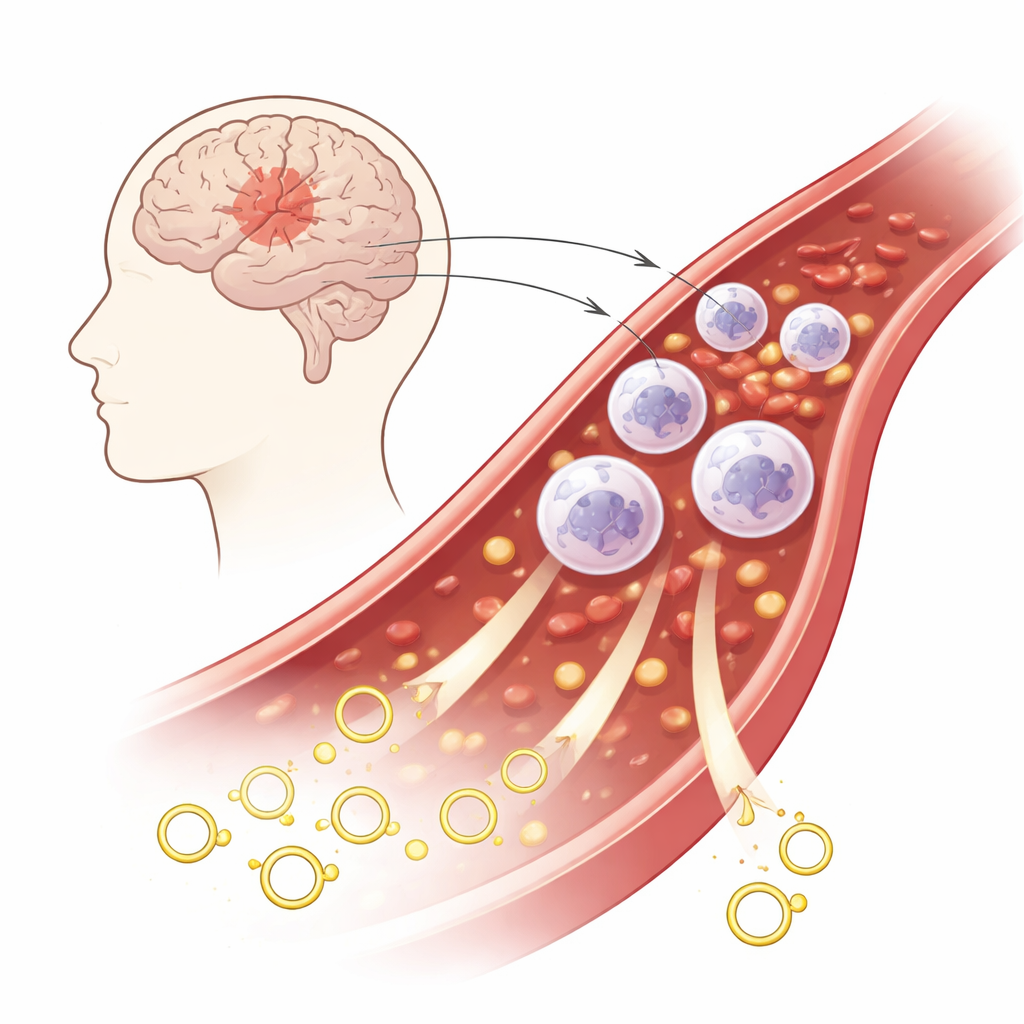
When someone shows possible signs of stroke, every minute counts. Doctors would love a simple blood test that could quickly confirm what is happening in the brain. Recently, a group of unusual genetic fragments called circular RNAs in the bloodstream were hailed as promising early warning signals released directly from injured brain cells. This study takes a closer look at those signals and finds that, in most cases, they probably come not from the brain at all, but from ordinary white blood cells, sharply limiting their usefulness as true stroke detectors.
Hunting for a brain signal in the blood
Current tools for spotting stroke in the emergency room rely heavily on symptoms and basic scans, and they are far from perfect. Many conditions can imitate stroke, leading to dangerous delays or wrong decisions. One idea has been to look for molecules that leak from damaged brain tissue into the blood, providing a direct fingerprint of brain injury. Proteins have been tried, but they are often present at very low levels and can be hard to measure quickly at the bedside. Circular RNAs, small loops of genetic material that are stable in blood, seemed like an attractive alternative because they resist decay and can be detected with very sensitive molecular methods.
The promise of circular RNAs in stroke
Two earlier studies had raised hopes by reporting 24 specific circular RNAs that appeared in the blood during stroke and were thought to be released from brain cells. One group found a circular RNA called circOGDH that increased in a mouse model of stroke and appeared higher in the blood of human stroke patients. Another group isolated tiny packages called exosomes from patients’ blood that were believed to come from brain cells, and inside these packages they found 23 additional circular RNAs that seemed able to distinguish stroke patients from healthy volunteers. Together, these reports suggested that circular RNAs could form the basis of a powerful, brain-derived blood test.
Checking where the signals really come from
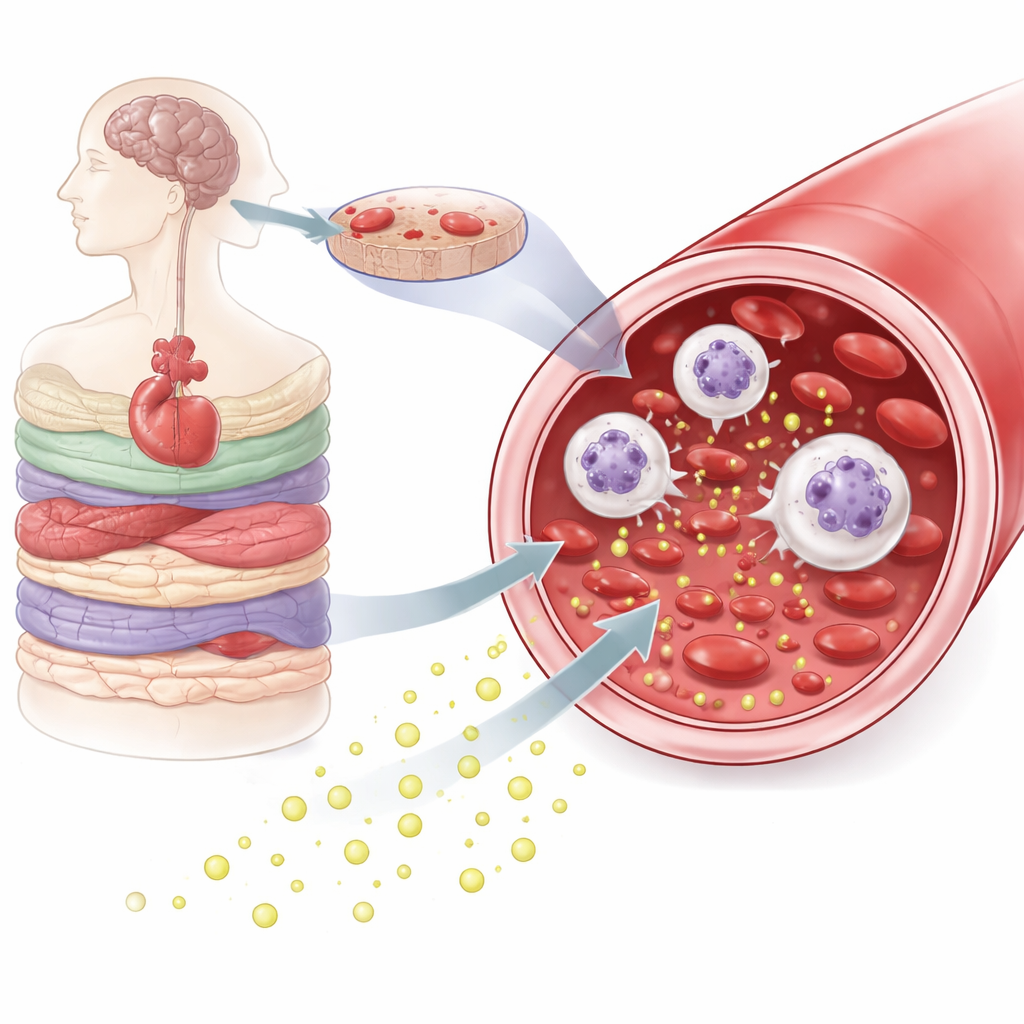
The new study asked a simple but crucial question: in the healthy body, which tissues normally make these 24 circular RNAs? The researchers tapped into a large public database containing RNA measurements from more than 30 types of human tissue, including brain, blood, muscle, gut, and others. For each circular RNA, they compared its average level in brain to its levels elsewhere and noted in which tissue it was highest. They also drew a comparison set of 500 random circular RNAs to see what typical body-wide patterns look like.
White blood cells steal the spotlight
The results were striking. Only one of the 24 candidate circular RNAs showed its highest expression in the brain. In contrast, 17 of them were most abundant in blood, where almost all RNA comes from white blood cells. When compared with the 500 random circular RNAs, which often reached their highest levels in brain and only rarely in blood, this pattern was extremely unlikely to be due to chance. Even circOGDH, the original standout, was most strongly expressed in skeletal muscle and several other body tissues, with only modest enrichment in brain. Because tissues like muscle and gut are much larger than the injured region in a typical stroke, normal turnover of their cells could easily flood the bloodstream with these molecules, drowning out any small signal from damaged brain.
Rethinking earlier stroke biomarker claims
The findings also cast doubt on how the earlier exosome study separated brain material from blood. The proteins used as hooks to pull out supposedly brain-derived exosomes are now known to be present on several types of blood cells as well. Combined with the new expression data, this strongly suggests that most of the circular RNAs measured in those experiments came from white blood cells or their debris, not from neurons or other brain cells. The modest differences in circular RNA levels between stroke patients and healthy controls reported earlier are likely explained by the well-known surge in certain white blood cells that occurs after stroke, rather than by direct release from injured brain tissue.
What this means for future stroke blood tests
For people hoping for a rapid, brain-specific blood test for stroke, this study is a cautionary tale. It shows that many molecules that rise in the blood during stroke may actually be indirect signals of the body’s immune response rather than direct messengers from the brain. To build reliable tests, researchers will need to focus on markers that are truly concentrated in brain tissue and carefully rule out contributions from other organs and from white blood cells. Circular RNAs may still hold promise, but they will require more rigorous search strategies and stricter proof of brain origin before they can safely guide life-or-death decisions in the emergency room.
Citation: O’Connell, G.C., Williams, K., Boyette, R.A. et al. Most purported brain-released plasma circular RNAs detected in stroke likely originate from white blood cells. Sci Rep 16, 11450 (2026). https://doi.org/10.1038/s41598-026-41061-w
Keywords: stroke biomarkers, circular RNA, brain injury detection, white blood cells, blood tests