Clear Sky Science · en
Leisure time management mediates the relationship between job search anxiety and career planning
Why Free Time Matters for Your Future Job
Finding a first job after university can feel like stepping into a storm of uncertainty. This study looks at how one everyday habit—what students do with their free time—can soften that storm. Focusing on students in sports science programs, the researchers asked whether good leisure time management could ease worries about finding a job and, at the same time, help students plan their careers more clearly.
Students Caught Between Worry and Hope
Today’s graduates face crowded job markets, unstable work conditions, and intense competition. For students in sports sciences, these pressures are often sharper: job openings are fewer, roles are less clearly defined, and private-sector work can be demanding. Many of these students feel strong job search anxiety—a blend of worry, fear of unemployment, and doubts about their own skills. At the same time, they are expected to set long-term career goals and take steps toward them. This tension between anxiety and planning is the core problem the study set out to understand.
Looking at Free Time as a Hidden Resource
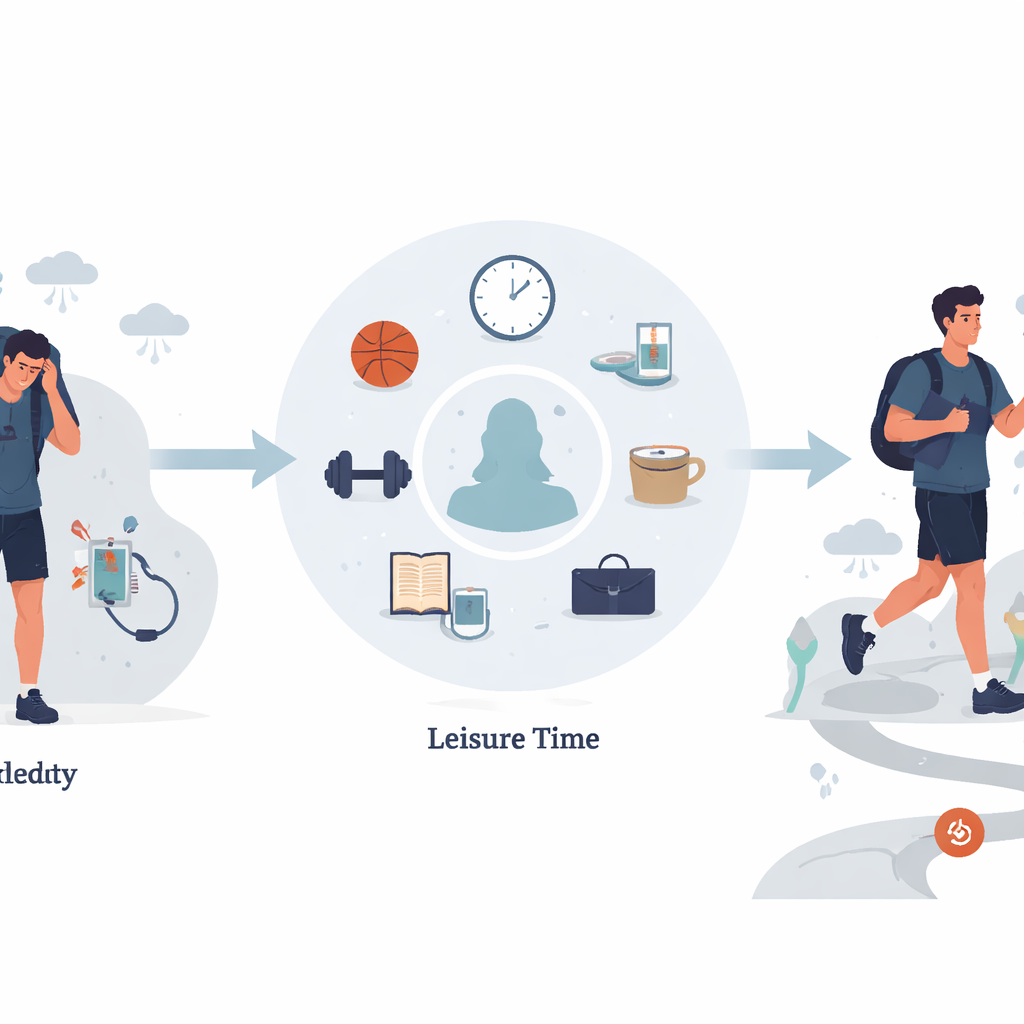
The researchers focused on leisure time management—how deliberately and purposefully students use their non‑study, non‑work hours. Rather than viewing free time as mere “leftovers” in the day, the study treats it as a personal resource that can build energy, skills, and resilience. Well-managed leisure time might include regular sports, hobbies, short courses, internships, or simply structured rest. Earlier research has linked such habits to better mental health, stronger study performance, and more active career preparation. The authors wondered whether this same resource could stand between job search anxiety and career planning, changing how one influences the other.
How the Study Was Carried Out
The team surveyed 390 students from a Turkish faculty of sports sciences, using well‑established questionnaires. One scale measured how anxious students felt about finding a job, another assessed how well they manage their leisure time, and a third captured how clearly and actively they plan their careers. Statistical tools allowed the researchers not only to see how each pair of factors was related, but also to test whether leisure time management acted as a “bridge” between job search anxiety and career planning. In other words, they examined whether anxiety affects how students handle their free time, which then shapes how they think about their future work life.
What the Numbers Revealed
The results showed three key connections. First, students who managed their leisure time better also tended to have stronger career plans; this link was moderately strong. Second, students with higher job search anxiety reported slightly more developed career planning, suggesting that a certain level of worry may push students to think about their future. Third, job search anxiety and leisure time management were also weakly but positively related. The most important finding, however, was that leisure time management partially mediated the relationship between anxiety and career planning. In practical terms, anxiety still influenced career planning directly, but part of its effect flowed through how students organized their free time.

What This Means for Students and Educators
For a non‑specialist audience, the takeaway is clear: how students use their free hours can change the way job worries shape their future. Anxiety about employment does not disappear, but students who turn their free time into a mix of rest, skill building, and career‑related activities seem better able to channel that worry into constructive planning. The study suggests that universities and counselors should treat leisure time management as more than a lifestyle issue; it is a practical tool for helping students, especially in competitive fields like sports sciences, to cope with job search stress and to take more confident, organized steps toward their chosen careers.
Citation: Yilmaz, S.H., Dokuzoğlu, G., Çevik, A. et al. Leisure time management mediates the relationship between job search anxiety and career planning. Sci Rep 16, 11145 (2026). https://doi.org/10.1038/s41598-026-41054-9
Keywords: job search anxiety, career planning, leisure time management, university students, sports sciences