Clear Sky Science · en
Assessing the hygienic disposal of patient stools among health workers at the Sunyani teaching hospital, Ghana
Why this everyday hospital task matters
When we think about hospital safety, we often picture high-tech equipment and life-saving drugs, not the simple act of throwing things away. Yet how nurses, doctors, and cleaners get rid of patient stools can make the difference between stopping dangerous infections at the door or quietly spreading them to staff, other patients, and the nearby community. This study from Sunyani Teaching Hospital in Ghana looks closely at how well health workers understand and follow safe stool disposal practices, and what helps or hinders them from doing the right thing every time.
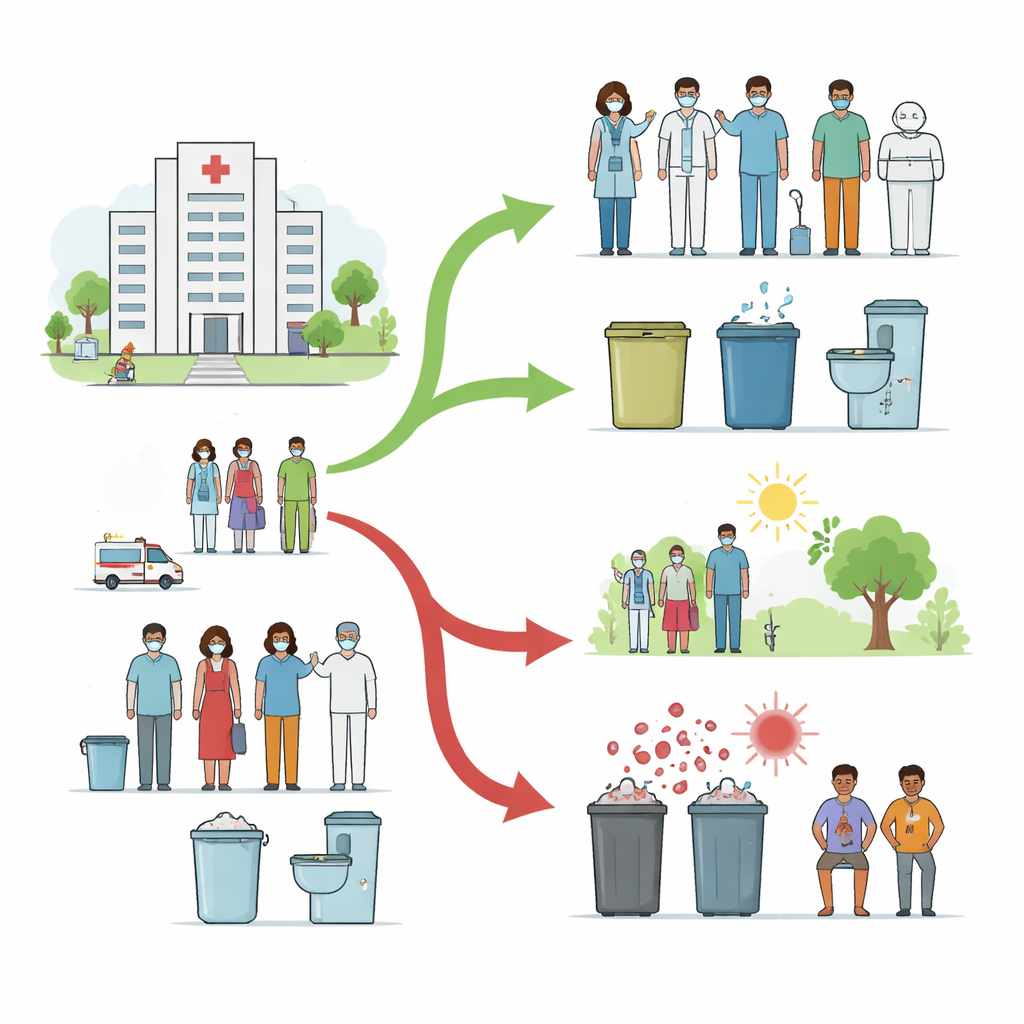
Hidden risks in hospital waste
Patient stools can carry a cocktail of germs, including bacteria, viruses, and parasites that cause illnesses such as diarrhoea, cholera, and typhoid. If waste is not handled and disposed of carefully, these germs can travel through water, surfaces, or unwashed hands, triggering hospital outbreaks and even community-wide disease. The World Health Organization estimates that a small but important share of hospital waste is infectious, and managing it safely has become a pressing public health concern, especially in low- and middle-income countries where resources are limited and patient numbers are rising.
A closer look at one busy Ghanaian hospital
The researchers focused on Sunyani Teaching Hospital, a large referral center in Ghana’s Bono Region that serves many districts and runs crowded medical, surgical, and children’s wards. They surveyed 315 health workers, including nurses, doctors, and janitorial staff who regularly handle patient care and waste. Each participant answered a structured questionnaire about their knowledge of the dangers of poor stool disposal, how often they followed good practices in their daily work, and what helped or got in the way of doing so. The questions were based on international infection-control guidelines and carefully tested to ensure they were clear and reliable.
What workers know versus what they do
The findings revealed a troubling gap between what health workers know and how they behave. More than half of the respondents showed low knowledge of how unsafe stool disposal can spread disease. Many struggled with basic questions, such as recognizing common infections linked to faecal contamination or the importance of thorough handwashing after contact. Only a tiny fraction reached a high knowledge score. Yet when it came to reported behaviour, most staff said they followed safe disposal routines at least some of the time. Overall, nearly four in five workers fell into a “moderate” adherence category, with only a small minority reporting poor practices and about one in five claiming consistently high adherence to protocols like using protective gear, sealing waste containers, and cleaning surfaces promptly.
Pressures and supports shaping daily practice
The study dug deeper to understand why practice often outpaced knowledge. Several factors stood out as strong predictors of better adherence. Staff who had received training, worked longer in the hospital, or had a sharper sense of their personal risk were more likely to follow safe procedures. Having enough gloves, containers, disinfectants, and dedicated disposal systems also made a clear difference: even willing and informed workers could not perform well without the right tools. At the same time, heavy workloads and time pressure pushed behaviour in the opposite direction, tempting staff to cut corners when wards were crowded and shifts were busy. Motivation and attitude—whether workers felt committed to safety and saw value in the rules—also played a key role.
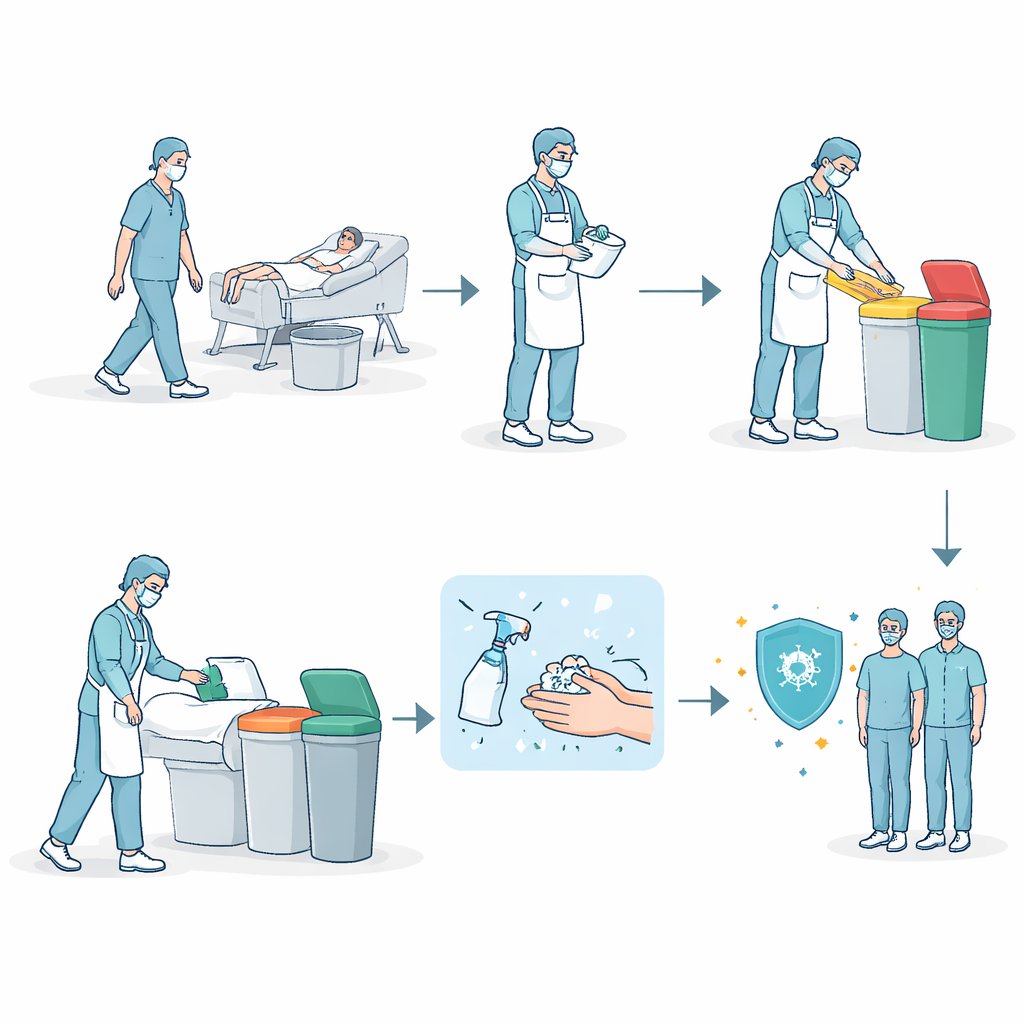
What these findings mean for safer care
For the lay reader, the message is both reassuring and cautionary. On the one hand, most staff at Sunyani Teaching Hospital are trying to handle patient stools safely, and institutional rules and resources are helping to keep practices at a moderate level. On the other hand, the study shows that many health workers still do not fully grasp the risks tied to this routine task, and that their behaviour can easily slip when training, supplies, or support are lacking. The authors conclude that regular education, steady provision of basic materials, and active supervision are essential to turn “moderate” performance into reliably safe care. In plain terms: when hospitals invest in teaching, tools, and teamwork around something as simple as stool disposal, they can quietly but powerfully cut down on infections and protect everyone who walks through their doors.
Citation: Barimah, A.J., Gyan, P., Boateng, S.O. et al. Assessing the hygienic disposal of patient stools among health workers at the Sunyani teaching hospital, Ghana. Sci Rep 16, 10347 (2026). https://doi.org/10.1038/s41598-026-40799-7
Keywords: hospital infection control, healthcare waste, stool disposal, Ghana hospitals, health worker training