Clear Sky Science · en
Goal-directed human factor experiment on the non-visual effect of luminous environment on indoor exercise
Why the Light Above Your Treadmill Matters
Most people think of gym lighting as a backdrop: bright enough to see the ball or the treadmill display, and not much more. This study argues that the color and brightness of those lights quietly shape how well you warm up, how hard you can push yourself, how quickly you tire, and how easily you unwind afterward. By tracking both body signals and mood while people played a simulated game of badminton, the researchers show that “smart” lighting can become a hidden coach, nudging us toward better, safer exercise.
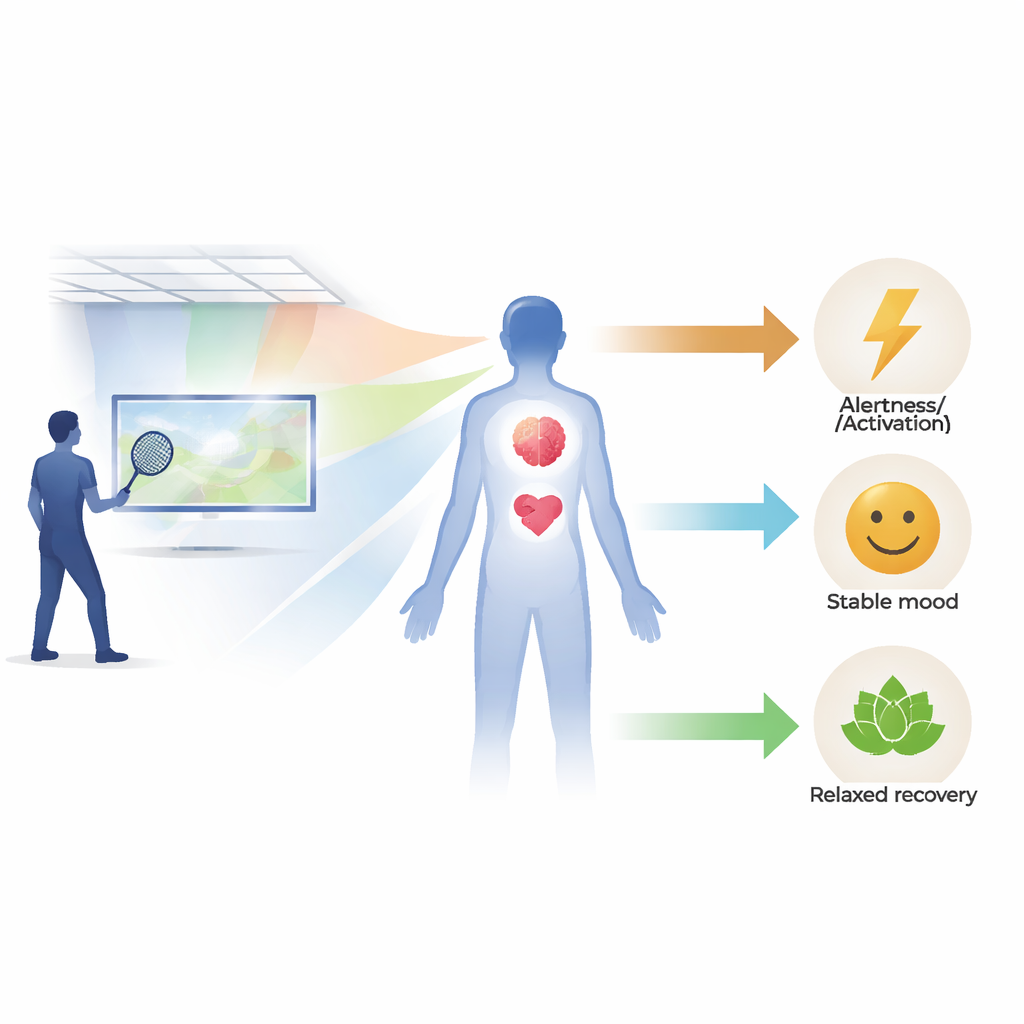
A Lab Gym Built from Screens and Sensors
To explore how light affects exercise without the chaos of a real sports hall, the team turned a darkened laboratory into a simple indoor court. A large screen displayed a motion-sensing badminton game that made volunteers swing, lunge, and step much like real play. Over one hour, 40 adults moved through six phases that mirror a typical workout: initial rest, warm-up, first exercise bout, short rest, second exercise bout, and final relaxation. Throughout, they wore wrist sensors to track heart rate and skin conductance (a marker that rises with effort, stress, and fatigue), and a cap to record brain activity. Before and after exercising, they also rated their mood and sleepiness using standard psychology questionnaires.
Five Kinds of Light, One Kind of Workout
The researchers tested five lighting “recipes” that combined different brightness levels with cooler or warmer light, similar to shifting from a cozy table lamp to a crisp midday sky. Brightness ranged from dim (about what you might find in a living room) to very bright (typical of sports facilities), while color temperature ranged from warm yellowish to cool bluish white. Importantly, the actual exercise routine, game, and room all stayed the same; only the overhead lighting changed. This allowed the team to see how light alone altered body signals such as heart rate and brain waves, as well as feelings of alertness, fatigue, and positivity.
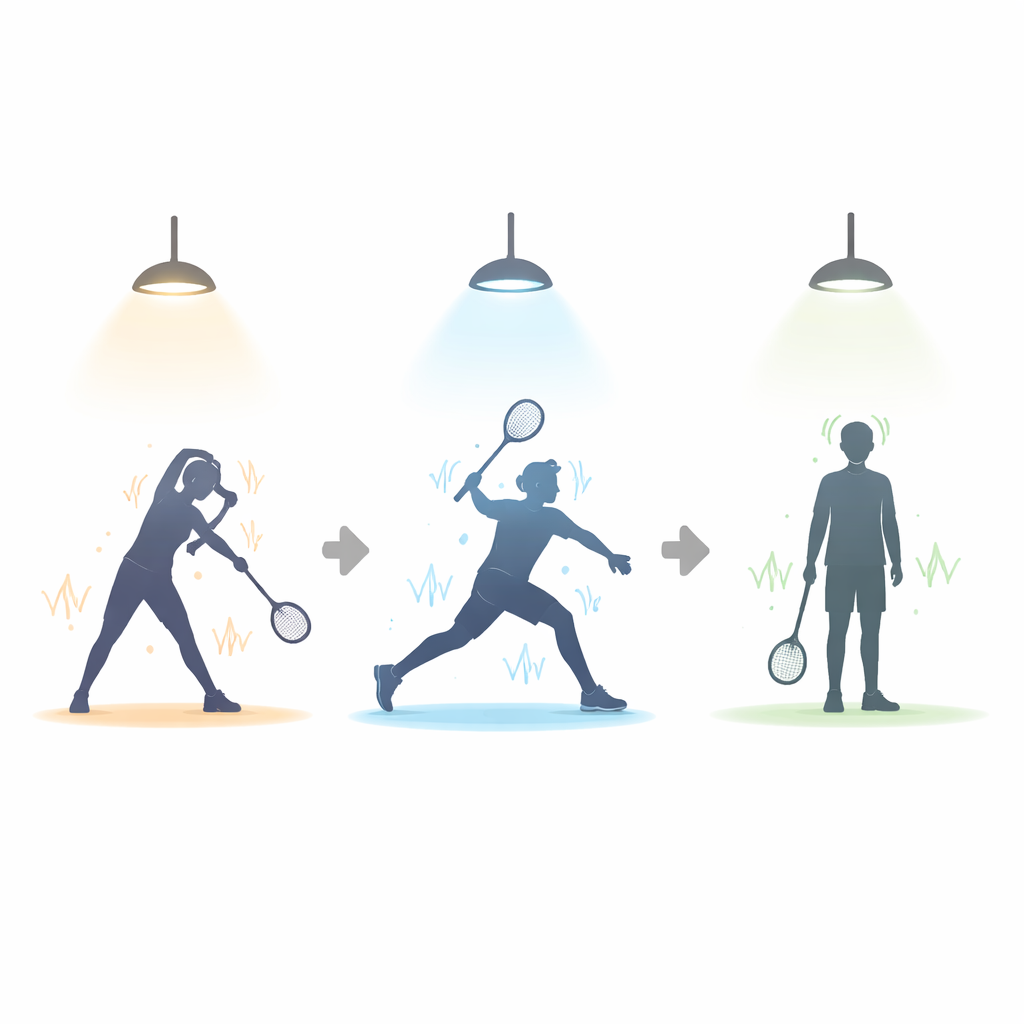
Bright, Cool Light for Getting Going and Staying Sharp
During warm-up, the dimmest, warmest setting left many people’s hearts beating too slowly to reach recommended preparation levels, and their brain activity suggested a lower state of alertness. In contrast, brighter, cooler lighting—similar to a clear outdoor morning—helped participants reach target heart rates more quickly and showed brain patterns linked to higher arousal and focus. During the main exercise bouts, these bright, cool settings also supported sustained alertness: brain waves shifted toward a more “switched-on” profile, self-reported sleepiness dropped, and positive feelings rose, especially under a moderately bright but distinctly cool white light. Skin conductance rose less steeply in these conditions, hinting at delayed fatigue and better endurance.
Softer Light for Winding Down
After exercise, the ideal lighting flipped. In the lower and medium brightness settings with warmer tones, people’s heart rates and brain waves drifted back toward their initial resting patterns more quickly. Under the most intense bright, cool light, the body seemed reluctant to fully relax within the same time window: alertness remained elevated and the brain’s “calm” signals were slower to recover. The authors suggest that cooler, brighter light is well suited to warming up and active play, while slightly dimmer, less cool lighting better supports the transition into rest and recovery.
What This Means for Everyday Gyms and Homes
The study concludes that lighting for exercise should not be one-size-fits-all: it should change with the phase of activity. For getting ready and working hard, brighter and cooler white light appears to boost alertness, mood, and performance. For stretching, cooling down, and relaxing, somewhat lower brightness with more neutral or slightly warm tones helps the body settle. Although the experiment used a simulated badminton game in a lab, the message travels well: if we treat light as part of the training plan rather than mere decoration, we can design gyms, studios, and home workout corners that quietly support healthier, more enjoyable movement.
Citation: Li, X., Zhao, W. & Bai, X. Goal-directed human factor experiment on the non-visual effect of luminous environment on indoor exercise. Sci Rep 16, 9996 (2026). https://doi.org/10.1038/s41598-026-40560-0
Keywords: indoor lighting, exercise performance, circadian health, sports environments, fitness mood