Clear Sky Science · en
Effect of cryogenic treatment on coated and uncoated carbide inserts during turning and facing of alloy steel using Taguchi method
Making Cutting Tools Last Longer
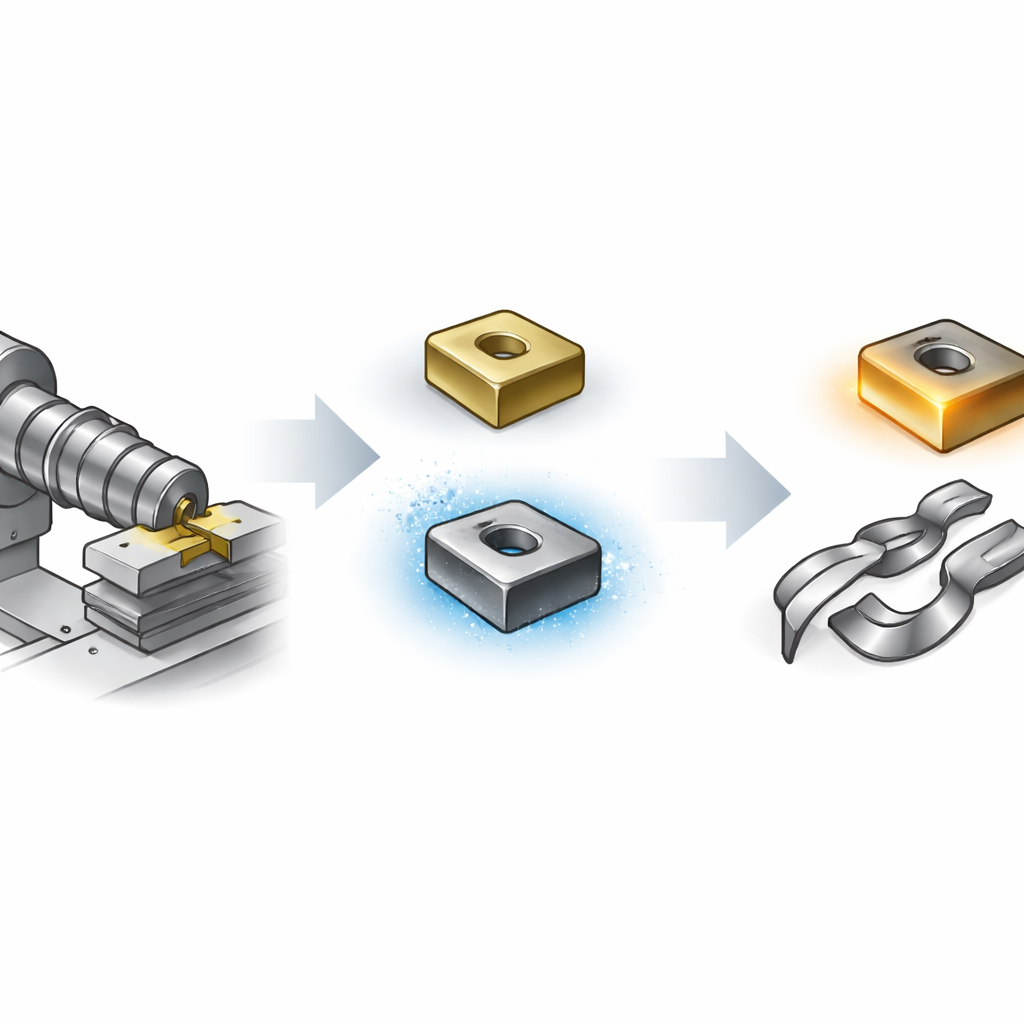
From car crankshafts to aircraft parts, modern machines depend on metal components that are difficult and expensive to shape. Every extra minute a cutting tool survives on the production line saves money and reduces waste. This study explores a simple but powerful way to make common metal-cutting inserts last much longer by chilling them to extremely low temperatures and gently reheating them—a treatment that could help factories cut costs while improving reliability.
Why Cooling Tools to Extreme Cold Matters
The researchers focused on EN24 alloy steel, a widely used material for highly stressed parts such as shafts and gears. These parts are often machined on lathes using small replaceable cutting inserts made of hard carbide, sometimes protected by thin ceramic-like coatings. In industry, coated carbide inserts are already popular because they resist wear better than uncoated tools. The question here was whether putting these coated inserts through a deep-freezing step, known as cryogenic treatment, followed by a moderate reheating step (tempering), could further boost their toughness and lifetime—especially in demanding on‑off cutting conditions that tend to chip tools.
How the Team Tested the Tools
The team used two types of machining tasks. In continuous turning, the insert cuts the spinning steel bar without interruption, simulating long, steady cuts. In intermittent facing, the tool repeatedly enters and leaves contact with several steel pieces, creating an impact-like loading that is much harsher on the cutting edge. Inserts were either left as they came from the factory, or cooled down to about −186 °C for 24 hours and then brought back slowly to room temperature. Some of these cryogenically treated inserts were additionally tempered at 200 °C for 150 minutes. The researchers varied cutting speed and feed rate according to a structured Taguchi design, which allowed them to separate the influence of machine settings, tool coating, and treatment on tool life.
What Microscopes Revealed Inside the Inserts
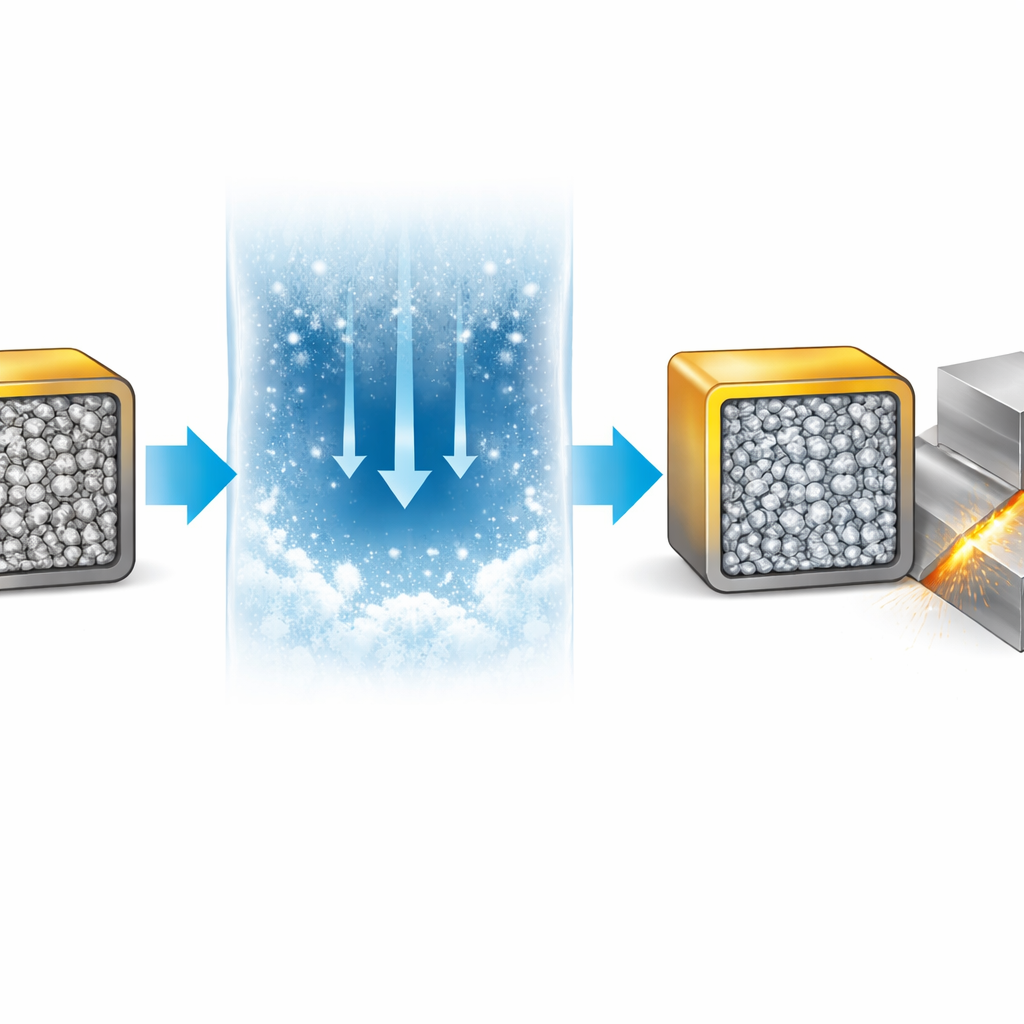
Scanning electron microscope images showed that cryogenically treated carbide inserts developed a more uniform and refined grain structure compared with untreated ones. The coating itself formed a sandwich of layers: a thicker inner stack of titanium‑based compounds topped by a thinner layer containing aluminum oxide and titanium carbide. The total coating thickness was about 18 micrometers. While some pores and small regions of peeling were seen between the inner and outer layers, overall adhesion and microstructure were improved in the deeply cooled tools. This finer, more even internal structure helps distribute stresses better, making the inserts less likely to chip under sudden loads.
How Much Longer the Treated Tools Survived
When the inserts were put to work, the benefits were striking. In continuous turning, cryogenically treated coated inserts lasted about 43% longer than untreated coated inserts for the same amount of wear. When tempering was added after deep cooling, tool life increased by roughly 47% under the same conditions. In the tougher intermittent facing tests, the gains were even larger: cryogenically treated coated inserts lived about two‑thirds longer than untreated ones, and deep cooling followed by tempering increased life by more than 70%. Measurements showed that cutting speed and feed rate also mattered, but the treatment of the insert was one of the most important contributors to performance in both steady and intermittent cutting.
What This Means for Real‑World Manufacturing
For a non‑specialist, the key takeaway is that treating standard coated carbide inserts with an extra deep‑freeze and tempering step can substantially extend how long they last and how well they resist chipping, without changing their basic hardness. In practical terms, this means fewer tool changes, more consistent surface quality, and potentially lower production costs when machining tough steels like EN24, especially in operations where the tool repeatedly bites in and out of the work. The study suggests that deep cryogenic treatment followed by tempering is a promising, relatively simple upgrade for cutting tools used in demanding, interrupted machining jobs.
Citation: Chand, R.P., Shekar, A.C., Rao, C.R.P. et al. Effect of cryogenic treatment on coated and uncoated carbide inserts during turning and facing of alloy steel using Taguchi method. Sci Rep 16, 9962 (2026). https://doi.org/10.1038/s41598-026-40235-w
Keywords: cryogenic treatment, carbide cutting inserts, tool wear, alloy steel machining, Taguchi optimization