Clear Sky Science · en
Long-COVID: assessment of circulating markers suggests no cerebral neuronal damage, neuroinflammation or systemic inflammation–a controlled study
Why this matters for people living with long-term COVID symptoms
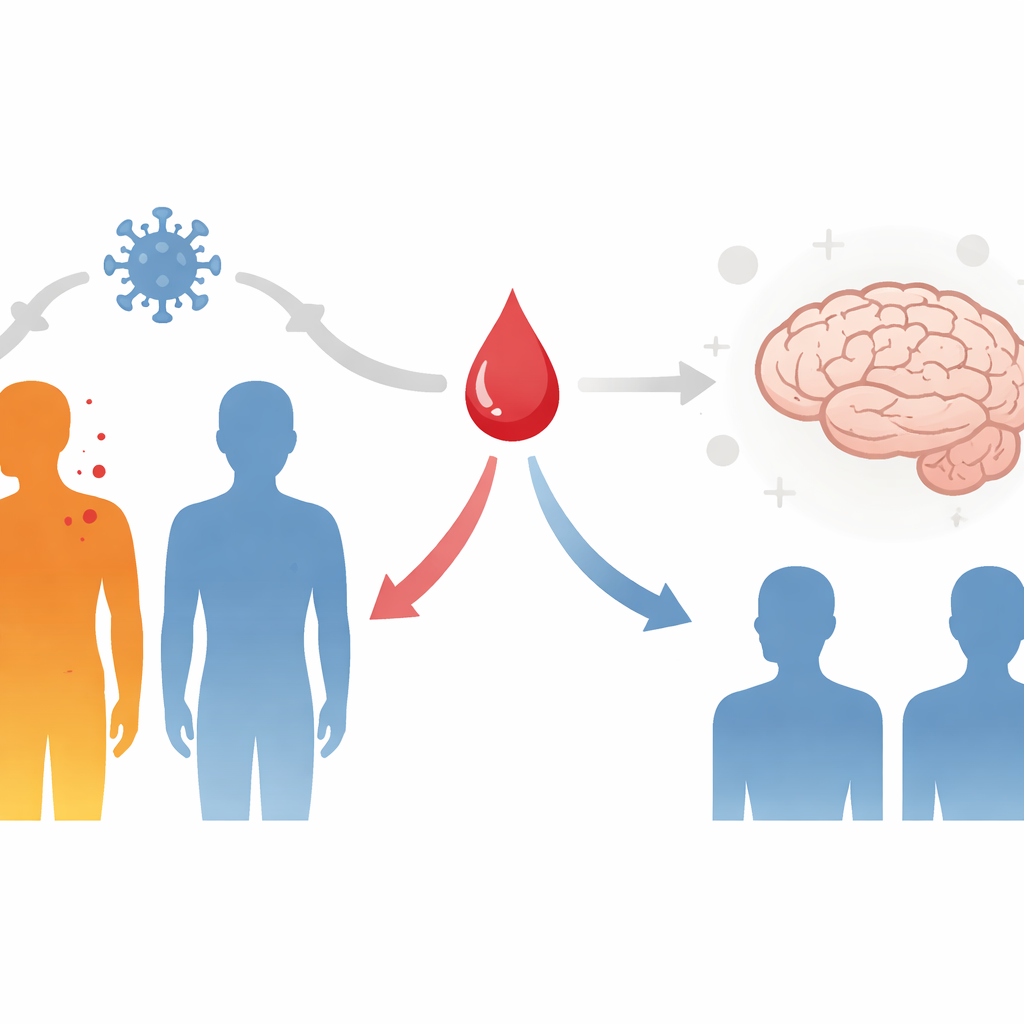
Many people who recover from COVID-19 continue to struggle with fatigue, memory problems, and "brain fog" for months or even years. A key worry has been that these symptoms might mean the virus has quietly damaged the brain or triggered ongoing inflammation that could cause lasting harm. This study set out to test that fear directly by looking for subtle blood signs of brain injury and inflammation in people with long-COVID compared with people who fully recovered.
Who was studied and what was measured
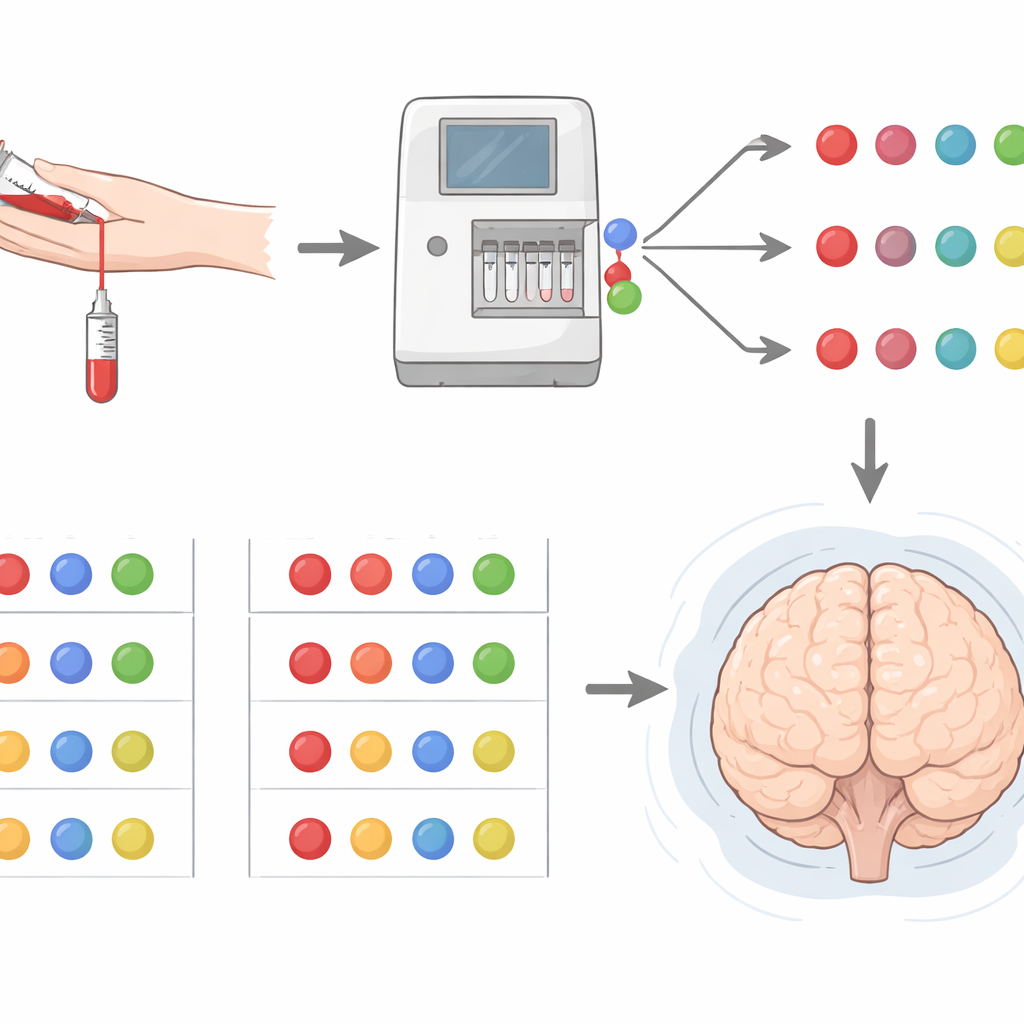
The researchers followed 96 people in Norway who had all had COVID-19, about 69 weeks—more than a year—after their infection. Half of them still had long-lasting symptoms that met standard criteria for long-COVID; the other half felt back to normal and served as comparison subjects. To avoid confusion from other illnesses, anyone with autoimmune or chronic inflammatory diseases, cancer, or other conditions that cause fatigue was excluded. From blood samples, the team measured markers linked to brain cell damage and brain support cells, as well as classic signs of inflammation in the body. They used both routine hospital tests and an extremely sensitive new technology capable of detecting very low levels of these markers.
Looking for hidden brain injury
Two of the main markers, called neurofilament light and GFAP, are widely used to signal damage or inflammation in the brain: they rise when nerve cells or key support cells are injured. Earlier work during or soon after COVID-19 infections had shown increases in these markers in some patients, raising concern that the virus might leave a lasting scar in the nervous system. In this study, however, more than a year after infection, levels of these brain-related markers were essentially the same in people with long-COVID as in those who felt fully recovered. This suggests that the common long-COVID complaints of brain fog and trouble concentrating are unlikely to be caused by ongoing structural damage to brain cells.
Checking the body’s immune alarm system
The team also searched for evidence that the immune system remained turned on long after the virus had gone. They examined C-reactive protein and several signaling molecules often elevated in infections and inflammatory diseases. Standard laboratory tests showed no meaningful differences between the long-COVID group and the recovered group. When they applied the ultrasensitive method, some markers appeared slightly higher at first glance in people with long-COVID. But once the researchers corrected the statistics for the many different measurements being made—a step that reduces the chance of false positives—those apparent differences no longer met the threshold for solid evidence. In other words, if there is ongoing inflammation, it is too small or inconsistent to be picked up confidently in this study.
What the patterns suggest about long-COVID
Importantly, none of the measured blood markers were linked to how severe people’s symptoms were; those who felt especially unwell did not show higher levels than others. Together, the results argue against the idea that persistent long-COVID symptoms are driven by clear-cut brain injury or a strong, lingering inflammatory process that shows up in the blood. Instead, the authors suggest that other explanations may be more likely. These include very low-level immune activity below current detection limits, changes in how brain networks function or use energy, or shifts in how the brain processes internal signals and discomfort—mechanisms that can produce real suffering without ongoing tissue damage.
What this means for patients and future research
For people living with long-COVID, this study offers a cautiously reassuring message: more than a year after infection, careful blood testing found no clear signs of continuing brain damage or major inflammation, even among those who still felt ill. That does not mean their symptoms are "all in their head" or unimportant; rather, it points scientists toward more subtle biological and functional changes that current blood tests cannot easily capture. The authors emphasize that their results are preliminary and based on a modest-sized group, so larger, longer-term studies using multiple kinds of measurements—including brain imaging and detailed cognitive testing—will be needed. Still, the findings challenge simple inflammation-based explanations and encourage a broader search for the roots of long-COVID and better ways to treat it.
Citation: Omdal, R., Lenning, O.B., Jonsson, G. et al. Long-COVID: assessment of circulating markers suggests no cerebral neuronal damage, neuroinflammation or systemic inflammation–a controlled study. Sci Rep 16, 11856 (2026). https://doi.org/10.1038/s41598-026-40142-0
Keywords: long COVID, brain health, inflammation, biomarkers, post-viral fatigue