Clear Sky Science · en
A switching-based deep learning framework for personalized and adaptive E-commerce recommendations
Why smarter online suggestions matter
Every time you shop online, behind the scenes an algorithm is guessing what you might want to see next. Yet people use shopping sites in very different ways: some just arrived, some browse casually, and others are devoted regulars. This paper introduces a new recommendation framework that adapts to these differences in real time, aiming to make product suggestions more accurate, fair, and useful for everyone—from first‑time visitors to heavy buyers.
Three kinds of shoppers, not one
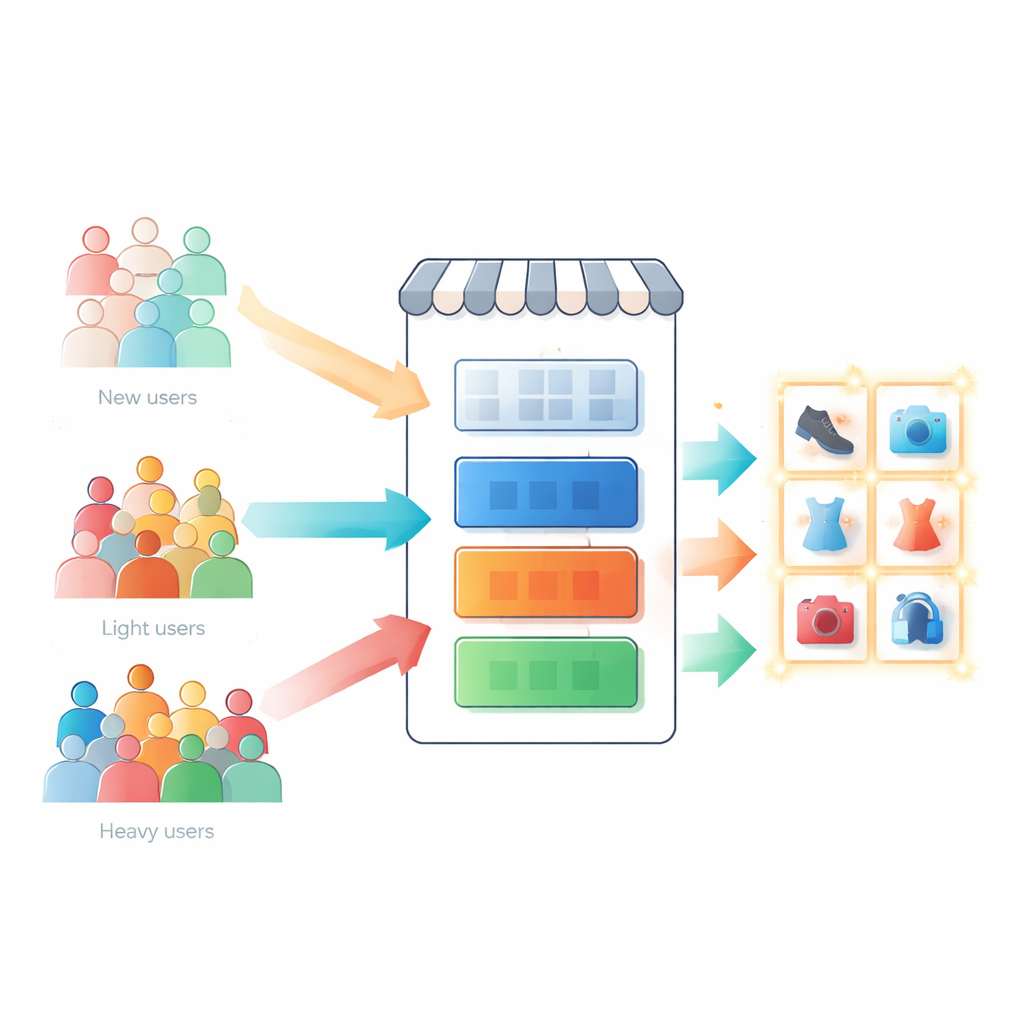
The authors start by arguing that treating all users the same is a recipe for weak recommendations. They divide shoppers into three broad groups based on how much they interact with the site. “Newbies” have almost no history, maybe just a few searches or clicks. “Light users” have made a handful of visits or purchases. “Heavy users” have a long trail of views, clicks, cart additions, ratings, and orders. Each group creates different kinds and amounts of data, so a one‑size‑fits‑all algorithm struggles to serve them equally well.
Helping new visitors with pictures and descriptions
For brand‑new users, the usual trick—looking for past patterns in their behavior—simply does not work because no such history exists. The proposed system tackles this “cold start” problem by relying on the products themselves. It uses a neural network that learns from both product images and their written details, like title, brand, category, and price. These different bits of information are combined into a shared numerical representation, so that products with similar looks and descriptions end up close together in this abstract space. When a new visitor types a simple query or clicks a few items, the system maps those actions into the same space and returns nearby products, effectively guessing taste from appearance and text rather than from long‑term habits.
Serving casual shoppers with lightweight matching
Light users provide some direct clues—such as a small number of views or past purchases—but still not enough for very complex methods. For this group, the framework uses a streamlined “two‑tower” model. One tower summarizes who the user is and what they have done so far; the other summarizes product features. During training, the system learns to pull the user’s representation closer to items they interacted with and push it away from others. This design allows very fast scanning through large catalogs to pick a shortlist of promising items. Tests show that, after training, the chance that the correct item appears in the top 10 suggestions roughly doubles, and ranking quality improves substantially compared to an untrained version.
Powering heavy users with many signals at once
Heavy users leave rich trails: what they view, what they buy, how they rate items, and more. Instead of focusing on just one of these behaviors, the authors build a multi‑task model that learns to handle several goals at once. A shared core represents both users and products; on top of this, one branch predicts ratings while another predicts which items a user is likely to choose next. Training both tasks together lets abundant but noisy signals like product views strengthen learning for rarer but more informative signals like ratings. Experiments show that models tuned only for ratings or only for retrieval perform well on their single goal but poorly on the other, while the joint model strikes a better overall balance.
Switching the right tool on at the right time
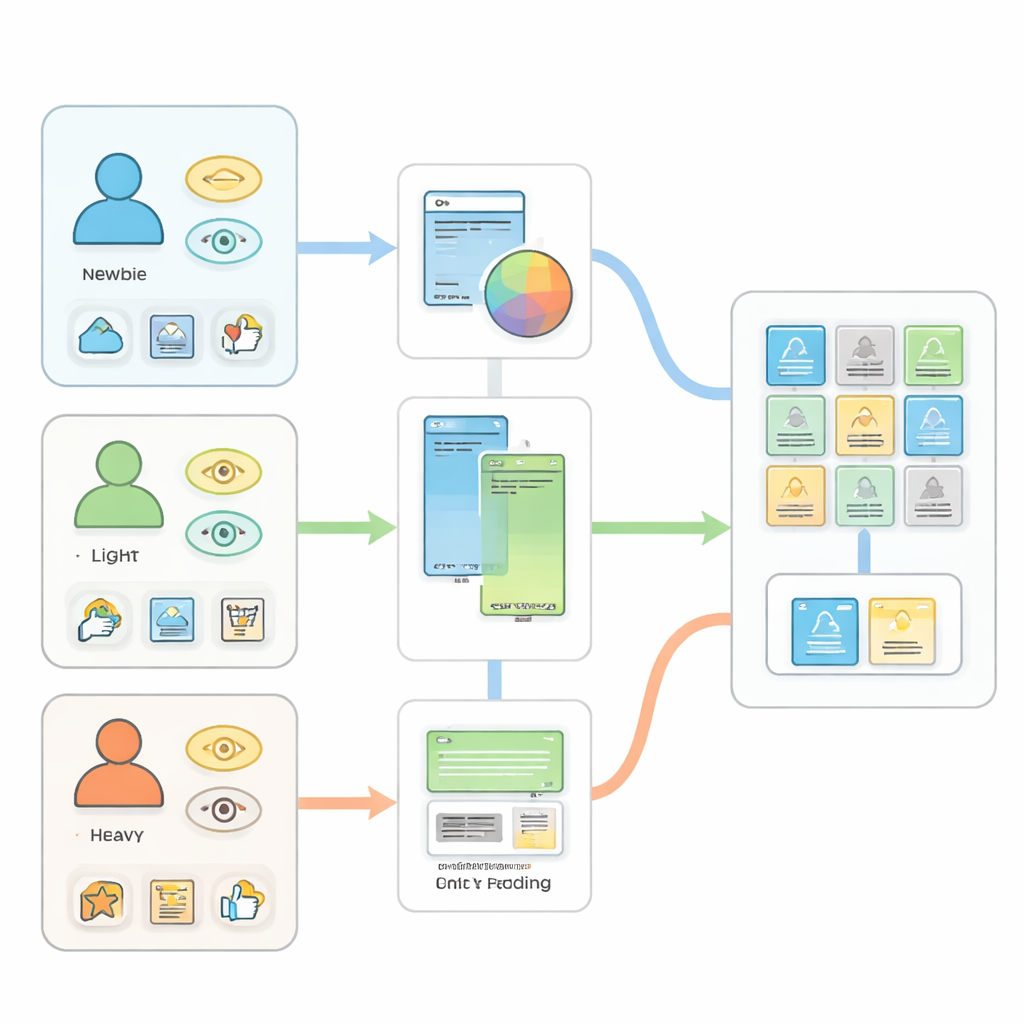
The key idea tying these parts together is a switching mechanism that chooses the right model based on each person’s current engagement level. As someone moves from new visitor to casual shopper to frequent customer, the system tracks changes in activity and automatically routes their data through the most suitable module. Across all three groups, this adaptive design cuts prediction errors, boosts hit rates, and makes better use of the many weak signals modern platforms collect. In everyday terms, it means your “Recommended for you” list can stay relevant whether you just arrived or have been shopping on the site for years, without one group’s needs overshadowing another’s.
Citation: Saini, K., Singh, A., Diwakar, M. et al. A switching-based deep learning framework for personalized and adaptive E-commerce recommendations. Sci Rep 16, 10382 (2026). https://doi.org/10.1038/s41598-026-40024-5
Keywords: e-commerce recommendation, personalized shopping, deep learning, user behavior, recommender systems