Clear Sky Science · en
Study on establishment of cardiovascular interventional disease database and prediction of postoperative mortality risk
Why this matters for patients and families
Cardiovascular procedures can save lives, but they also carry real risk, especially for older and sicker patients. One of the biggest questions after an intervention is, “What are the chances I or my loved one might die in the months after surgery?” This study shows how carefully organized hospital data and a modern artificial intelligence (AI) model can help doctors estimate that risk more accurately, so they can watch vulnerable patients more closely and step in earlier when trouble is brewing.
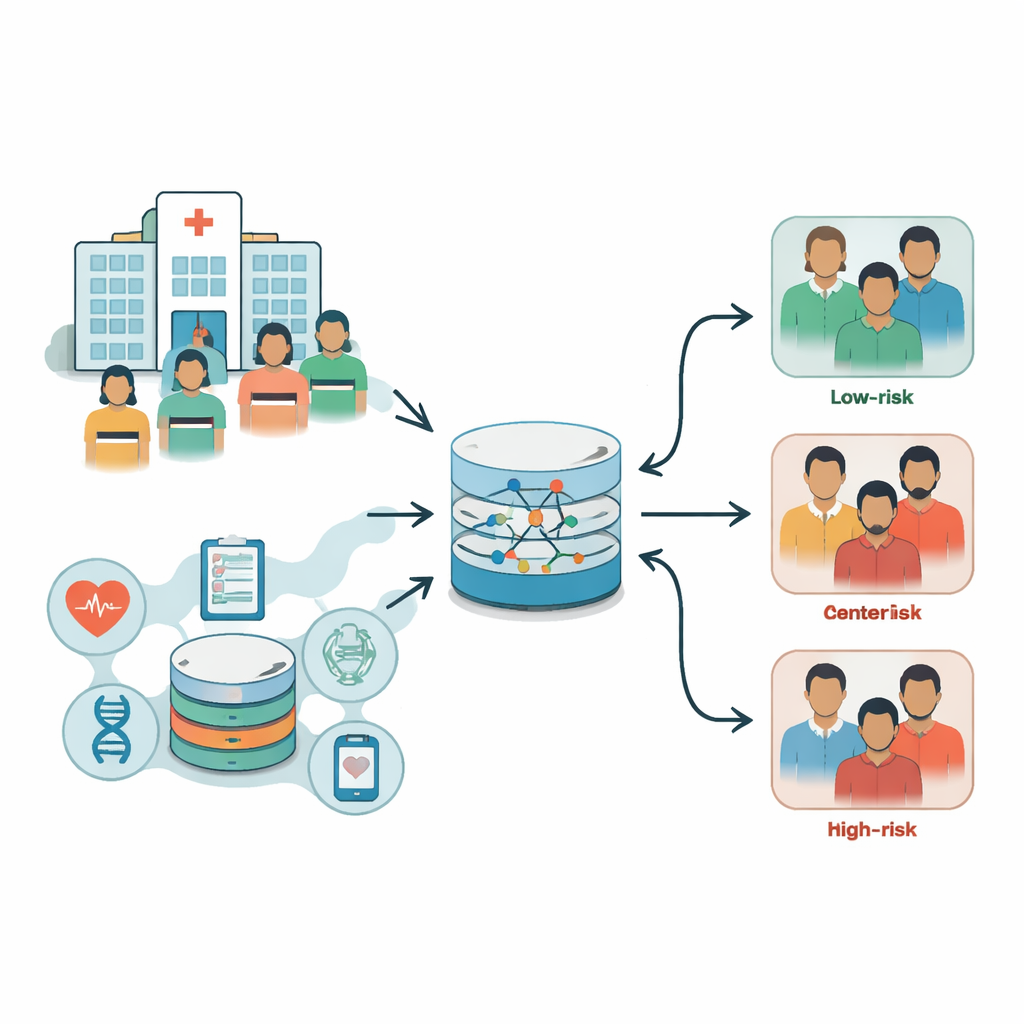
From scattered records to a complete patient story
Traditionally, information about heart patients has been scattered across many hospital systems—lab reports in one place, imaging in another, and follow-up notes somewhere else. Much of it is written in free text and not standardized, making it hard for computers and even doctors to see the full picture. The researchers tackled this by building a dedicated database just for cardiovascular interventions in a large hospital in Zhejiang Province, China. Over one year, they collected detailed, structured data from 728 patients who underwent minimally invasive heart procedures, eventually focusing on 638 cases with complete information from admission through six months after surgery. This “full-cycle” view captures who the patients are, what happens before and during the procedure, and how they recover afterward.
What goes into the heart-risk database
The database pulls information from multiple hospital systems, such as electronic medical records, lab systems, imaging platforms, and follow-up clinics. The team grouped the data into four main blocks: basic patient details and medical history; tests and scans done before surgery; what actually occurred during the procedure; and follow-up indicators like vital signs, blood tests, and daily living ability scores. They then cleaned the data—removing fields with too many missing values, filling small gaps sensibly, and converting text categories (like smoking or not, bleeding or not) into numeric codes that computers can analyze. They also summarized multiple existing illnesses into a single comorbidity score, making it easier to reflect each patient’s overall disease burden.
Teaching an AI model to see warning signs early
With the data in order, the researchers asked a focused question: based on all this information, can we predict who will die within six months of the procedure? Only 41 of the 638 patients died in that window, which makes the prediction problem especially tricky—there are far more survivors than deaths, and many models tend to overlook the rare but crucial high-risk cases. The team first used a feature-selection method to pick 30 of the most informative variables across the full patient journey. These included factors such as age, body mass index, comorbidity burden, certain blood test results, operation details like how long instruments stayed in place, and follow-up measures such as kidney and liver function and daily living ability.
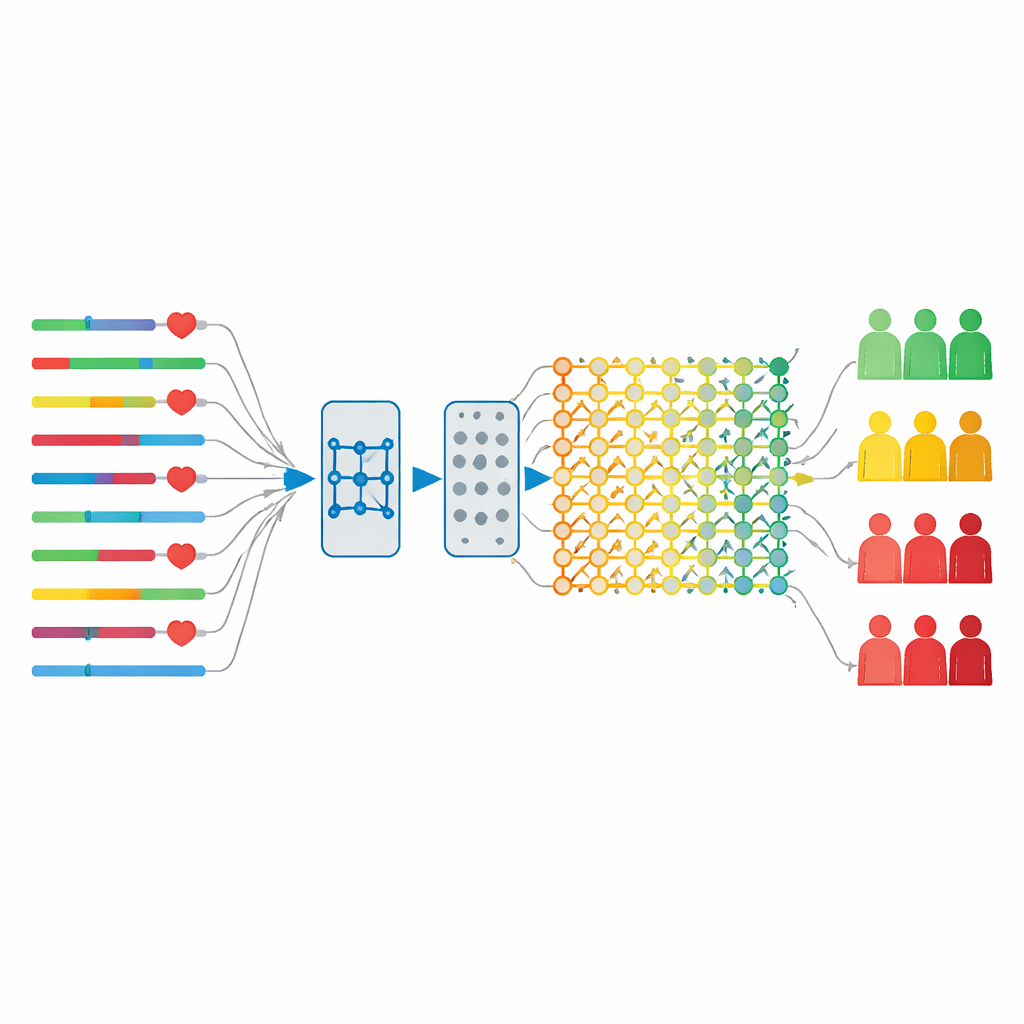
A hybrid AI engine built for speed and accuracy
To analyze this time-based data, the researchers designed a hybrid model that combines two AI techniques. The first, known as a long short-term memory network, is good at tracing patterns across time—such as how lab values change before and after surgery—but can become slow and prone to overfitting if used alone. The second, called a broad learning system, quickly builds connections across features without the heavy weight-tuning typical of deep networks. In their design, patient life-cycle data first passes through the time-aware part of the model, then through a regularizing step to reduce overfitting, and finally into the broad learning layer that rapidly computes the final prediction. This structure keeps the strengths of deep learning while trimming its weaknesses.
What the results mean for real-world care
When they compared their hybrid model against three common neural-network approaches, the new design clearly performed best. It correctly classified patients about 87% of the time, and, importantly, it identified more than 93% of those who actually died within six months—a key advantage when the goal is to not miss high-risk individuals. In everyday terms, this means that by organizing hospital data into a dedicated heart-intervention database and running it through a tailored AI model, doctors can obtain a more reliable early warning about which patients need extra attention after their procedure. While the study comes from a single hospital and still needs to be tested in other centers, it points toward a future where smarter data use and specialized prediction tools help make heart interventions safer and recovery more secure.
Citation: Qi, P., Hu, C., Li, Y. et al. Study on establishment of cardiovascular interventional disease database and prediction of postoperative mortality risk. Sci Rep 16, 12493 (2026). https://doi.org/10.1038/s41598-026-39788-7
Keywords: cardiovascular intervention, postoperative risk, mortality prediction, medical databases, artificial intelligence in healthcare