Clear Sky Science · en
Spatiotemporal patterns and typological differences in the development-protection nexus of resource-based cities in China
Why These Mining Cities Matter to Everyday Life
Across China, hundreds of cities have grown rich by digging up coal, oil, metals, and timber. These places power factories, heat homes, and feed global supply chains—but they also carry heavy environmental scars. This study looks at how such "resource-based cities" are changing their use of land: where they build, what they protect, and how that balance affects both prosperity and pollution. Understanding these patterns offers clues for any region trying to move from boom-and-bust extraction toward cleaner, more resilient growth.
Measuring the Balance Between Growth and Nature
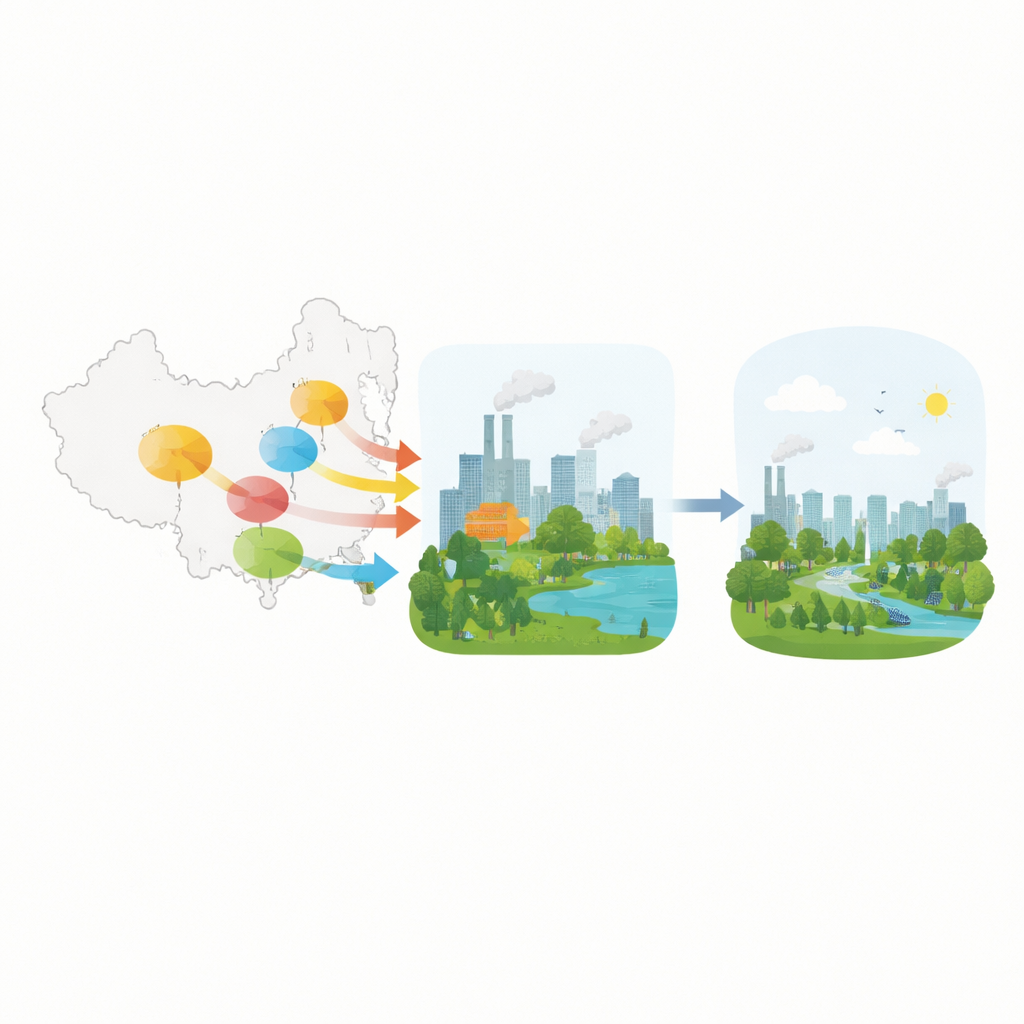
The researchers created a scorecard to track how well 110 resource-based cities manage both development and protection over 2005–2020. On the development side, they looked at factors such as the spread of built-up land, road density, population growth, and economic indicators. On the protection side, they included forest and wetland area, greening inside cities, waste and sewage treatment, and how efficiently cities use energy, water, and land. By combining 22 such measures into a single index, they could see not just who was growing fast, but who was doing so while caring for their environment and using resources more wisely.
Growth Still Outruns Protection
Overall, the combined score for development and protection climbed steadily, rising by nearly 3 percent per year on average. Yet the gap between the two halves of the scorecard was clear: construction and economic activity advanced much faster than pollution control and ecosystem care. This meant that, even as services like waste treatment improved, many cities still leaned heavily on intensive land use and resource extraction. When the COVID-19 pandemic hit in 2020, the development side of the index dropped sharply, exposing how vulnerable some local economies remain when they depend on old-style, resource-hungry growth.
Different City Paths, Different Outcomes
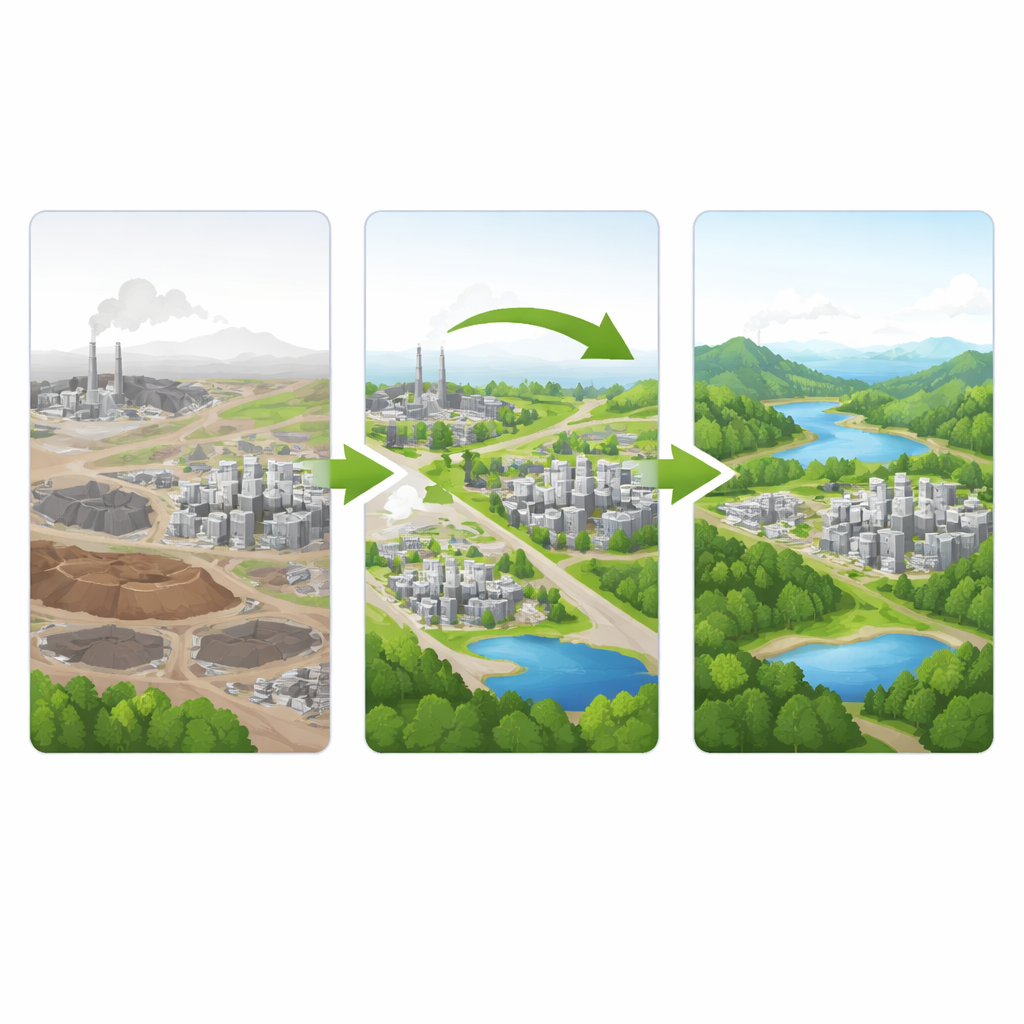
Not all resource-based cities followed the same path. Places further along in their transition—so‑called regenerative cities that have already begun to shift away from raw extraction—scored highest on the combined index. Growing cities, still in the early expansion phase, scored lowest but were improving fastest. Cities built on non-metallic resources such as limestone tended to perform best, managing relatively strong economies alongside better protection. Coal and oil cities, by contrast, showed high development but weak environmental performance, reflecting their heavy pollution and rigid industrial structures. Forestry cities, often acting as ecological buffers, scored well on protection but lagged economically, pulling down their overall scores.
East–West Divide on the Map
When the team mapped these scores, a clear pattern emerged. Cities in the east and south—especially in provinces such as Shandong and Jiangsu—formed clusters of high performers, with both strong economies and improving environmental management. In the west and far northeast, many cities remained stuck at lower levels, with heavy industry, fragile landscapes, and less capacity to invest in cleaner growth. Over time, the "center of gravity" of better performance drifted slightly southwest, hinting that national programs aiming to lift central and western regions are slowly taking hold. At the same time, the overall spread between top and bottom cities widened, and signs of polarization appeared: some cities are racing ahead while others struggle to keep up.
What This Means for Future Transitions
The study shows that geography and resources do not completely dictate a city’s fate. Even among cities with similar mines or forests, some have used policy, innovation, and planning to build more compact, efficient, and greener urban forms. Others remain locked into one-sided extraction. For ordinary people, this translates into whether their hometown becomes a cleaner, more livable city with diverse jobs—or a place left behind as resources run out. The authors argue that policies must be tailored: pioneer regions should focus on quality and innovation, lagging regions need basic environmental investments and new industries, and coal and oil cities in particular require strong support to shift toward cleaner energy and circular economies. Their framework for measuring the balance between development and protection offers a tool that other countries’ mining and industrial regions can adapt as they plan their own low-carbon futures.
Citation: Ji, L., Gao, H., Chen, L. et al. Spatiotemporal patterns and typological differences in the development-protection nexus of resource-based cities in China. Sci Rep 16, 10699 (2026). https://doi.org/10.1038/s41598-026-39235-7
Keywords: resource-based cities, land use, low-carbon transition, urban sustainability, China regional development