Clear Sky Science · en
Maternal nutrition practices and its implications for child growth and development in Jimma Town a community based cross sectional study
Why mothers diets matter for growing children
What a mother eats during pregnancy and breastfeeding can shape her child’s health for years to come. In Jimma Town, a semi-urban community in southwest Ethiopia, researchers set out to understand how everyday food choices, health care and living conditions of mothers relate to how well their young children grow. Their findings help explain why some children thrive while others struggle with poor growth, even within the same community. 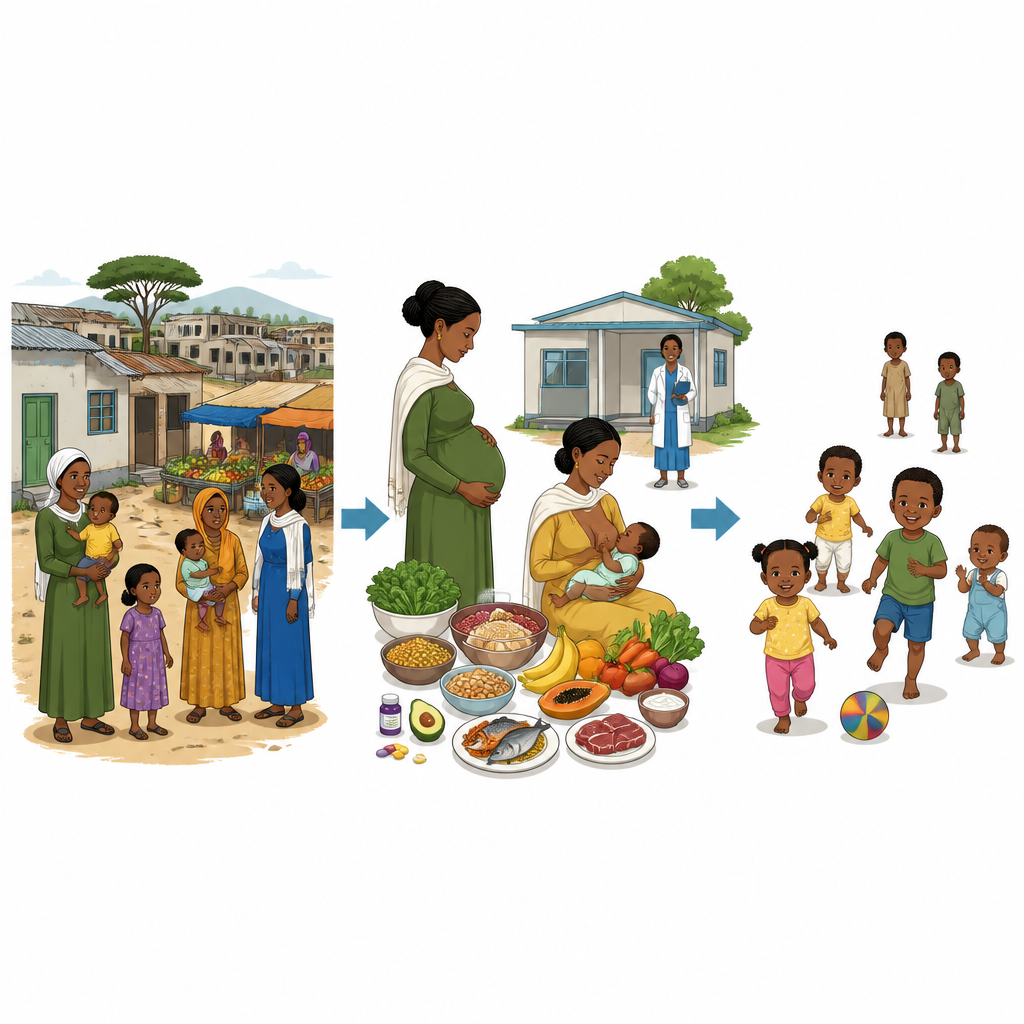
The community and the mothers studied
The study followed 423 mothers who had children younger than two years and lived in Jimma Town. Researchers visited families in their homes rather than only in clinics, so they could include mothers with different incomes, jobs and schooling levels. Using interviews and simple body measurements of both mothers and children, they collected information on household income, parents education, mothers work, medical care during pregnancy, breastfeeding habits, supplements and the children’s weight, height and body build.
How family circumstances shape child growth
One clear pattern was the power of education and stable work. Children of mothers who finished primary or secondary school were several times more likely to show healthy growth than those of mothers who could not read or write. When fathers worked in government jobs, private business or non-government groups, their children were more likely to grow well than those of unemployed fathers. Being married, having a moderate but steady household income and living in smaller families also went along with better child growth. In contrast, mothers working as casual laborers and widowed or divorced mothers often had children with poorer growth, reflecting the strain of unstable income and limited support.
Food, supplements and everyday eating habits
The study found that what mothers ate and the advice they received about food made a big difference. Mothers who reported eating a balanced mix of foods and increasing their meals during pregnancy and breastfeeding were more likely to have well-grown children. Regular intake of key nutrients such as folic acid, iron, calcium, omega-3 fats, vitamin D, protein and zinc was strongly linked with better child growth, while missing these nutrients reduced the chances of healthy development. Many mothers did not receive nutritional counseling or prenatal vitamins, and almost half reported dietary restrictions or did not feel they kept a balanced diet, pointing to gaps that health programs could address. 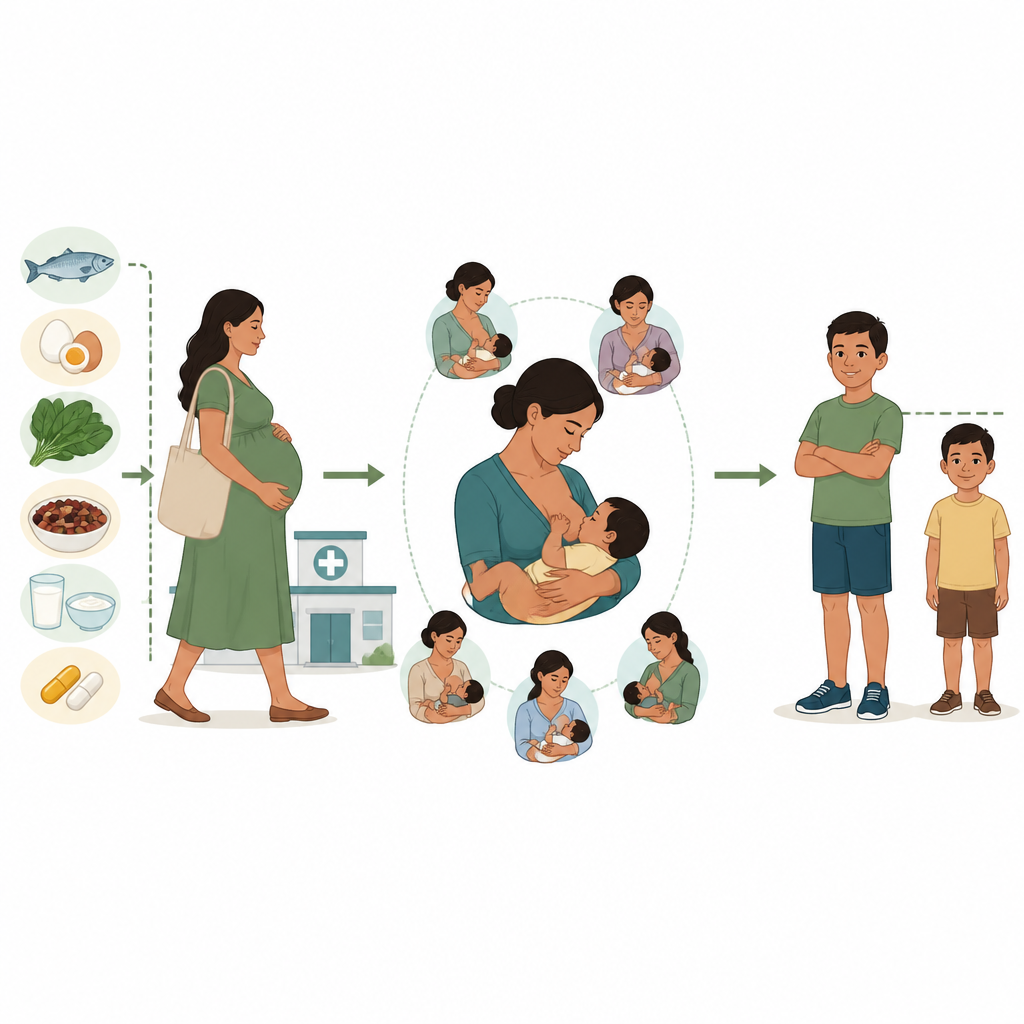
Breastfeeding, clinic visits and child measurements
Breastfeeding practices were another major factor. Mothers who breastfed their babies six to eight times a day had children who were much more likely to grow well than those breastfed fewer times. Continuing breastfeeding beyond the first months and combining it with suitable complementary foods supported better outcomes. Antenatal clinic visits, pregnancy support from family, tetanus vaccination and advice from health workers also went hand in hand with healthier children. Children who started life with a normal birth weight and who had a normal body build for their age were more likely to stay on a good growth path, while underweight children and those whose parents rarely sought growth checkups were at higher risk.
What this means for families and communities
Overall, the study shows that good child growth in Jimma Town is not just about having enough food; it depends on mothers education, family income, social support, regular health care and access to nutrient-rich diets before and after birth. When mothers are informed, supported and able to eat well, their children are more likely to be taller, stronger and healthier. The authors suggest that improving girls and women’s schooling, expanding prenatal care and nutrition counseling, encouraging frequent breastfeeding and ensuring access to key vitamins and minerals could help more children in the community reach their full potential.
Citation: Marine, B.T., Haile, Y.A. & Zewde, M.G. Maternal nutrition practices and its implications for child growth and development in Jimma Town a community based cross sectional study. Sci Rep 16, 15195 (2026). https://doi.org/10.1038/s41598-026-37151-4
Keywords: maternal nutrition, child growth, breastfeeding, Ethiopia, micronutrients