Clear Sky Science · en
Assessment of environmental radioactivity in the City of Melilla
Why this matters to everyday life
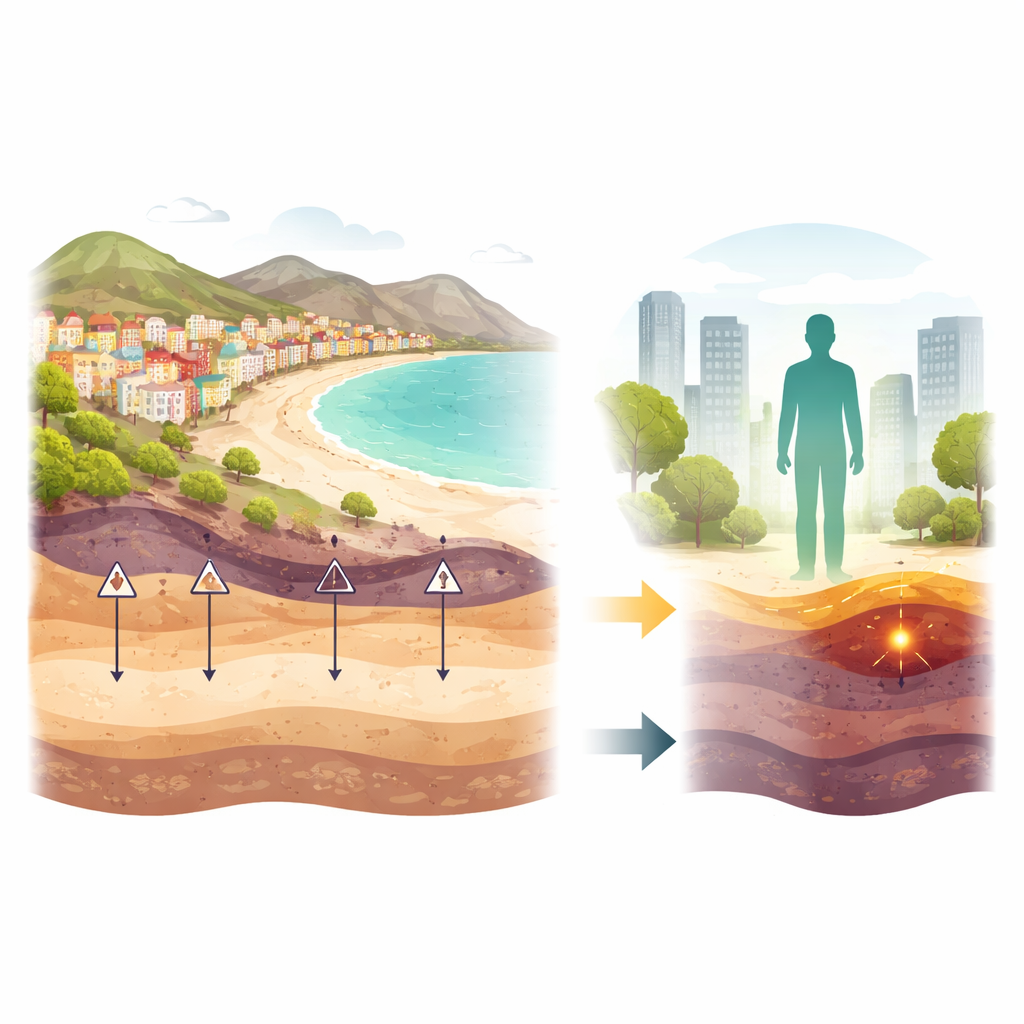
We all live in an invisible sea of natural radiation coming from the ground, the air, and even the food we eat. In most places it is harmless background, but in some areas it can creep high enough to raise long‑term health concerns, especially through the lung‑damaging gas radon. This study focuses on Melilla, a small but dense Spanish city in North Africa, to answer a simple question with big implications for its residents: how radioactive is the local environment, and does it pose any real risk?
Taking the pulse of an unseen landscape
The researchers spent fifteen years measuring radioactivity in Melilla’s soils, beaches and air. They collected nearly eighty soil and sand samples across the city and coastline, paying special attention to different kinds of rocks: light-colored carbonate formations, younger river deposits, and darker volcanic rocks in the southwest. In the lab they used high‑precision detectors to quantify tiny traces of natural elements that give off radiation, such as uranium and thorium series isotopes and potassium, along with the man‑made fallout element cesium‑137 left over from nuclear weapons tests and past nuclear accidents. They also measured ground‑level gamma rays in the field to see how the lab data played out in real outdoor exposure.
Quiet ground, with a few livelier spots
By mapping those measurements, the team found that most of Melilla’s territory has relatively low natural radioactivity. Soils rich in carbonates and loose sediments that blanket much of the city’s north and central areas showed modest levels of radioactive elements. In contrast, pockets of volcanic rock and volcanic‑derived sediments in the southwest stood out clearly, with roughly double to triple the concentrations of key radioisotopes compared with the rest of the city. Even so, when the authors compared Melilla’s averages to worldwide and Spanish figures, all three major natural sources of radiation in soil came out below global medians and national means, placing the city in the lower half of the global background range.
Clues from the sky and the sea
The study also looked at substances delivered from the atmosphere. Cesium‑137 and a naturally occurring tracer called lead‑210 tended to accumulate in less disturbed northern zones, where vegetation and limited construction reduce erosion. Interestingly, extra patches of lead‑210 appeared near fuel depots and the airport, hinting that fine particles from engines can carry this tracer and deposit it in nearby soils. Along Melilla’s beaches, radioactivity in the sand was generally low, but the authors saw differences between natural stretches of coast and artificial beaches built with imported or disturbed materials, including a former landfill. These patterns provide a valuable baseline for spotting any future contamination brought in by currents, ships, or regional industry.
From maps to doses and health risk
Numbers on a map matter chiefly because of how they translate into the dose a person actually receives. Using international formulas, the team converted soil radioactivity into outdoor and indoor gamma‑ray doses and then checked those estimates against their field measurements. Average outdoor doses turned out to be modest, and indoor doses were higher, as expected, because walls and roofs trap radiation. When combined with typical time spent indoors and outdoors, the total annual dose for a resident of Melilla was about half the global average and well below the limit used in Spanish regulations. The calculated lifetime cancer risk from this background radiation also fell under international reference values, suggesting no unusual threat for the general population.
Spotting where radon could be a problem
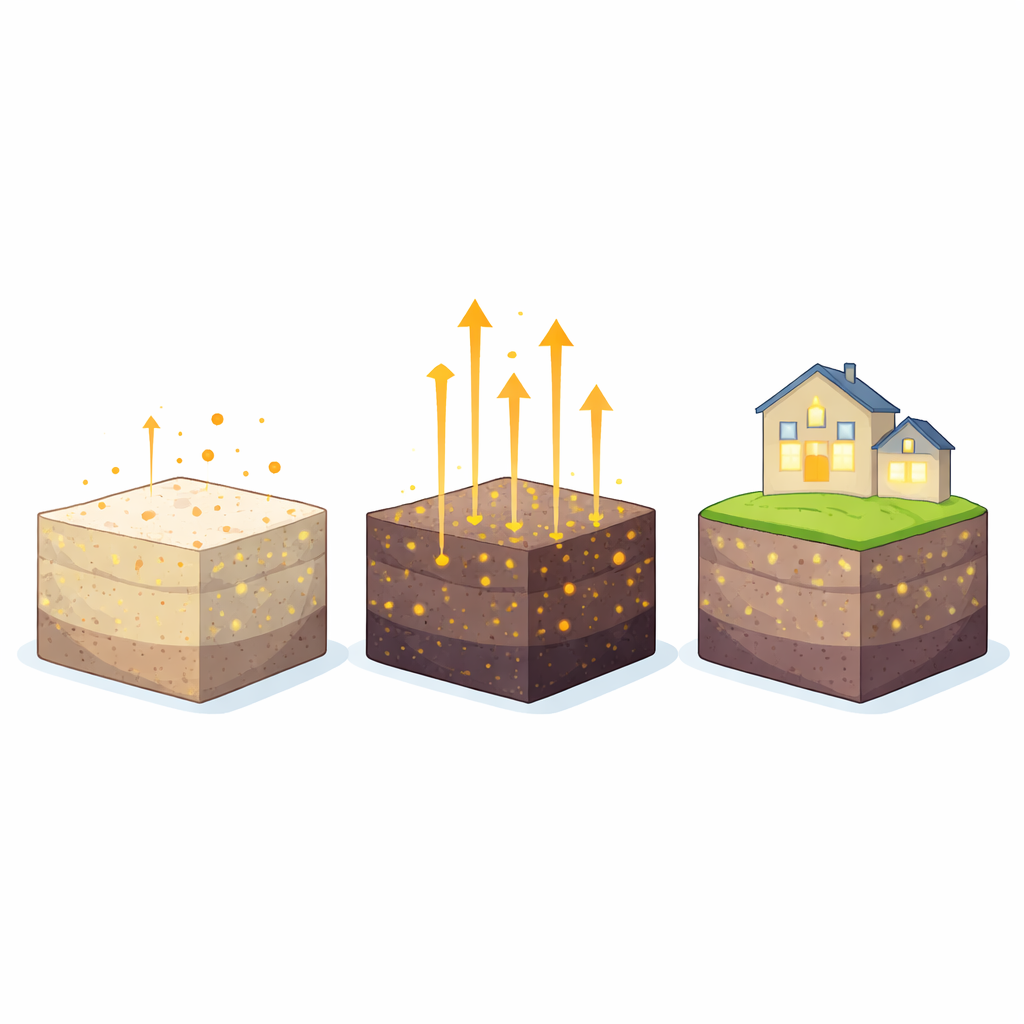
Because radon gas seeps out of the ground wherever uranium and its decay products are present, the researchers used their gamma‑ray data to build a map of potential radon exposure. Most of Melilla’s built‑up area landed in the lowest concern category, where indoor radon is very unlikely to exceed the regulatory reference level. Only a smaller southwestern sector, underlain by volcanic rocks, showed higher potential, marking it as an area where new or renovated buildings should include simple protective features such as under‑floor ventilation or gas barriers. In plain terms, the study’s message is reassuring: Melilla’s natural radiation levels are generally low and safe, but a limited number of neighborhoods deserve closer attention for radon control, allowing local authorities to focus their efforts where they matter most.
Citation: Rubiano, J., Cámara, F., Miquel-Armengol, N. et al. Assessment of environmental radioactivity in the City of Melilla. Sci Rep 16, 14489 (2026). https://doi.org/10.1038/s41598-026-35980-x
Keywords: environmental radioactivity, radon exposure, gamma radiation, soil radioisotopes, Melilla