Clear Sky Science · en
Tissue resident memory T cells populate the human uveal tract
Why Immune Cells in the Eye Matter
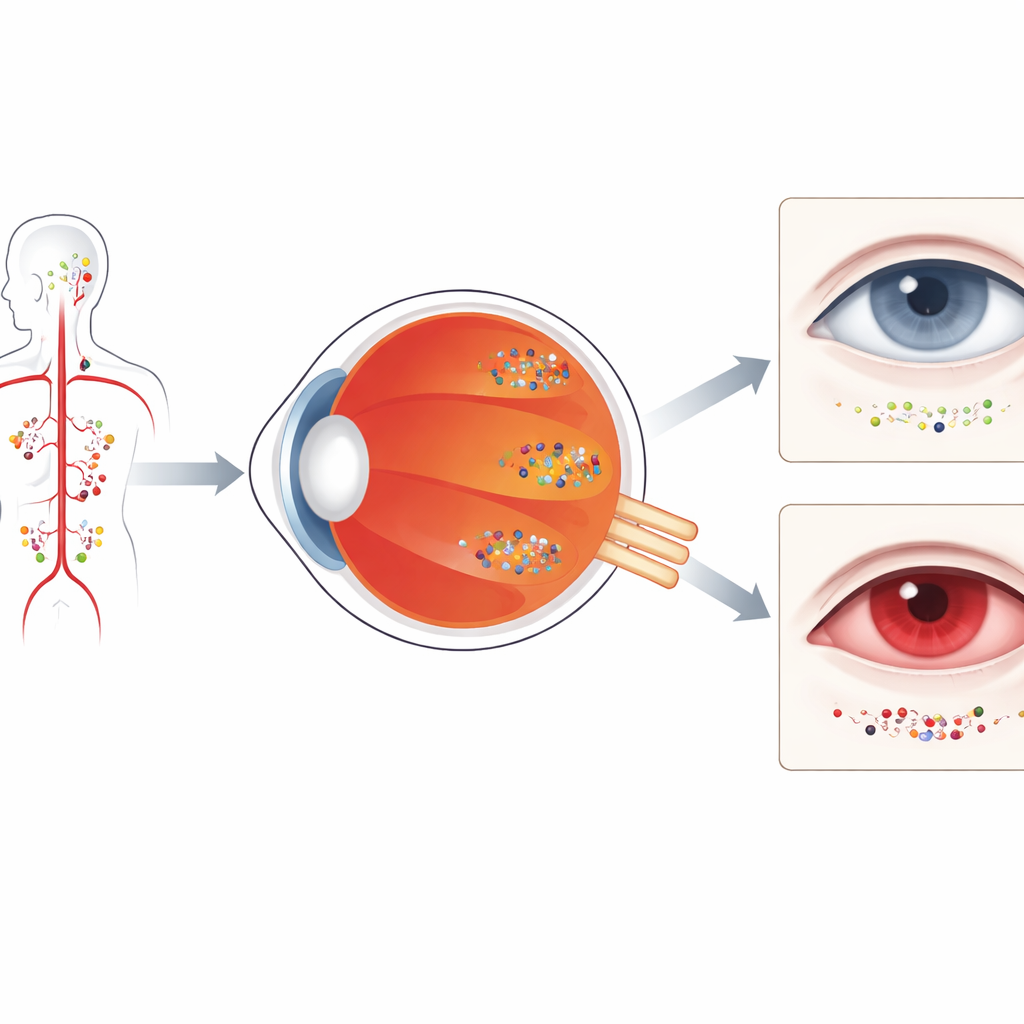
The inside of the eye has long been viewed as a protected sanctuary, largely sealed off from the body’s immune system so that delicate structures for sight are not damaged by inflammation. This study overturns that simple picture. The authors show that a special class of long‑lived immune cells, called tissue‑resident memory T cells, actually make their home in key layers of the eye. These cells may help guard against infections, but they may also help drive painful inflammatory eye diseases and their relapses.
Hidden Guardians Inside the Eye
The eye’s middle layer, known as the uveal tract, includes the colored iris at the front, the ciliary body that helps focus the lens, and the choroid that feeds the retina. Using advanced cell‑sorting and imaging methods on non‑inflamed donor eyes, the researchers found that these tissues are far from empty. They are populated by several types of T cells, including a group that bears hallmarks of long‑term residence in tissue rather than free circulation in the blood. These resident cells sat within the iris, ciliary body, and choroid, next to blood vessels but clearly within the tissue itself.
Long‑Lived Cell Memories and Disease Flares
The team then looked at fluid drawn from the front chamber of the eye in patients with active uveitis, a broad term for non‑infectious inflammatory diseases of the uveal tract. Single‑cell genetic profiling showed that many T cells there belonged to repeated clones, meaning they were copies of a few founding cells that had encountered specific triggers. These expanded clones carried gene signatures linked to staying put in tissue and to rapid re‑activation, rather than leaving through the circulation. In patients with severe long‑standing uveitis whose eyes had to be removed, the researchers saw abundant resident‑like T cells not only in the front of the eye but also in the retina, a place typically thought to be free of such cells in health.
Traces of Past Inflammation in Quiet Eyes
To explore what happens after a flare subsides, the scientists analyzed small pieces of iris tissue obtained during glaucoma surgery. Some donors had a past history of uveitis that was clinically quiet at the time, whereas others had never had uveitis. Although these eyes looked calm, gene‑activity patterns told a different story. Iris tissue from people with past uveitis was enriched for genes associated with T cell activity and for genes involved in presenting antigens, the molecular “faces” that T cells recognize. The data also suggested changes in local support cells and blood vessels that could favor the survival of resident memory T cells long after obvious inflammation has resolved.
Lessons from a Mouse Model
Because it is difficult to follow the same human eye over time at a cellular level, the group turned to a mouse model of autoimmune uveitis. In this model, disease is triggered in the back of the eye and then slowly subsides. The researchers tracked T cells in the front uveal tissues at different time points. While overall T cell numbers dropped sharply once inflammation calmed, the subset with a resident memory profile stayed high, remaining many times more numerous than in healthy, never‑inflamed eyes. This persistence, even when the eye appeared normal on imaging, mirrors the human data and supports the idea that resident memory T cells form a lasting imprint of past inflammation.
What This Means for Eye Health and Treatment
Together, the findings show that the human eye is not an immune‑cell desert. Instead, it hosts resident memory T cells in health, during active disease, and after apparent recovery. These cells likely contribute to fast local defense against infections and other insults. But in non‑infectious uveitis they may also act as a “sleeper” population that can be re‑awakened, driving renewed bouts of inflammation in the same eye regions. Recognizing their presence reshapes the concept of immune privilege in the eye and points to resident memory T cells as potential targets for new therapies aimed at preventing recurrent uveitis without broadly suppressing the entire immune system.
Citation: Foers, A.D., Reekie, I.R., Wickramasinghe, L.C. et al. Tissue resident memory T cells populate the human uveal tract. Sci Rep 16, 11330 (2026). https://doi.org/10.1038/s41598-025-33444-2
Keywords: uveitis, tissue-resident memory T cells, ocular immunology, uveal tract, autoimmune eye disease