Clear Sky Science · en
Wealth Composition, Distribution, and Transmission: The Graduate Center Wealth Project Data Warehouse
Why Wealth Data Matters to Everyone
Who owns what, and how that changes over time, shapes everything from family security to political power. Yet while we track income in great detail, the picture of private wealth is blurry and scattered across studies, countries, and methods. This article introduces the Graduate Center Wealth Project data warehouse, a large, open collection of harmonized data that brings together what we know about household wealth, how it is distributed, and how inheritances and gifts are taxed. It is a new set of tools for anyone interested in how fortunes are built, shared, or concentrated across the globe.
What This New Wealth Warehouse Includes
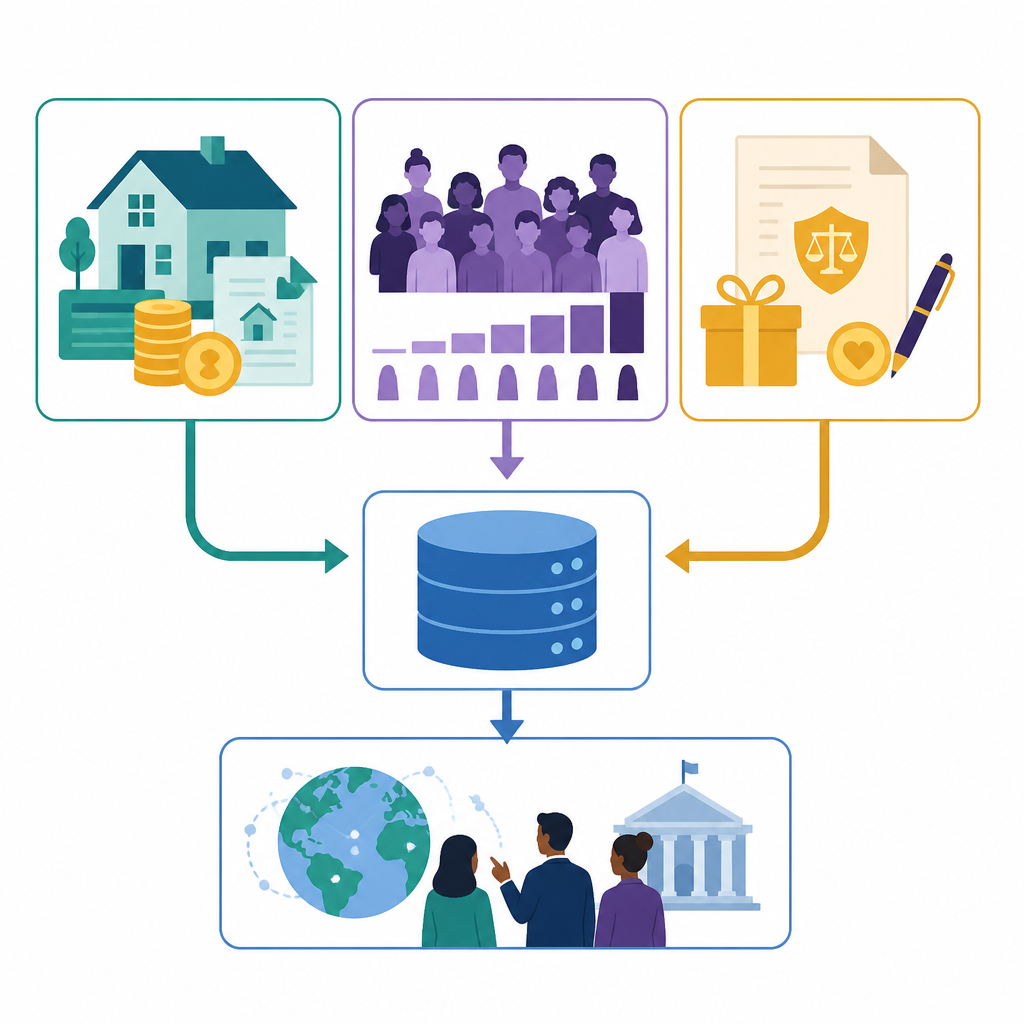
The data warehouse organizes information into three main sections that together describe private wealth from different angles. One section, called Wealth Topography, focuses on what household balance sheets look like: how much is tied up in homes and land, how much sits in bank accounts or business assets, how much is held offshore, and how much debt people carry. A second section, Wealth Inequality Trends, tracks how net wealth is spread across a population, for example how large a slice of total wealth goes to the top tenth or the very richest. The third section documents taxes on estates, inheritances, and gifts, including tax rates, exemptions, and revenues, for countries around the world and for U.S. states.
How Many Sources Become One Coherent Picture
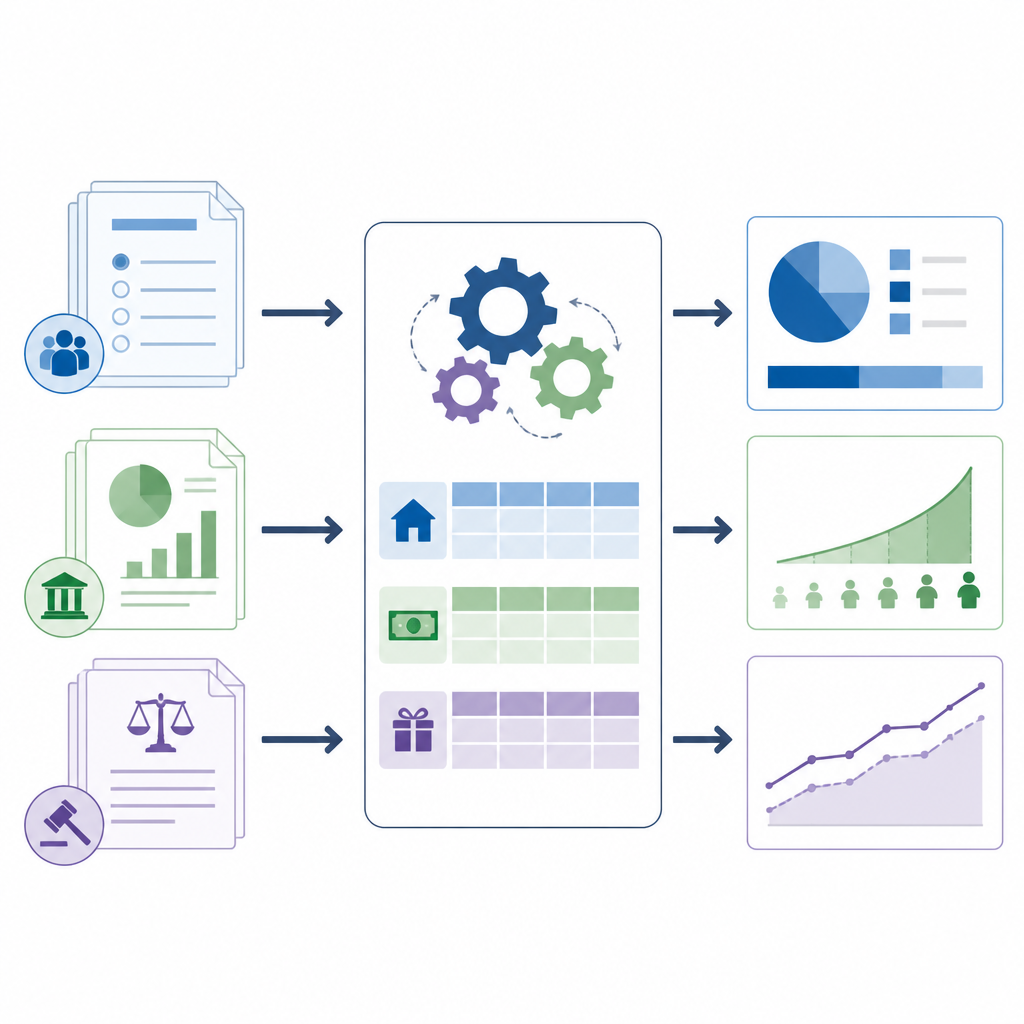
To build this resource, the team assembled raw information from official statistics, household surveys, academic work, corporate research, and tax laws. These sources arrive in many formats and use different definitions of what counts as wealth. The authors extract the numbers, then systematically group detailed asset and debt items into broader, comparable buckets such as housing, financial assets, and business capital. They keep all values in each country’s own currency and, where possible, compute indicators directly from underlying household survey microdata using appropriate statistical weights and procedures.
Tracking Inequality and Inheritance Rules Over Time
The wealth inequality section collects long time series from a wide range of studies and datasets, but applies clear rules about what is included. The warehouse prioritizes benchmark estimates chosen by original authors and excludes series that are built entirely from modelled or imputed wealth distributions without any direct microdata. It stores standard measures such as the Gini index, wealth shares of rich groups, average wealth in each slice of the distribution, and the wealth level needed to enter a given group, like the top tenth. The inheritance and gift tax section, in turn, classifies each country’s system as estate, inheritance, or gift based, harmonizes tax brackets, exemptions, and credits, and tracks when such taxes were introduced, changed, or repealed.
Checking Data Quality Across Countries and Years
Because the warehouse pools many sources, careful quality checks are crucial. For the balance sheet and inequality sections, the team compares their estimates from household surveys to other available aggregates and series, looking for consistent trends and logging gaps or breaks when new data releases appear. They examine how results differ when surveys miss very rich households or when countries use different sampling designs. For the tax section, the authors cross-check legal rules and reported revenues wherever possible and enforce internal consistency rules, such as making sure that years with no tax cannot show positive tax receipts unless there is a documented lag from earlier estates.
What This Means for Public Debate
For non-specialists, the key message is that we now have a more unified and transparent way to look at who holds wealth, how that is changing, and how inheritances and gifts are treated by tax systems around the globe. Instead of relying on isolated studies or headline figures, journalists, students, and policymakers can explore a single open dataset and online dashboard to see how housing, savings, and debts add up, how much of society’s wealth rests at the top, and how different countries tax the transfer of fortunes between generations. The warehouse does not settle debates about the best way to tax or regulate wealth, but it gives those debates a firmer factual foundation.
Citation: Longmuir, M., Disslbacher, F., Rapp, S. et al. Wealth Composition, Distribution, and Transmission: The Graduate Center Wealth Project Data Warehouse. Sci Data 13, 774 (2026). https://doi.org/10.1038/s41597-026-07105-6
Keywords: wealth inequality, household assets, inheritance tax, data warehouse, economic policy