Clear Sky Science · en
Prospective evaluation of genomics-guided off-label treatment
Why this matters to people with cancer
When standard cancer treatments stop working, many patients and their families start searching for other options. One hope is to reuse existing drugs in new ways based on the DNA of a person’s tumor. This study describes a nationwide effort in the Netherlands to test such "off-label" cancer drugs in an organized, transparent way, so that patients can access promising medicines while doctors and regulators learn what actually helps and what does not.
A new way to try old drugs
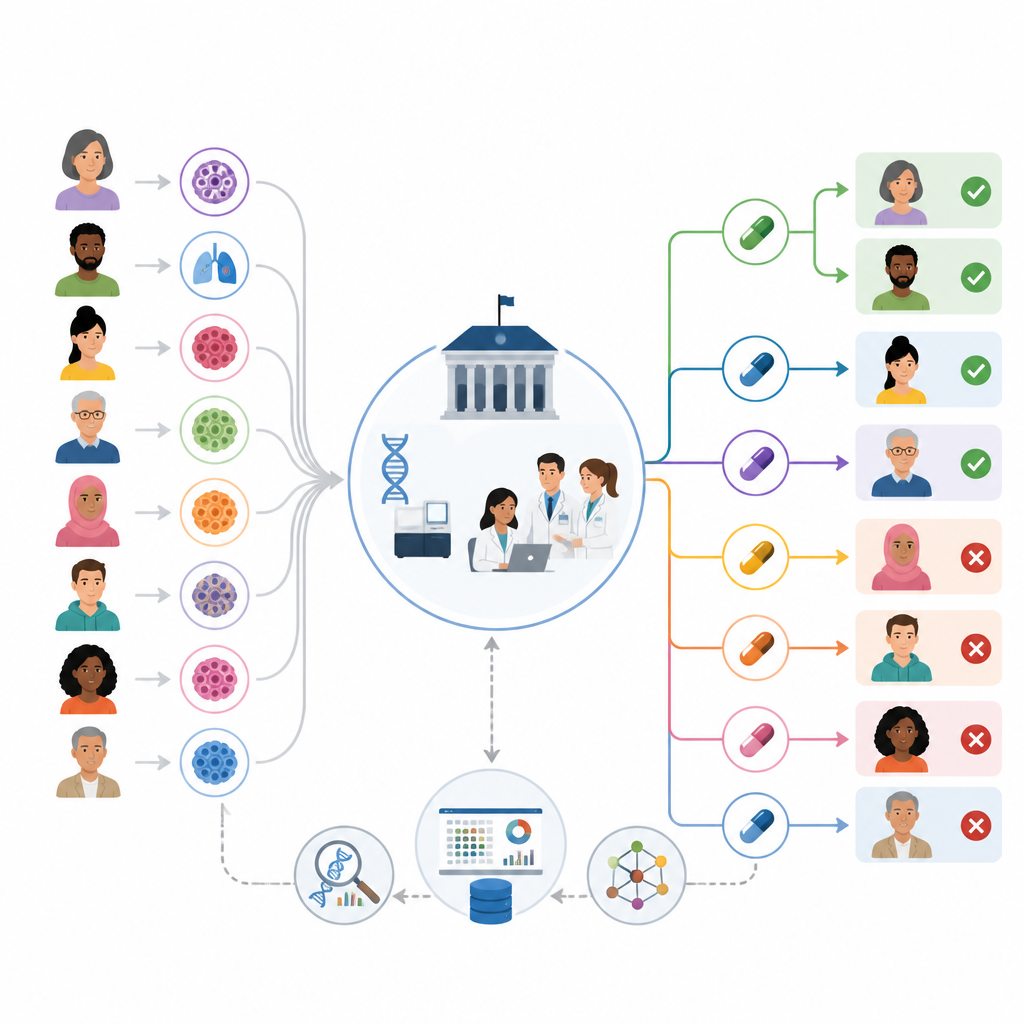
The project, called the Drug Rediscovery Protocol (DRUP), invites adults with advanced solid cancers who have no standard treatments left but whose tumors carry certain genetic changes. Instead of each doctor prescribing off-label drugs on their own, DRUP brings patients into one large trial with many small groups. Each group is defined by three things: tumor type, the genetic change found in the tumor, and a drug that already has approval for some other cancer. Patients receive the matched drug at known safe doses, and their results are tracked in a uniform way across 35 hospitals in the country.
How the trial is organized
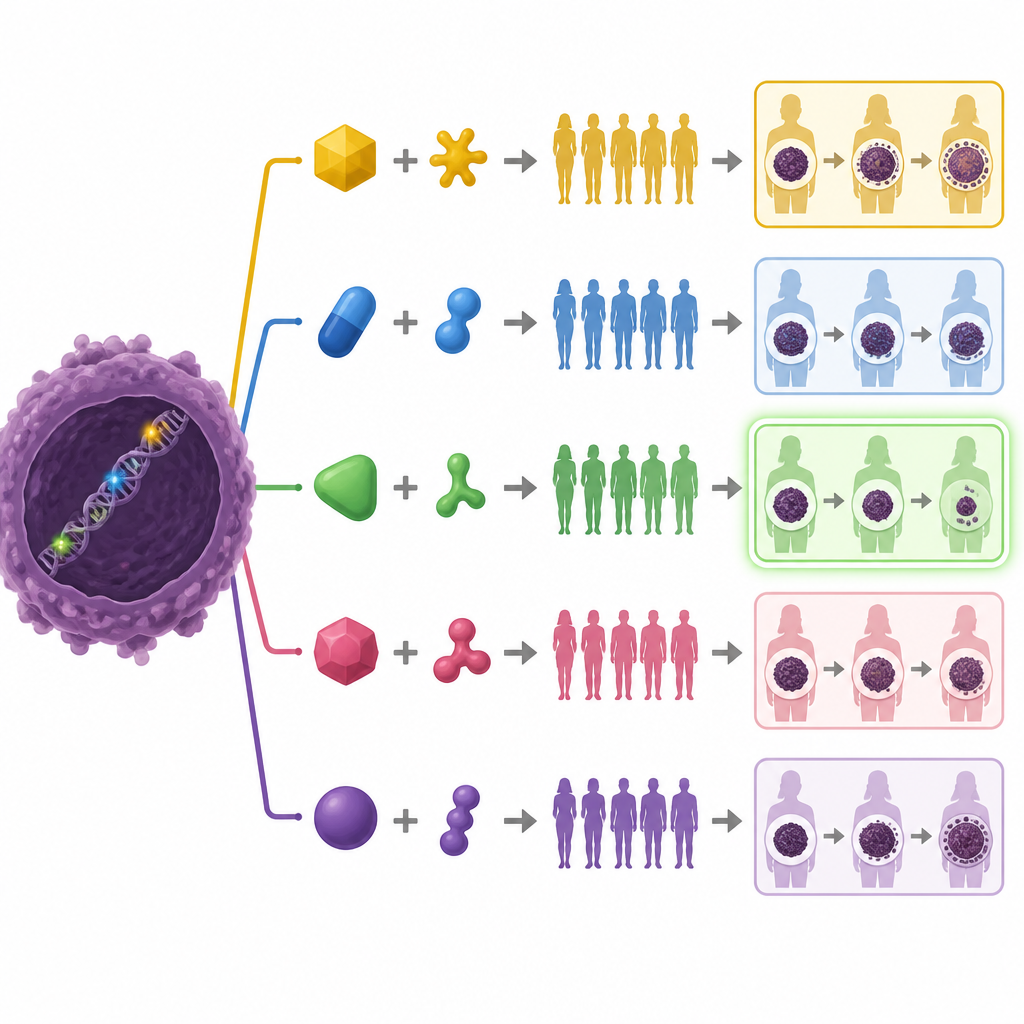
DRUP uses a stepwise design to avoid exposing many people to treatments that are unlikely to work. In the first step, eight patients enter a group. If none benefit, that group is closed. If at least one patient’s cancer shrinks or stays stable for four months or longer, another sixteen patients can join. A group is considered successful if at least five of these twenty-four patients gain clear benefit. Only then can a larger confirmation step be opened, aimed at gathering enough evidence to support wider use or health insurance coverage of that off-label drug for that specific genetic-tumor combination.
What happened for more than 1,600 patients
Between 2016 and 2024, 1,610 patients started treatment across 37 different drugs. Their cancers covered more than 100 tumor types, and about four in ten had rare cancers that usually have very few trial options. Among 1,363 patients who could be properly evaluated, about one in three experienced meaningful clinical benefit, defined as lasting tumor shrinkage or disease control for at least 16 weeks. Roughly one in six had clear tumor shrinkage. On average, cancers stopped growing for just over three months, and patients lived a median of a little more than eight months after starting their off-label drug, though outcomes varied widely.
Who benefited the most and at what cost
The benefits were strongest for people whose tumors carried genetic changes already known to predict good responses elsewhere, such as certain BRAF mutations, signs of mismatch repair failure, very high numbers of DNA mutations, or defects in BRCA genes. In contrast, some popular targets, such as changes in CDK4/6 pathway genes, rarely led to benefit when treated with single drugs aimed at that pathway. Importantly, only about 7 percent of patients were "exceptional responders," staying free of disease progression for two years or longer or achieving complete responses. Serious side effects were common: almost three in ten patients had severe treatment-related problems, and treatment had to be stopped due to toxicity in nearly one in ten.
Lessons for making off-label use safer
By assembling many small experiences into one structured trial, DRUP showed that tissue type still matters for some drug–mutation pairs, that patients treated earlier in their illness tend to do better, and that short periods of stable disease may not represent true benefit. The study also revealed practical barriers: some successful groups could not move into larger confirmation stages because drug patents were expiring, or because certain genetic–tumor combinations were simply too rare to enroll quickly in a single country.
What this means for patients and health systems
For people facing advanced cancer, this study offers a realistic picture: off-label precision medicines can sometimes provide substantial and long-lasting benefit, especially in well-understood genetic groups, but overall success rates are modest and side effects are significant. The authors argue that off-label use should not happen in an unstructured way based only on hope or social media reports. Instead, these treatments should be offered within frameworks like DRUP that carefully track outcomes and side effects, refine which genetic markers truly matter, and generate the kind of evidence regulators and insurers need before expanding official drug labels.
Citation: Verkerk, K., Spiekman, A.C., Haj Mohammad, S.F. et al. Prospective evaluation of genomics-guided off-label treatment. Nature 653, 558–566 (2026). https://doi.org/10.1038/s41586-026-10405-x
Keywords: precision oncology, off-label cancer drugs, genomic profiling, basket trial, rare cancers