Clear Sky Science · en
Efficacy and safety of different inhaler types for asthma and chronic obstructive pulmonary disease. a systematic review and meta-analysis
Why inhalers and the planet matter
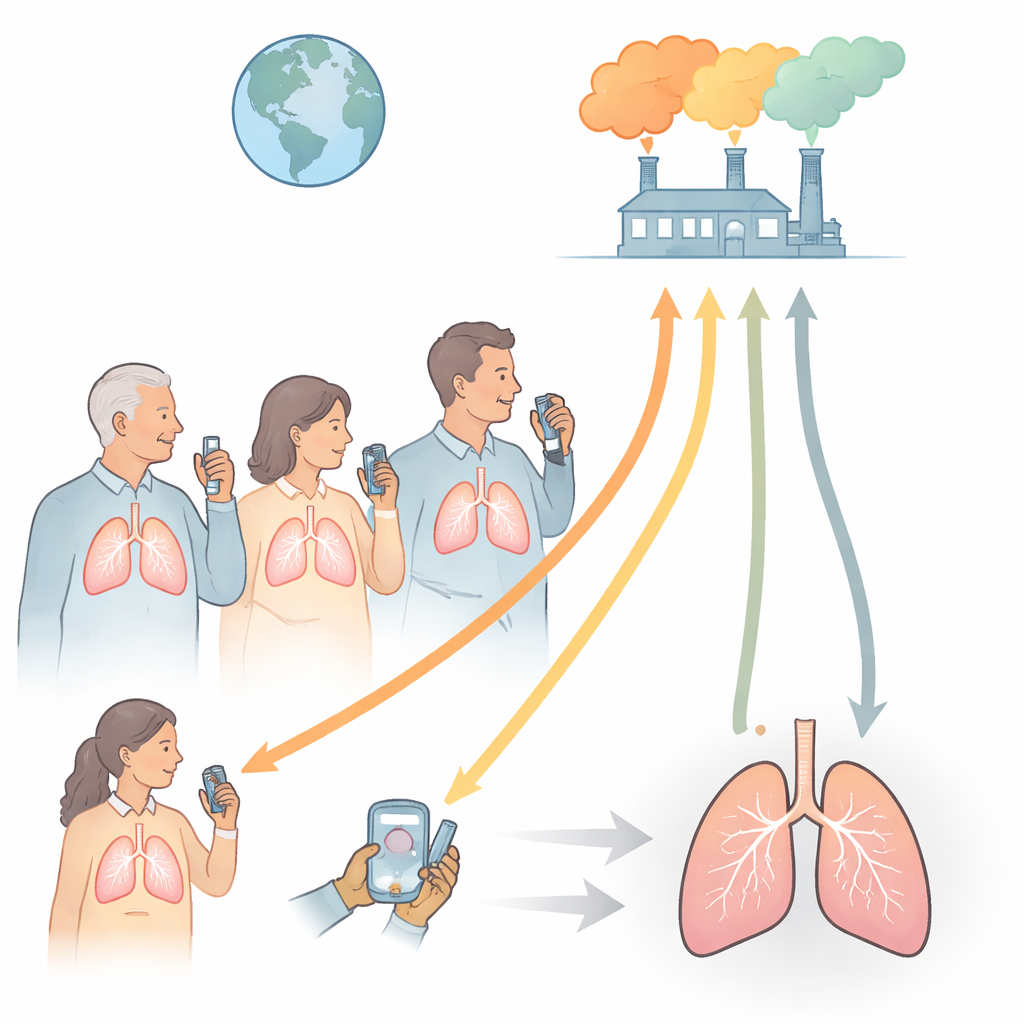
For millions of people living with asthma or chronic obstructive pulmonary disease (COPD), inhalers are as essential as eyeglasses or shoes. But many commonly used inhalers rely on powerful propellant gases that contribute to climate change. This study asks a simple but important question: can patients safely switch to more climate‑friendly inhalers without sacrificing control of their breathing problems?
Different tools for the same job
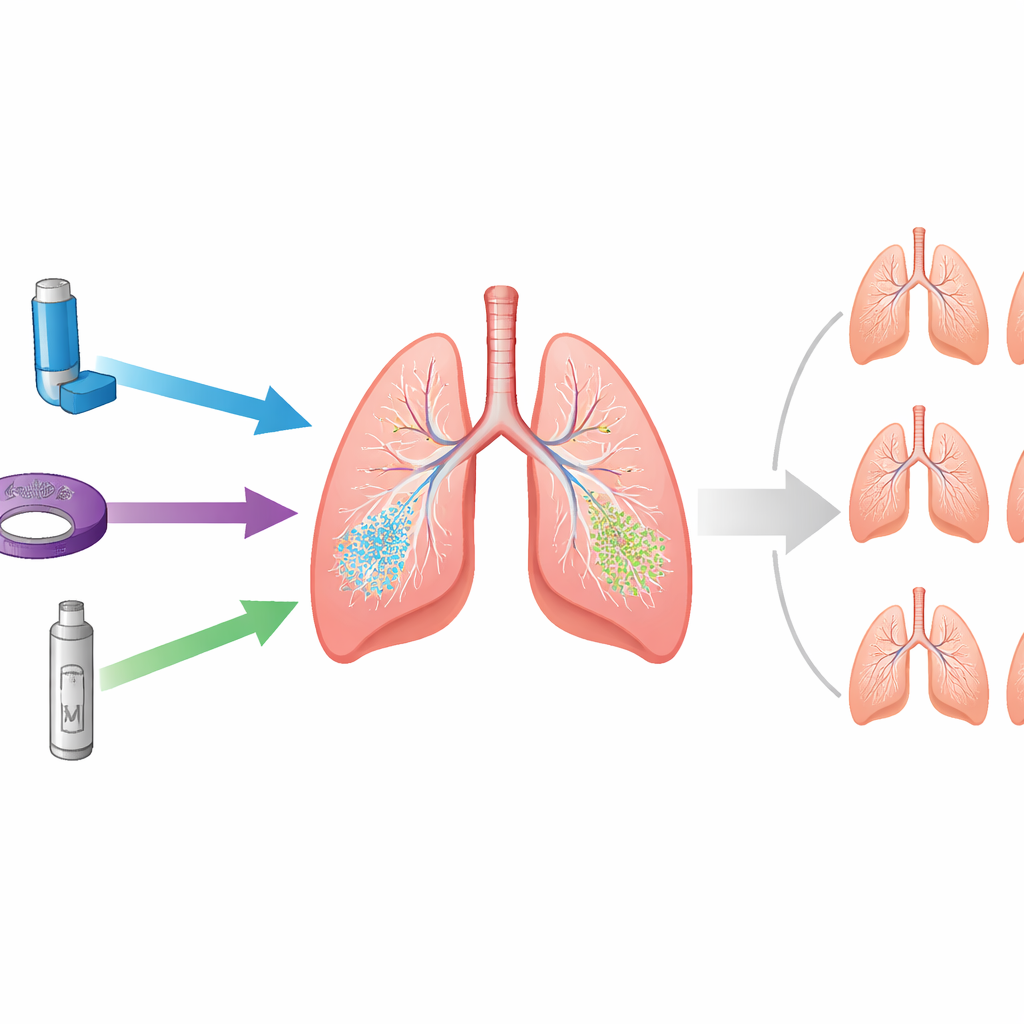
There are three main types of handheld inhalers. Pressurised metered dose inhalers, or pMDIs, are the familiar spray devices that use a propellant gas to push medicine into the lungs. Dry powder inhalers (DPIs) and soft mist inhalers (SMIs) deliver the same medicines without such gases. Because pMDIs use fluorinated gases with a high global warming effect, health systems are under pressure to move toward DPIs and SMIs. Yet doctors and patients have been unsure whether these propellant‑free devices work just as well in everyday care.
Gathering the best available evidence
The authors carried out a large systematic review and meta‑analysis, a method that pools results from many clinical trials to get a clearer overall picture. They searched major medical databases up to late 2025 and found 44 randomised controlled trials involving 24,710 people with asthma or COPD. These trials compared pMDIs with DPIs or SMIs while keeping the drug type and dose as similar as possible, so that the only meaningful difference was the device. Studies covered long‑term maintenance treatment for asthma and COPD, as well as short‑term treatment for asthma attacks in children.
Breathing tests and everyday symptoms
Across the trials, the researchers looked at several measures that matter to patients and clinicians. These included standard breathing tests (how much air someone can blow out in one second, and how fast they can exhale), day‑to‑day symptoms, quality of life scores, flare‑ups that required extra care, and the need for “rescue” inhalers. For asthma and COPD alike, the numbers were strikingly similar between propellant inhalers and propellant‑free devices. Tiny differences did appear, but they were far smaller than thresholds experts consider noticeable or important in real life. In other words, lungs worked just as well regardless of whether the medicine came from a spray, a powder, or a mist.
Safety, side effects, and special groups
The review also checked for safety problems, including overall side effects, serious complications, hospital visits, and deaths. Again, no meaningful differences emerged between device types. This held true for adults with long‑term asthma or COPD and for children treated during asthma attacks. Some trials had design limitations, such as imperfect masking of which device was used, so the authors rated much of the evidence as “moderate” rather than “high” certainty. Still, the consistency across dozens of studies and many different outcomes suggests that any real differences, if they exist, are very small.
What this means for patients and the climate
The findings support a reassuring conclusion for patients, clinicians, and policymakers. When people are taught to use their inhaler correctly, propellant‑free devices such as DPIs and SMIs control asthma and COPD just as effectively and safely as traditional spray inhalers, at least when the same medicines and doses are used. That does not mean every person should switch devices: age, hand strength, breathing ability, cost, and personal preference still matter, and some people may do better with one type over another. But from a big‑picture view, the study suggests that health systems can increase the use of low‑carbon inhalers without harming patient care, and that future efforts can focus on how to make such changes smoothly while keeping people’s lung disease well controlled.
Citation: Loftus, M.J., Cumpston, M.S., Barnes, S. et al. Efficacy and safety of different inhaler types for asthma and chronic obstructive pulmonary disease. a systematic review and meta-analysis. npj Prim. Care Respir. Med. 36, 18 (2026). https://doi.org/10.1038/s41533-026-00488-4
Keywords: asthma inhalers, COPD treatment, dry powder inhaler, climate-friendly healthcare, respiratory medicine