Clear Sky Science · en
Shared gene signatures and biochemical regulatory networks linking Parkinson’s disease and ulcerative colitis
Why a gut disease might matter for brain health
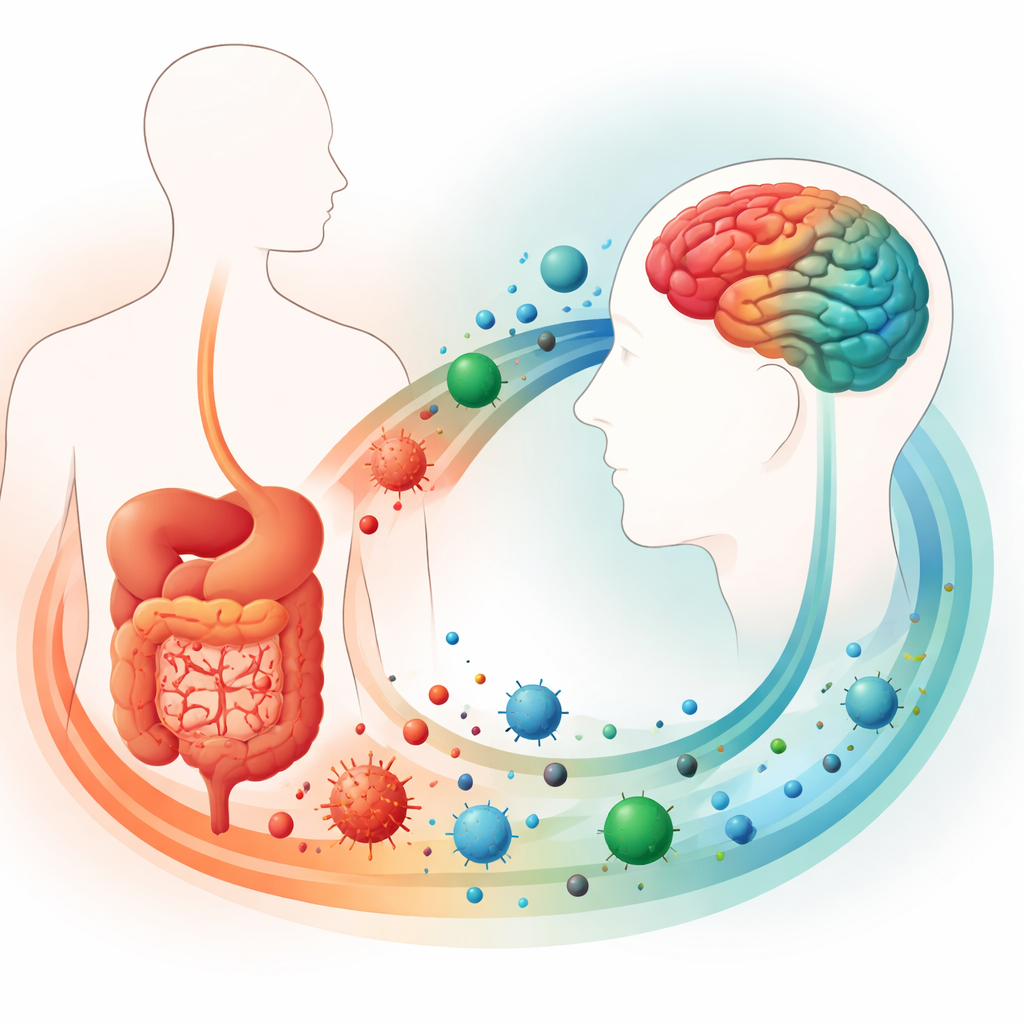
Many people think of Parkinson’s disease as a problem of movement and the brain, and ulcerative colitis as a problem of the gut. This study asks a surprising question: could these two very different disorders share common roots in the body’s immune and stress systems? By sifting through large genetic and blood‑based data sets, the researchers looked for shared molecular patterns that might help explain why people with ulcerative colitis seem to have a higher risk of developing Parkinson’s disease, and how the gut and brain might be linked through inflammation.
Looking for common signals in blood
The team began by collecting information on thousands of genes previously tied to Parkinson’s disease or ulcerative colitis from several public databases. They then combined these catalogs with real‑world measurements of which genes were turned up or down in blood cells from patients and healthy volunteers. This integrated approach yielded 320 “signature” genes that appeared in both conditions. Rather than focusing on any single gene, the researchers treated this group as a shared fingerprint of the two diseases, capturing how the immune system and stress responses are altered in the bloodstream.
A small hub of powerful regulators
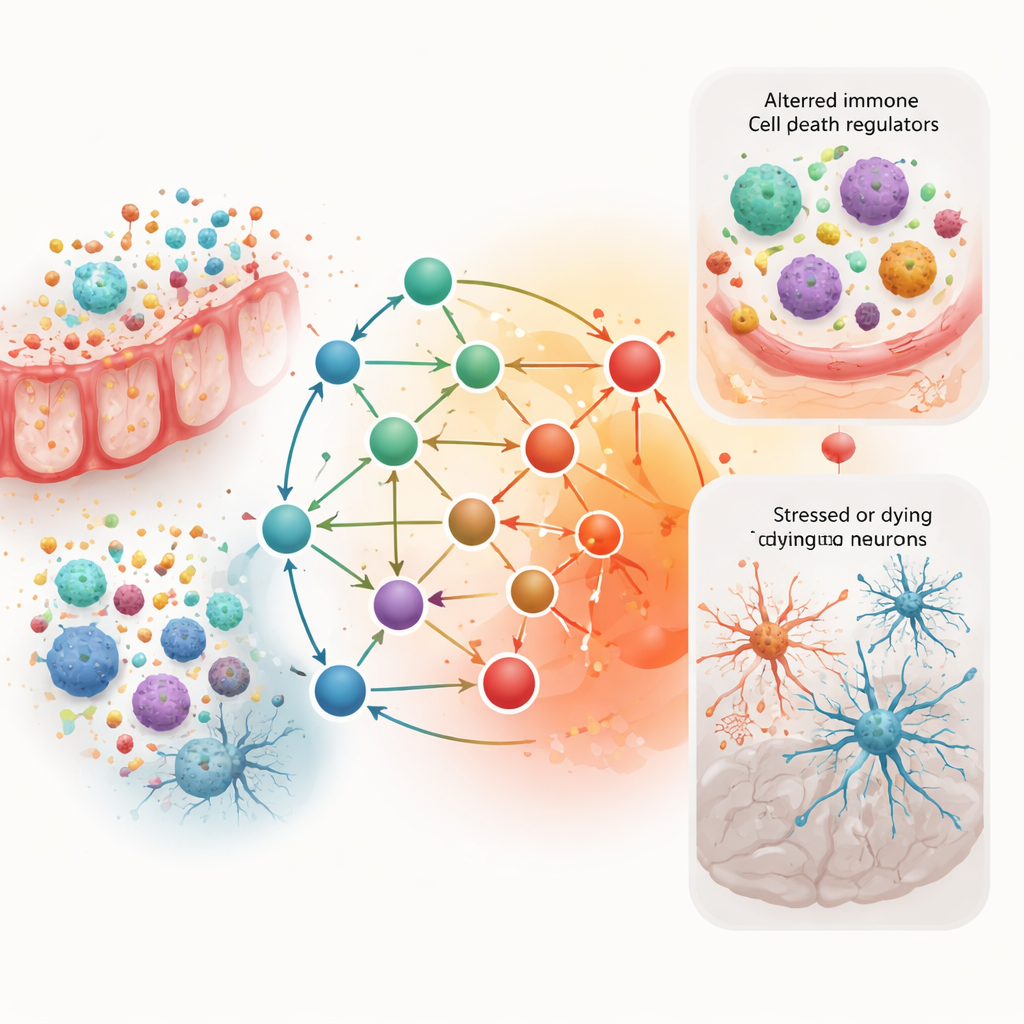
Within this shared fingerprint, computer models of how proteins interact with one another revealed a tightly connected core of just 10 genes. Many of these, including TNF, IL1B, IL6, BCL2 and CASP3, are well‑known players in inflammation and programmed cell death. They form a kind of control hub that can influence whether cells survive or die under stress. When the authors tested how well each of these genes could, on its own, distinguish patients from healthy people, they found that only a few showed consistent performance across different data sets. This means that although these genes are central to the network, they are not reliable single diagnostic markers—more like key cogs in a complex machine than simple on–off switches.
Inflammation, stress and the gut–brain axis
To understand what this shared gene set is actually doing, the researchers examined which biological processes it is most involved in. The 320 genes pointed toward responses to microbes, toxins from bacteria, oxidative stress (chemical wear and tear on cells), and changes in fat‑related pathways. One immune pathway involving a signal called IL‑17 stood out especially strongly for ulcerative colitis and more modestly for Parkinson’s disease. When they compared these patterns with blood data from people with Alzheimer’s disease, the same inflammatory and fat‑related themes did not appear, suggesting that the Parkinson–colitis link is not simply a generic feature of brain disorders.
Shifts in the body’s defense cells
The study also estimated the mix of immune cells circulating in the blood. In Parkinson’s disease, the researchers saw fewer monocytes (a type of white blood cell) and more activated natural killer cells, hinting at early activation of certain innate defenses. In ulcerative colitis, neutrophils and monocytes were increased, along with regulatory T cells, while helpful memory B cells and certain calming macrophages were reduced. Notably, a drop in memory B cells appeared in both conditions, hinting at a shared pattern of immune imbalance. Several of the core genes were tightly linked to these shifts, suggesting that the same inflammatory switches could be rewiring the immune landscape in the gut and brain.
Control layers and potential treatments
Digging deeper, the team mapped how higher‑level regulators, such as transcription factors and microRNAs, sit on top of the 10 core genes. Two master controllers, TP53 and JUN, emerged as central hubs that integrate stress and inflammatory cues. A small RNA molecule called miR‑21 appeared to influence multiple core genes involved in cell survival and death. Finally, by overlaying information on known chemicals and drugs, the authors highlighted environmental toxins that might worsen these pathways and existing medicines—such as some anti‑inflammatory agents—that might, in theory, help rebalance them. These suggestions are early and based only on network patterns, not clinical trials.
What this means for patients
Overall, the study supports the idea that Parkinson’s disease and ulcerative colitis share a common backdrop of chronic inflammation and cell stress, visible in the blood as a connected network of genes and immune changes. Rather than offering a simple blood test to predict disease, the work maps out a systems‑level framework: a set of molecular circuits that may link gut inflammation to brain vulnerability along the gut–brain axis. For patients, the message is that controlling long‑term inflammation in the gut and understanding its ripple effects throughout the body may one day help in preventing or treating certain forms of Parkinson’s disease, but much experimental and clinical work is still needed before these insights can guide everyday care.
Citation: Sun, X., An, Z., Wang, S. et al. Shared gene signatures and biochemical regulatory networks linking Parkinson’s disease and ulcerative colitis. npj Parkinsons Dis. 12, 109 (2026). https://doi.org/10.1038/s41531-026-01374-z
Keywords: gut–brain axis, Parkinson’s disease, ulcerative colitis, chronic inflammation, immune dysregulation