Clear Sky Science · en
Sex differences in the severity of non-motor symptoms in Parkinson’s disease: a systematic review and meta-analysis
Why this topic matters to everyday life
Parkinson’s disease is often recognized by its shaking and movement problems, but many people do not realize how strongly it also affects mood, sleep, and other invisible parts of health. These less obvious non-motor symptoms can shape daily life for both patients and families, and they do not affect men and women in exactly the same way. Understanding these differences can help doctors and caregivers offer support that feels more personal and effective.
Looking beyond movement problems
Non-motor symptoms in Parkinson’s disease include low mood, anxiety, poor sleep, memory troubles, digestive issues, bladder problems, and changes in sexual function. They may appear years before the classic movement signs and often become the main reason people feel unwell. Yet most earlier research focused on single issues, such as depression or sleep, each measured with its own rating tool. This made it hard to see the full picture of how men and women differ when all these symptoms are considered together.
A closer look across many studies
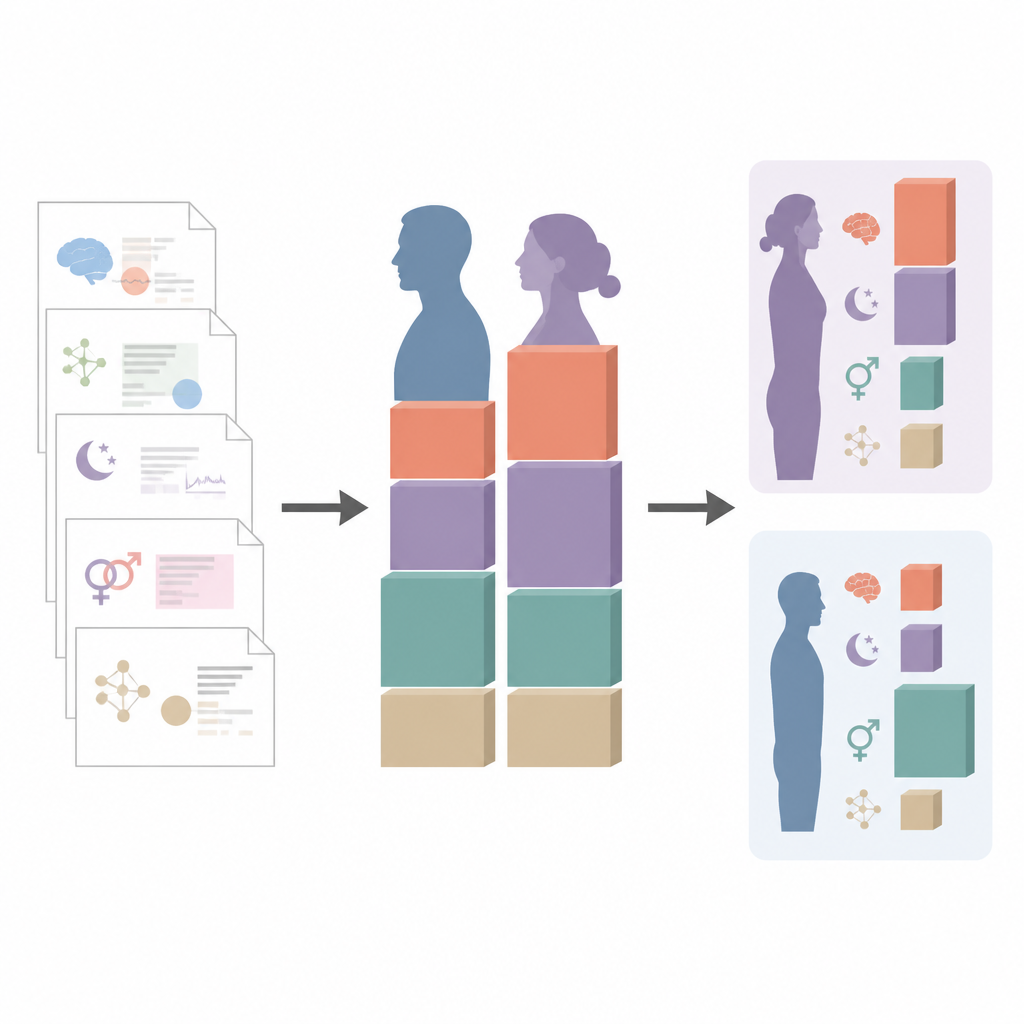
To gain a clearer view, the authors gathered and analyzed data from nine earlier studies, covering 4352 people with Parkinson’s disease from Europe and Asia. All of these studies used the same questionnaire, called the Non-Motor Symptoms Scale, which scores nine different groups of symptoms and also gives a total score. By pooling these results with statistical methods designed for combining studies, the team compared how severely men and women were affected in each symptom group and checked how age and years of illness might influence the findings.
What differs for women
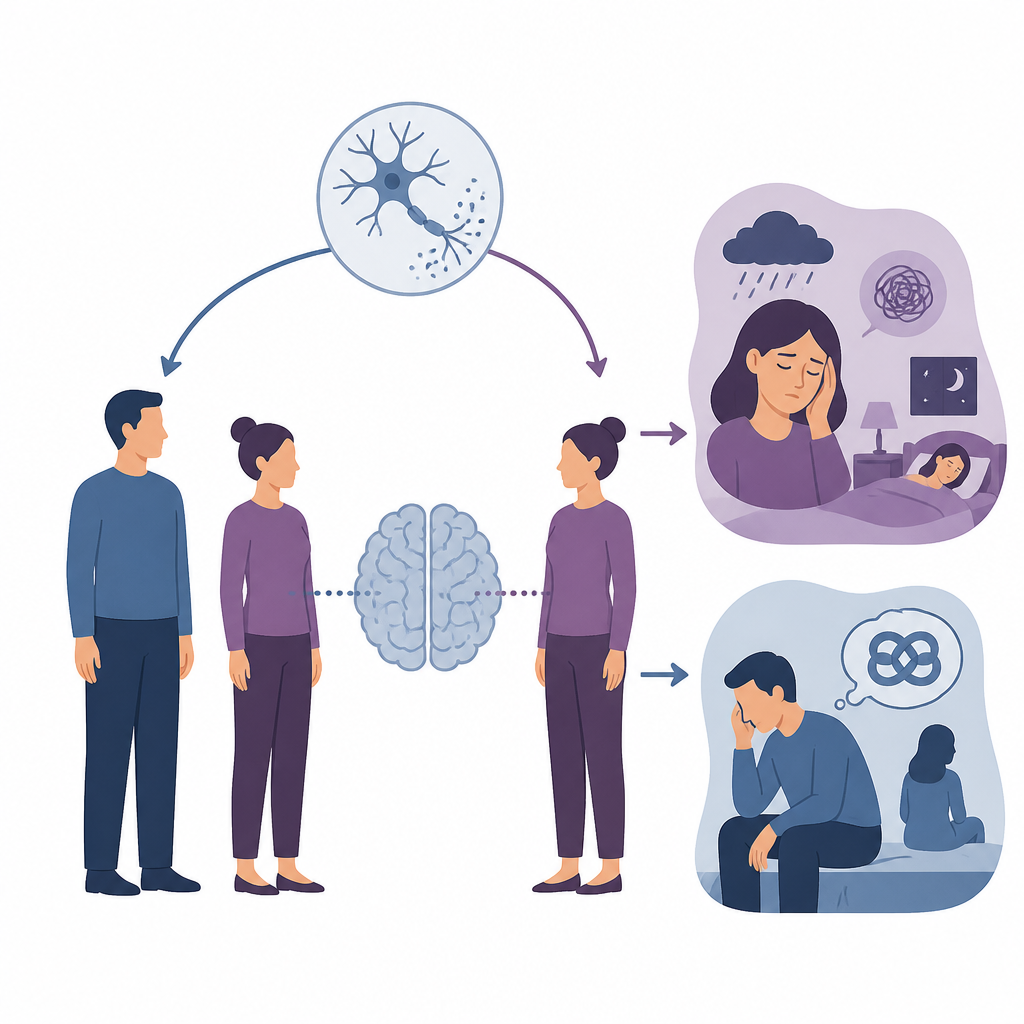
The analysis showed that women with Parkinson’s disease tended to have more severe problems in the mood and thinking group, which includes depression, anxiety, and related complaints. Women also reported worse difficulties in the sleep and fatigue group, meaning trouble sleeping, feeling unrefreshed, or easily exhausted. These patterns echo what is seen in the general population, where women have a higher lifetime risk of depression and certain sleep problems, particularly around and after menopause. The results suggest that hormonal changes, social roles, and how women experience and report distress may all play a part in shaping how Parkinson’s disease feels day to day.
What differs for men
In contrast, men in the pooled studies showed more severe problems in the sexual function group. Sexual difficulties are known to increase with age in the general population, but men with Parkinson’s disease appear to be at especially high risk. Reduced activity of brain chemicals involved in reward and arousal, such as dopamine, likely contributes. Cultural factors may also influence who feels comfortable mentioning sexual concerns, with women possibly underreporting these problems. For other symptom groups, such as attention and memory, heart and blood pressure issues, hallucinations, digestion, and bladder function, the study did not find clear overall differences between the sexes, although results varied across regions.
What these findings mean for care
Because the included studies were mostly from hospitals in Europe and Asia, and many did not break down every symptom separately, the authors caution that their results may not capture all experiences worldwide. Still, using a single, well-tested questionnaire across many patients allowed a more balanced comparison than most earlier work. The results highlight that women with Parkinson’s disease may need especially close attention to mood and sleep, while men may need more open discussion and help with sexual health. Recognizing these patterns is a step toward more tailored care, where treatment plans are guided not only by movement problems but also by how non-motor symptoms differ between women and men.
A simple takeaway for patients and families
This study suggests that Parkinson’s disease does not affect everyone in the same way: women are more likely to struggle with mood and sleep, while men more often face sexual difficulties. Knowing this can encourage patients, relatives, and clinicians to ask the right questions and not dismiss these issues as “just aging.” By paying attention to sex-related differences in non-motor symptoms, health care teams can move closer to truly personalized support for people living with Parkinson’s disease.
Citation: Cicero, C.E., Terravecchia, C., Pettinato, L.L. et al. Sex differences in the severity of non-motor symptoms in Parkinson’s disease: a systematic review and meta-analysis. npj Parkinsons Dis. 12, 112 (2026). https://doi.org/10.1038/s41531-026-01323-w
Keywords: Parkinson’s disease, non-motor symptoms, sex differences, mood and sleep, sexual dysfunction