Clear Sky Science · en
Early skeletal deteriorations following short-duration spaceflight
Why Space Travel Matters for Your Bones
As trips to orbit become more common, from government missions to private flights, one surprising vulnerability stands out: our skeletons. Bones evolved under Earth’s gravity, and when that constant pull disappears, they begin to change. This study asks a pressing question for future space tourists and Mars explorers alike: can bone damage start in just a few days in space, long before anyone notices weakness or fracture risk?
Short Trips, Real Changes
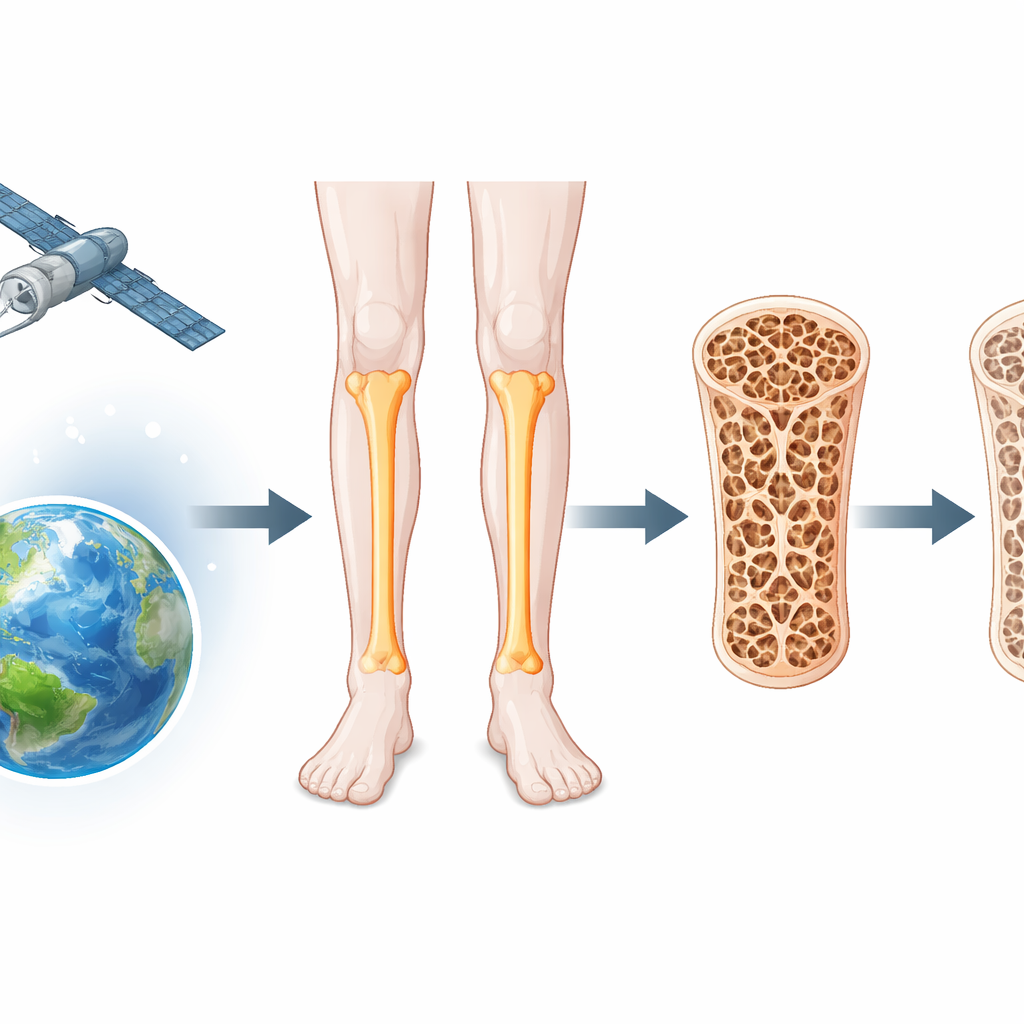
Researchers followed eight crew members—four men and four women—on two short SpaceX missions, Polaris Dawn and Fram2, each lasting only three to five days. Before and after flight, the team scanned each astronaut’s wrist and lower leg using an advanced 3D imaging method that reveals not only how much bone is present, but also how the internal “scaffolding” is arranged. They focused on the tibia in the lower leg, which normally bears body weight, and the radius in the forearm, which is less loaded in everyday life.
Leg Bones Feel Weightlessness First
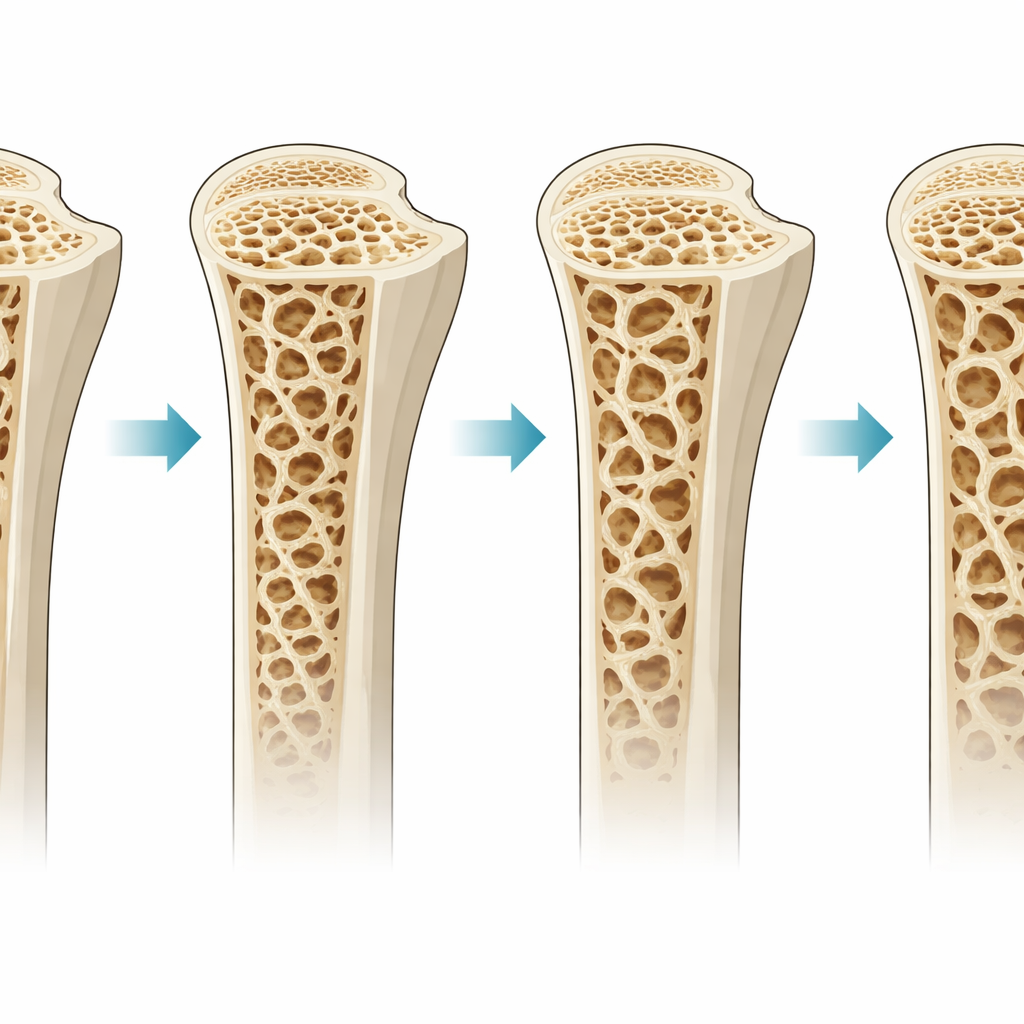
The scans showed that even this brief time in orbit was enough to nudge the leg bones in the wrong direction. In the tibia, overall bone density dropped, and the fine, sponge-like inner structure—called trabecular bone—became slightly thinner and more widely spaced. These are early signs of weakening, even though the computer models of how much force the bone could withstand did not yet show a clear loss of strength. At the wrist, by contrast, the changes were tiny, suggesting that bones that usually carry body weight on Earth are the first to suffer when that weight disappears.
Not Just Getting Older
One crew offered a rare natural experiment. Because the Polaris Dawn launch was delayed by two years, those astronauts had two pre-flight scans taken on Earth, two years apart, plus the scan taken after their eventual mission. During the two years on the ground, their bones barely changed, showing no meaningful loss in density or structure. Yet after less than five days in space, the same bones showed clear deterioration. This contrast makes a strong case that the observed losses are driven by microgravity, not by normal aging over time.
Different Responses in Men and Women
When the researchers looked separately at male and female crew members, they saw hints that bones may respond differently depending on sex. Men tended to lose more of the inner, sponge-like bone in the tibia and showed small declines in estimated strength. Women, on the other hand, appeared somewhat protected in that inner region but showed larger increases in tiny pores in the hard outer shell of the bone. Because all of the men in this small group were older and heavier than the women, the study could not fully separate the effects of sex, age, and body size, but the patterns suggest that tailored protection strategies may be needed.
What This Means for Future Space Travel
The main lesson is sobering but useful: bones can begin to deteriorate in as little as three to five days in space, especially in weight-bearing sites like the shin. That means even short missions are long enough to serve as testbeds for new protective measures—such as targeted exercise routines or other interventions—without waiting months for changes to appear. By showing that bone damage starts quickly and in specific regions, this work lays the groundwork for faster, smarter ways to safeguard skeletal health during the coming era of frequent orbital flights and longer journeys beyond Earth.
Citation: Matheson, B.E., Walle, M., Bugbird, A.R. et al. Early skeletal deteriorations following short-duration spaceflight. npj Microgravity 12, 28 (2026). https://doi.org/10.1038/s41526-026-00578-0
Keywords: spaceflight, bone loss, microgravity, astronaut health, tibia