Clear Sky Science · en
Investigating the contribution of rare non-coding variants in BRCA1, BRCA2 and PALB2 to hereditary breast cancer
Why hidden parts of cancer genes matter
Genetic testing has helped many families understand why breast cancer runs in their relatives, mainly by finding harmful changes in well known genes like BRCA1, BRCA2 and PALB2. But most of the DNA in these genes lies outside the protein making sections that are usually tested, leaving a large blind spot. This study asks whether rare changes in those overlooked regions can partly explain breast cancer in families who currently receive no clear genetic answer. 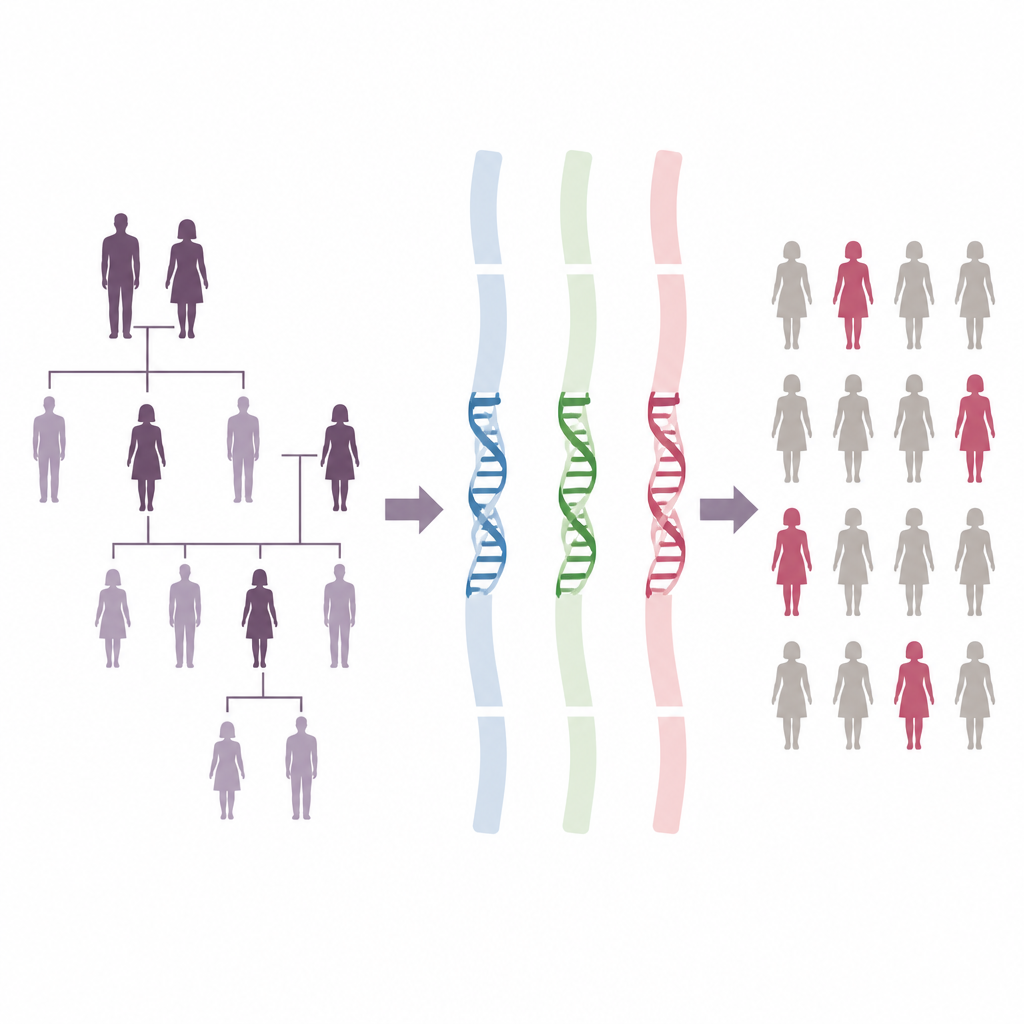
Looking beyond the usual suspects
The researchers drew on the BEACCON study, which includes more than 11,000 women, about half with strong family histories of breast cancer and half without cancer. Instead of examining only the standard gene segments that code for proteins, they sequenced the entire stretches of BRCA1, BRCA2 and PALB2, including deep internal regions and nearby control zones that help switch genes on and off. They then compared how often rare changes in these non coding areas appeared in women with hereditary breast cancer compared with cancer free controls.
Small changes with a real impact
Nearly half of the women with hereditary breast cancer carried at least one rare non coding change in one of the three genes, compared with just over two fifths of the control group. This translated to a modest rise in breast cancer risk overall, suggesting that most of these changes are harmless but that a meaningful minority are not. The signal was stronger in women with triple negative breast cancer, an aggressive form more often linked to inherited faults in BRCA1 and PALB2, hinting that hidden changes in these genes may be especially important for that subtype.
Reading the clues in tumors
To separate dangerous variants from innocent bystanders, the team studied tumor samples from selected women whose non coding changes looked most suspicious. They searched the cancer DNA for patterns typical of faulty BRCA1, BRCA2 or PALB2, such as loss of the healthy copy of the gene and a distinctive kind of widespread DNA damage. In about a quarter of the variants they could test, the tumors showed these hallmarks, supporting the idea that the hidden changes were disrupting the genes’ normal role in repairing broken DNA. 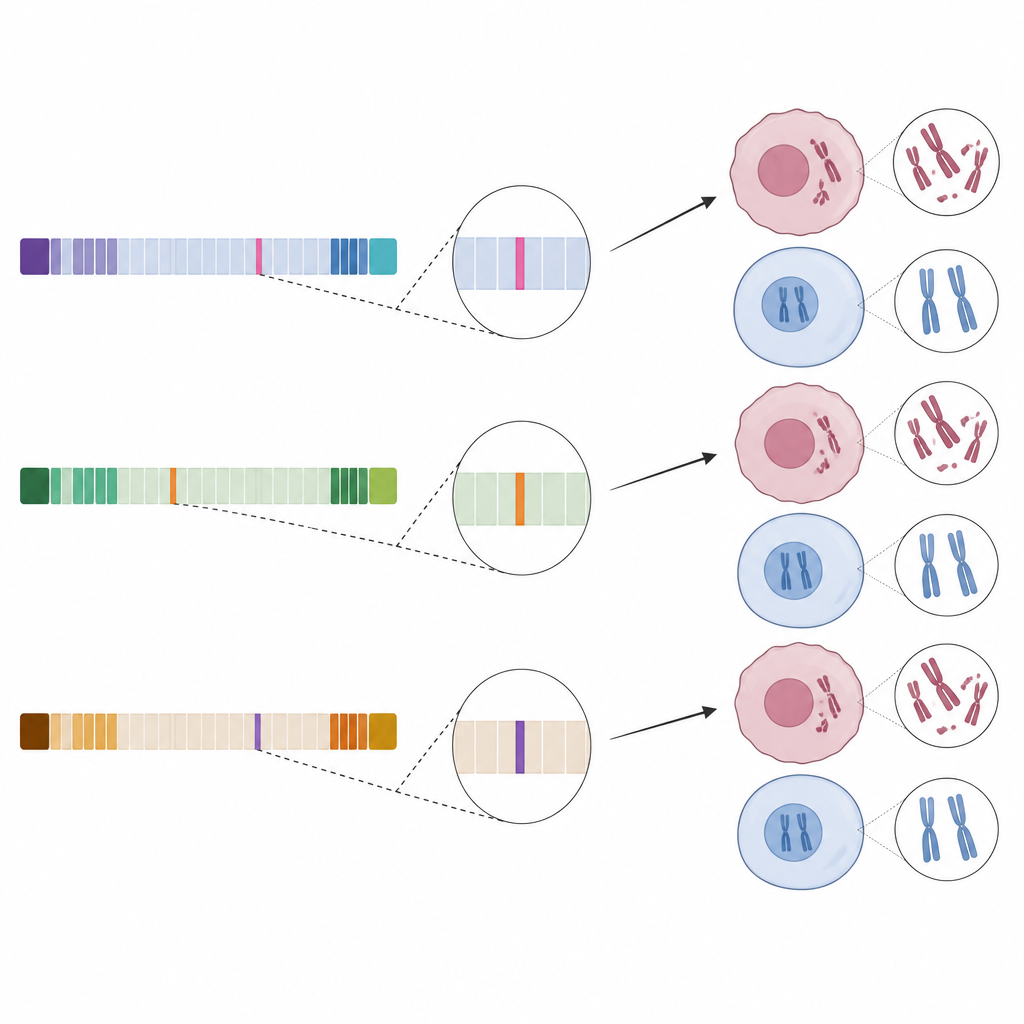
Testing variants in living cells
The researchers then recreated two of the most promising non coding variants in healthy breast cells grown in the laboratory using precise gene editing tools. Both changes lay deep within introns, long stretches of DNA normally removed when a gene is read. Detailed analysis showed that each variant created a new faulty cut and paste signal, leading the cells to insert extra pieces into the BRCA1 or PALB2 genetic messages. This scrambled the instructions, greatly reducing normal gene activity and supporting the view that these variants are truly harmful.
What this means for families
Taken together, the findings suggest that rare non coding changes in BRCA1, BRCA2 and PALB2 may account for up to around one in ten hereditary breast cancer cases that currently lack an explanation. While each individual change is extremely rare and hard to prove harmful, the study shows that some of the missing heritability lies in DNA regions that routine tests ignore. For families, this work points toward more complete genetic testing and deeper laboratory studies that could eventually turn today’s uncertain results into clearer answers about inherited breast cancer risk.
Citation: Zhao, Q., Li, N., Marinovic, E. et al. Investigating the contribution of rare non-coding variants in BRCA1, BRCA2 and PALB2 to hereditary breast cancer. npj Breast Cancer 12, 73 (2026). https://doi.org/10.1038/s41523-026-00942-z
Keywords: hereditary breast cancer, BRCA1, BRCA2, PALB2, non-coding variants