Clear Sky Science · en
Post-infection sequelae of COVID-19 and other infectious diseases—a nationwide Danish study with 40-month follow-up
Why this study matters for everyday life
Many people worry about lingering health problems after COVID-19, often called long COVID. This large Danish study followed almost the entire population for more than three years to ask a simple but vital question: Are long-term problems after COVID-19 uniquely bad, or are they similar to what happens after other serious infections like flu or pneumonia? The answer can help guide public health planning and also shape how individuals think about their own risk and recovery.
Looking at a whole country over time
The researchers used nationwide health and laboratory records covering 5.8 million people in Denmark from early 2020 to mid-2023. They linked all official COVID-19 PCR test results, hospital records, and prescriptions for infection-treating drugs. Then they tracked, over time, who went on to develop a first diagnosis of mental health disorders (such as depression, anxiety, or psychosis) and a wide range of physical illnesses affecting the brain, lungs, heart and blood vessels, kidneys, hormones, blood, muscles, skin, and more. This design let them compare people with positive COVID-19 tests to those who tested negative, were never tested, received antibiotics or other anti-infective drugs, or were hospitalized with non-COVID infections.
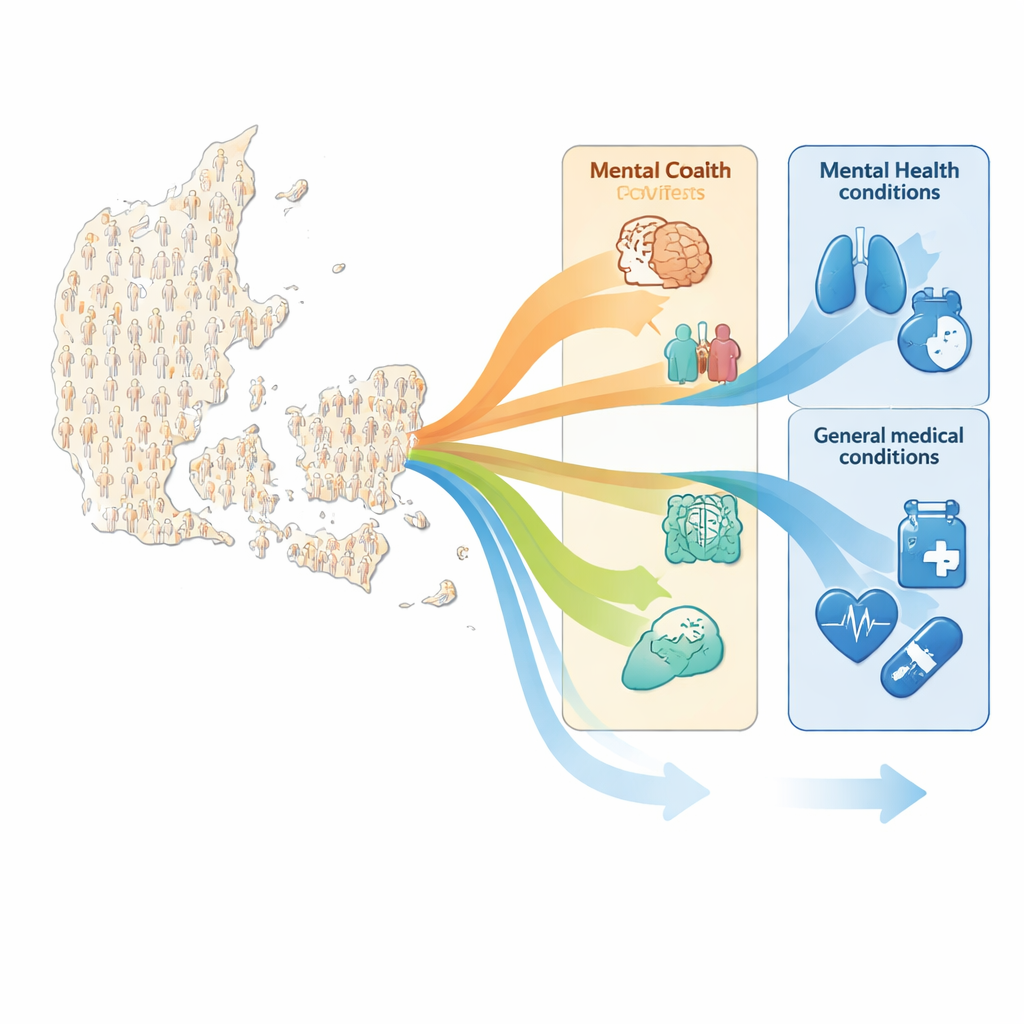
Mild COVID-19 versus no infection
When the team compared people who tested positive for COVID-19 with those who only had negative tests, they found no clinically meaningful increase in new mental health diagnoses. For general medical problems, the overall difference was tiny. Slightly higher rates were seen early after infection and in people with repeated infections, and mainly for certain issues such as neuropsychiatric symptoms (for example, dizziness or memory complaints), muscle and joint problems, and skin conditions. These small increases were mostly limited to infections with virus variants that came before Omicron and to people who had fewer than three vaccine doses. In other words, for the vast majority who had mild or moderate COVID-19 managed outside hospital—especially in the later, highly vaccinated phase of the pandemic—the long-term risk of serious new diagnoses was low and similar to that of people who never caught the virus.
The role of severe illness and hospital care
The picture changed clearly when the researchers looked at people who were sick enough with COVID-19 to require hospital care, particularly admission to an intensive care unit. These patients had much higher rates of both mental health disorders and general medical conditions afterwards than people who were never hospitalized. The longer their hospital stay and the more times they were admitted, the greater their later risk. However, when these severely ill COVID-19 patients were compared directly with people hospitalized for other infections—especially serious lung infections not caused by the coronavirus—their risks were very similar. In some cases, non-COVID lung infections were linked to even higher rates of later physical illness.
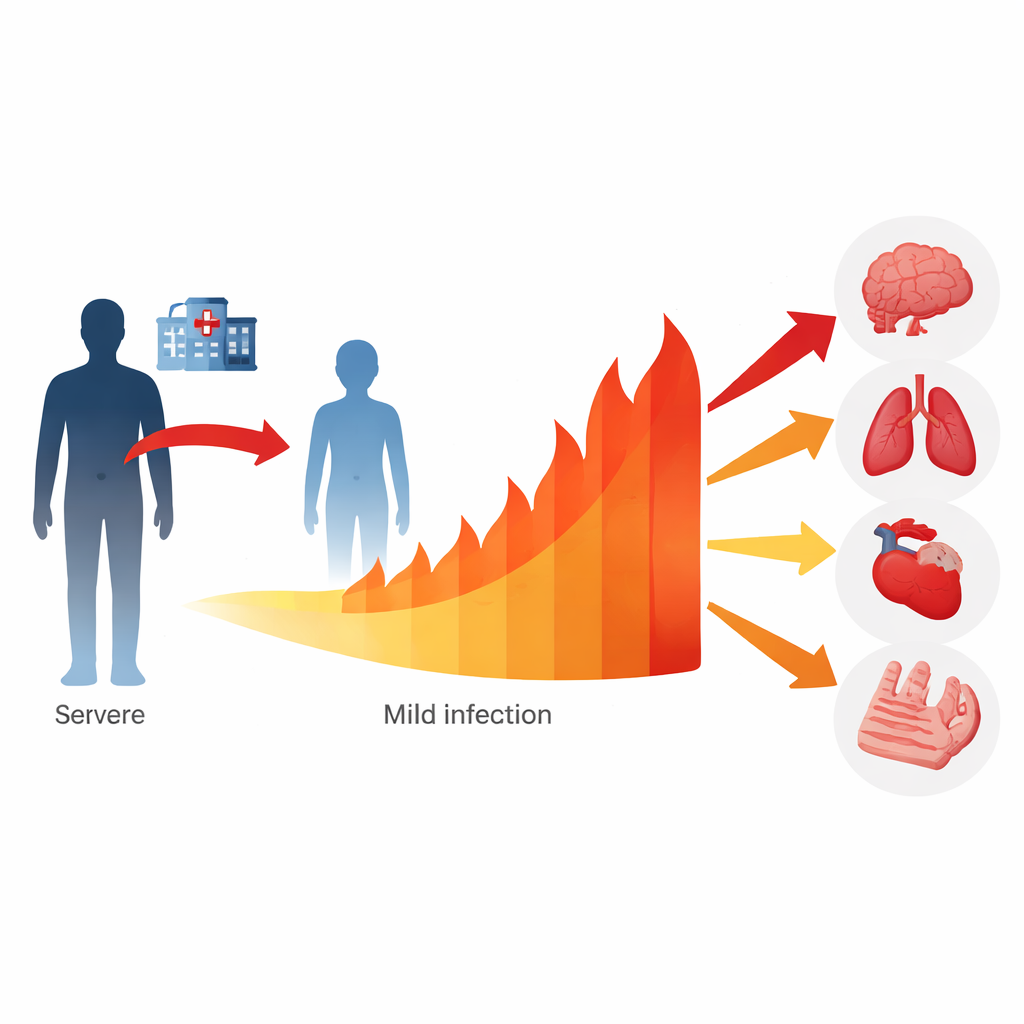
Inflammation, vaccines, and other infections
The study also explored how the body’s inflammatory response might be involved. Using a blood marker of inflammation called C-reactive protein, they found that very high levels during an infection were linked to more later physical health problems, regardless of whether the infection was due to COVID-19 or something else. Among people treated in the community, higher inflammation was associated with more general medical conditions mainly in middle-aged and older adults. In hospitalized patients, other markers of severity—such as needing intensive care—were stronger signals of later risk than this single blood test. Vaccination appeared protective: once people had received three or more doses, a positive COVID-19 test was no longer associated with higher rates of new physical diagnoses compared with a negative test.
What this means for our understanding of long-term effects
Overall, the study suggests that long-lasting health problems after COVID-19 are driven less by some mysterious unique property of the coronavirus and more by how severe the infection is, much like with other serious infections. Mild COVID-19, especially in a highly vaccinated population and during the Omicron era, was not linked to a major surge in first-time mental or physical diagnoses that required hospital or specialist care. In contrast, people who survived severe infections—COVID-19 or otherwise—did face a clearly higher risk of later health problems. For individuals, this means that preventing severe illness through vaccination and timely medical care remains crucial. For health systems, it means planning rehabilitation and follow-up not just for COVID-19 survivors, but for anyone recovering from a serious infection.
Citation: Grønkjær, C.S., Christensen, R.H.B., Kondziella, D. et al. Post-infection sequelae of COVID-19 and other infectious diseases—a nationwide Danish study with 40-month follow-up. Nat Commun 17, 3894 (2026). https://doi.org/10.1038/s41467-026-70351-0
Keywords: long COVID, post-infection sequelae, COVID-19 hospitalization, infectious diseases, Danish cohort study