Clear Sky Science · en
Risk of cervical cancer and high-grade lesions in vulnerable women a systematic review and meta-analysis
Why this matters for women’s health
Cervical cancer is one of the few cancers we can largely prevent, yet it still kills about 300,000 women each year and over 600,000 are diagnosed annually. This study asks a sobering question: in wealthy and upper‑middle‑income countries, where vaccines and screening tests exist, which women are still being left behind—and how big is their risk? By pooling data from many studies, the authors reveal which groups of women face the greatest danger of developing serious precancerous changes and cervical cancer, highlighting where health systems are failing and where action could save the most lives.
Who counts as vulnerable
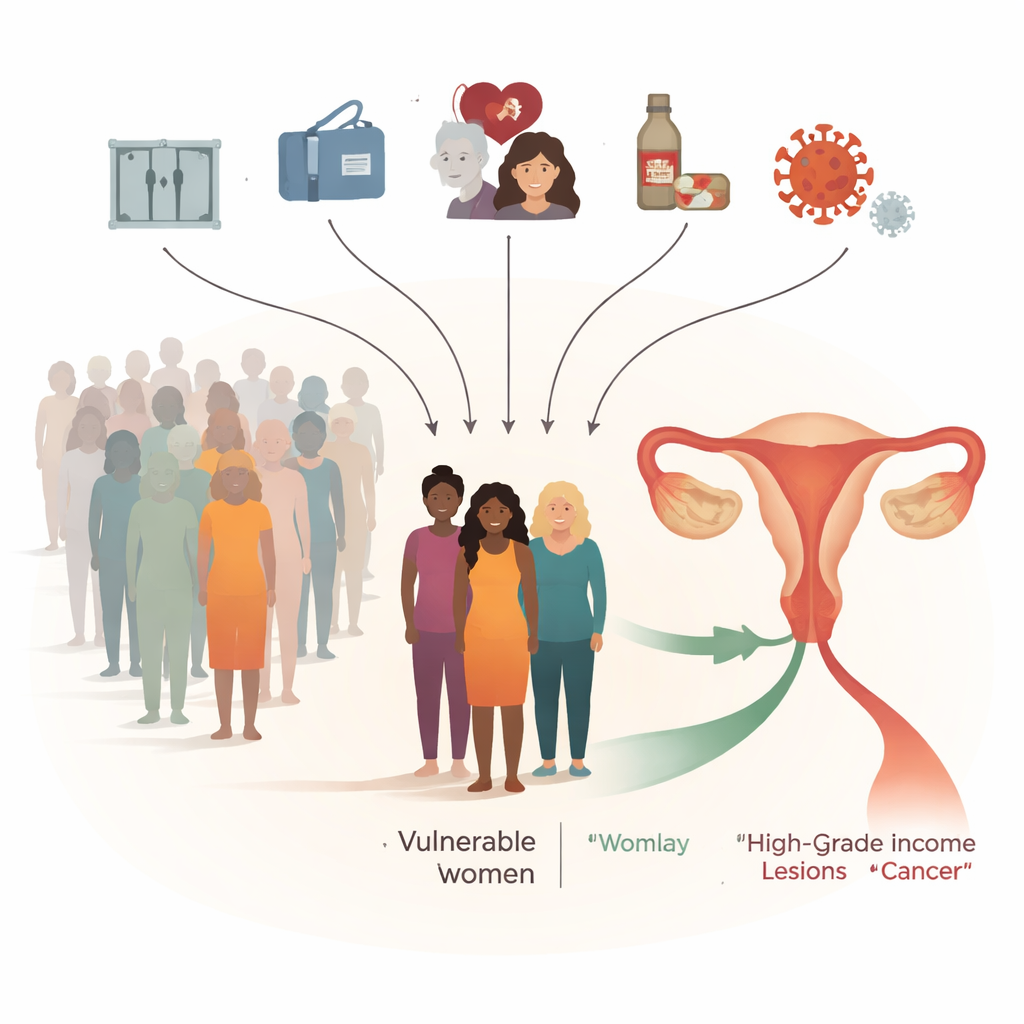
Not all women have the same chances of staying healthy. The researchers used the World Health Organization’s idea of “social determinants of health” to define vulnerability. Rather than focusing only on biology, this approach looks at how poverty, discrimination, stigma, and weak social support limit access to prevention and care. In this review, vulnerable women included those with low income or education, migrants, women in prison, sex workers, women living with HIV, and women with mental illness or substance use disorders such as alcohol or drug dependence. These women often face overlapping barriers: they may struggle to see a doctor, have lower vaccination rates, avoid screening because of fear or mistrust, or find it hard to complete follow‑up visits after an abnormal test.
How the study was done
The authors carried out a systematic review and meta‑analysis, meaning they searched several major medical databases for all relevant studies up to early 2024, then combined the results using statistical methods. They focused on countries with relatively strong health systems—high‑ and upper‑middle‑income nations—to see how inequities persist even where resources exist. In total, 127 studies were included, most from Europe, North America, and other high‑income regions. The team looked at two main outcomes: diagnosed cervical cancer of any stage, and “high‑grade lesions,” which are serious precancerous changes in cervical cells that can progress to cancer if not treated. They compared each vulnerable group with women in the general population of the same countries.
How much higher the risks are
The combined data show that vulnerable women, as a whole, face almost three times the risk of cervical cancer and about two‑and‑a‑half times the risk of high‑grade lesions compared with other women. But the dangers are not evenly spread. Women living with HIV, those with substance use disorders, sex workers, and women in prison formed a first cluster with particularly high risks—often two to five times higher than average. In some analyses, incarcerated women and sex workers had among the highest rates of serious cervical disease. A second cluster, including migrants, women of low socioeconomic status, and women with mental illness, had more moderate but still clearly increased risks. Even small increases matter because these groups are large and already burdened by other health challenges.
Why these gaps exist
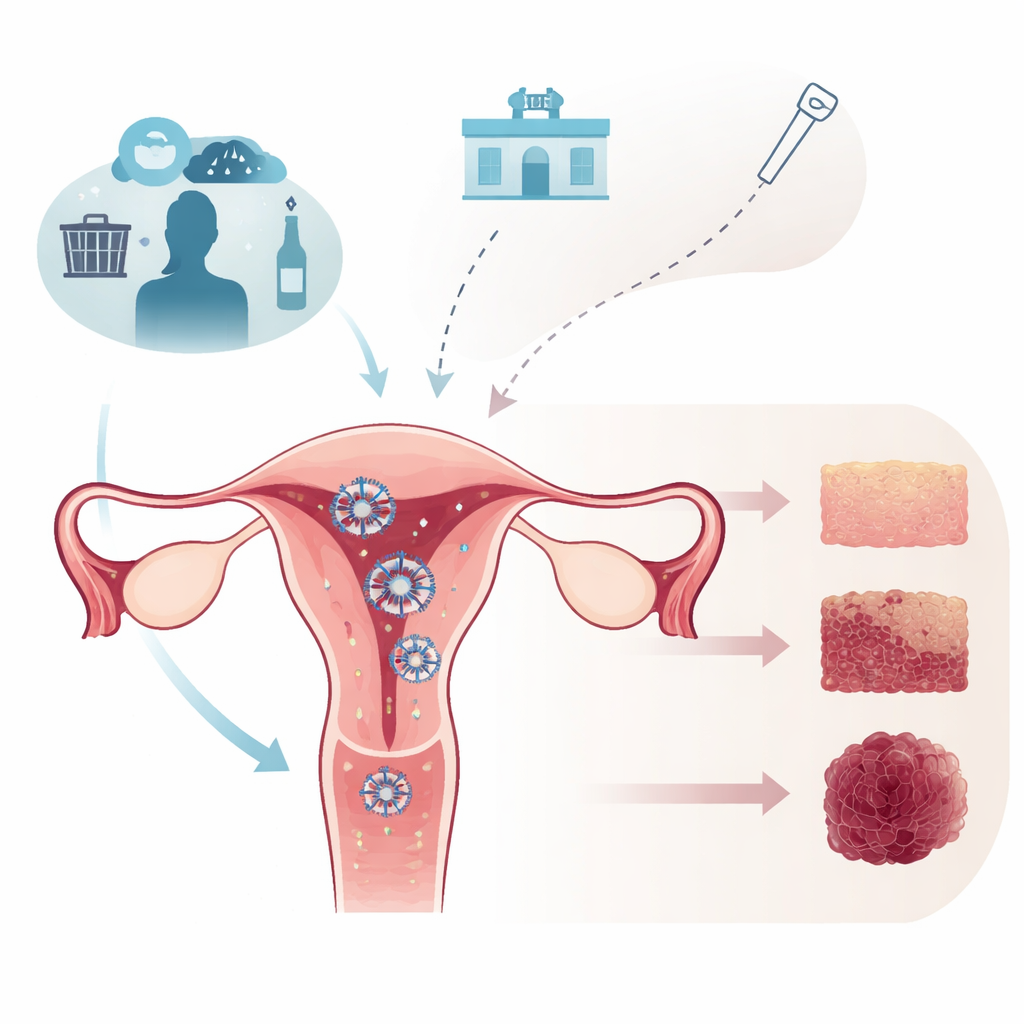
The study suggests that these differences are driven by more than just infection with the cancer‑causing human papillomavirus (HPV). Many vulnerable women are less likely to receive HPV vaccination, to be invited to screening, or to complete recommended follow‑up. For example, women leaving prison may lose contact with health services, and migrants may face language barriers, unfamiliar health systems, or cultural norms that discourage gynecological exams. Women with HIV or substance use problems may experience stigma in healthcare settings and juggle many urgent needs at once, making cancer prevention a lower priority. These overlapping disadvantages can allow HPV infections to persist and progress from early cell changes to advanced cancer.
What this means for prevention
To make cervical cancer truly rare, the authors argue, prevention must be redesigned around the needs of these higher‑risk groups. They highlight strategies such as free or low‑cost HPV vaccination, self‑sampling kits for HPV testing, mobile clinics, community health workers, and patient navigators who help women move through the system. They also call for tools like a Social Vulnerability Index to help health services identify who needs extra support. While the analysis has limitations—such as differences in how studies defined vulnerability and signs of publication bias—the message is clear. In countries that pride themselves on strong healthcare, vulnerable women are still far more likely to develop severe cervical problems and cancer. Closing this gap will require not only medical tools but also policies that confront poverty, stigma, and exclusion head‑on.
Citation: Hassine, A., Tisler, A., Martel, M. et al. Risk of cervical cancer and high-grade lesions in vulnerable women a systematic review and meta-analysis. Nat Commun 17, 3344 (2026). https://doi.org/10.1038/s41467-026-70050-w
Keywords: cervical cancer, vulnerable women, HPV screening, health inequities, HIV and cancer