Clear Sky Science · en
Segmented filamentous bacteria are worldwide human gut commensals
Hidden Helpers in Our Guts
Deep inside the human intestine lives a little-known group of microbes called segmented filamentous bacteria, or SFB. Long studied in mice, these strange, thread‑like bacteria are powerful shapers of the immune system. Until now, no one knew how common they were in people, or even whether a true human version existed. This study combines microscopy, genome sequencing, and massive global DNA surveys to show that SFB are genuine human gut residents found on every inhabited continent, especially during early childhood.
Meet the Hooked Threads
SFB are unlike the familiar round or rod‑shaped bacteria. Under the microscope they appear as long filaments made of segments, with a thin end that forms a hook‑like tip used to latch tightly onto the lining of the small intestine. The researchers examined stool from children in Mali, Kenya, and The Gambia and found filaments with exactly this telltale shape: a smooth thin segment ending in a tip, thick bulbous regions where new cells bud off, and spores that help the bacteria survive harsh conditions. High‑resolution electron images confirmed that these human filaments share the same segmented body plan and hook structure as the classic SFB seen in laboratory mice.
A New Human Species with a Special Diet
To go beyond appearance, the team reconstructed the genomes of these African SFB from stool samples. The DNA showed that they form a new species, which the authors name Anisomitus miae, and that it belongs firmly within the broader SFB family seen in many animals. Like their animal cousins, these bacteria have small, streamlined genomes and seem tightly adapted to life on the gut surface. Yet they also carry unique features: a full toolkit for breaking down starch and glycogen and importing the resulting chains of sugar units, as well as extra defenses against oxidative and other environmental stress. These traits suggest that human SFB tap into specific dietary and host‑derived energy sources and are equipped to endure the changing conditions of the intestine.
Six Lineages Spread Around the World
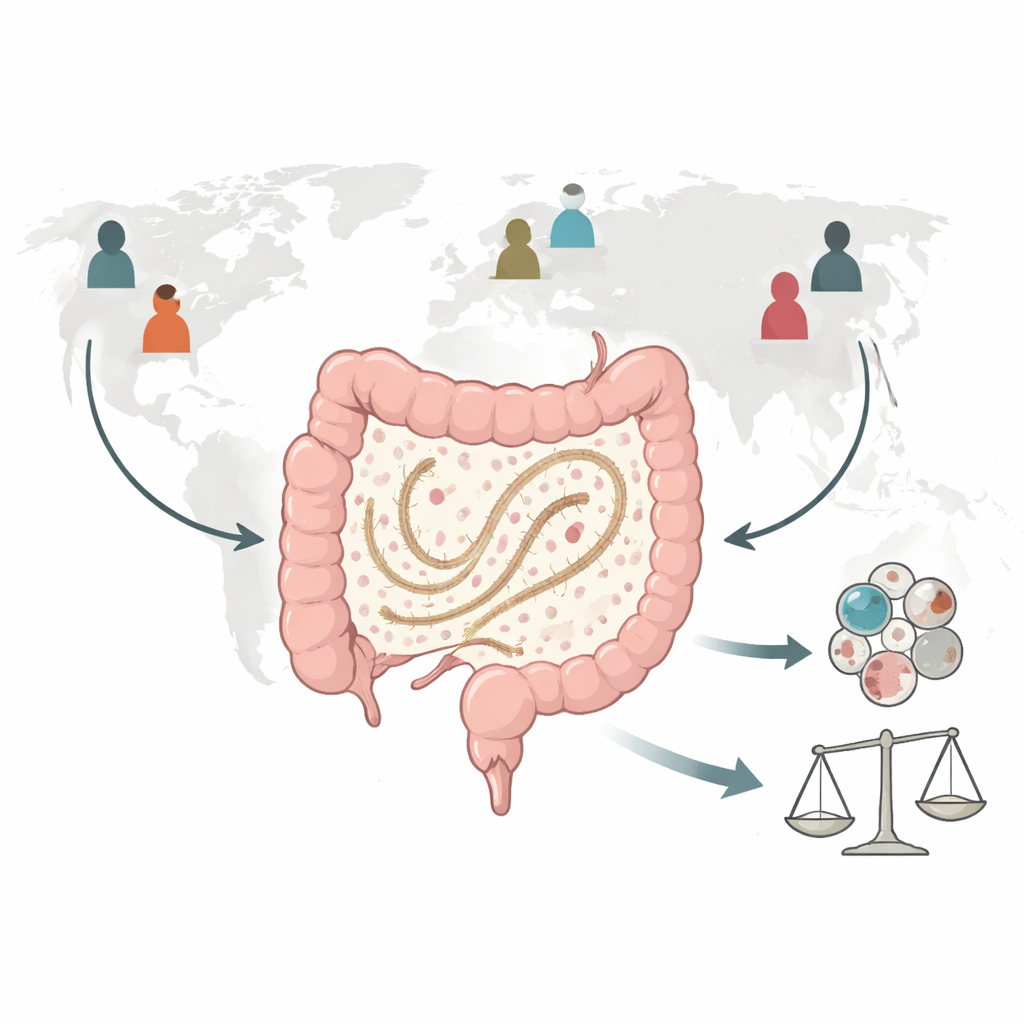
The authors then mined thousands of publicly available DNA datasets, focusing on the 16S rRNA gene, a standard barcode for identifying bacteria. By carefully defining how similar a sequence must be to count as SFB, they discovered SFB‑like signatures in samples from people in forty‑plus countries. The data cluster into at least four major and two minor human lineages. One lineage, corresponding to the newly defined African species, dominates in sub‑Saharan Africa and is also found in Indigenous groups in South America. Others are more closely related to SFB seen in mice, rats, or chickens and are common in parts of Asia and Europe. In some individuals, more than one lineage co‑exists at the same time, meaning people can carry a small mixture of SFB types.
A Brief but Powerful Childhood Visit
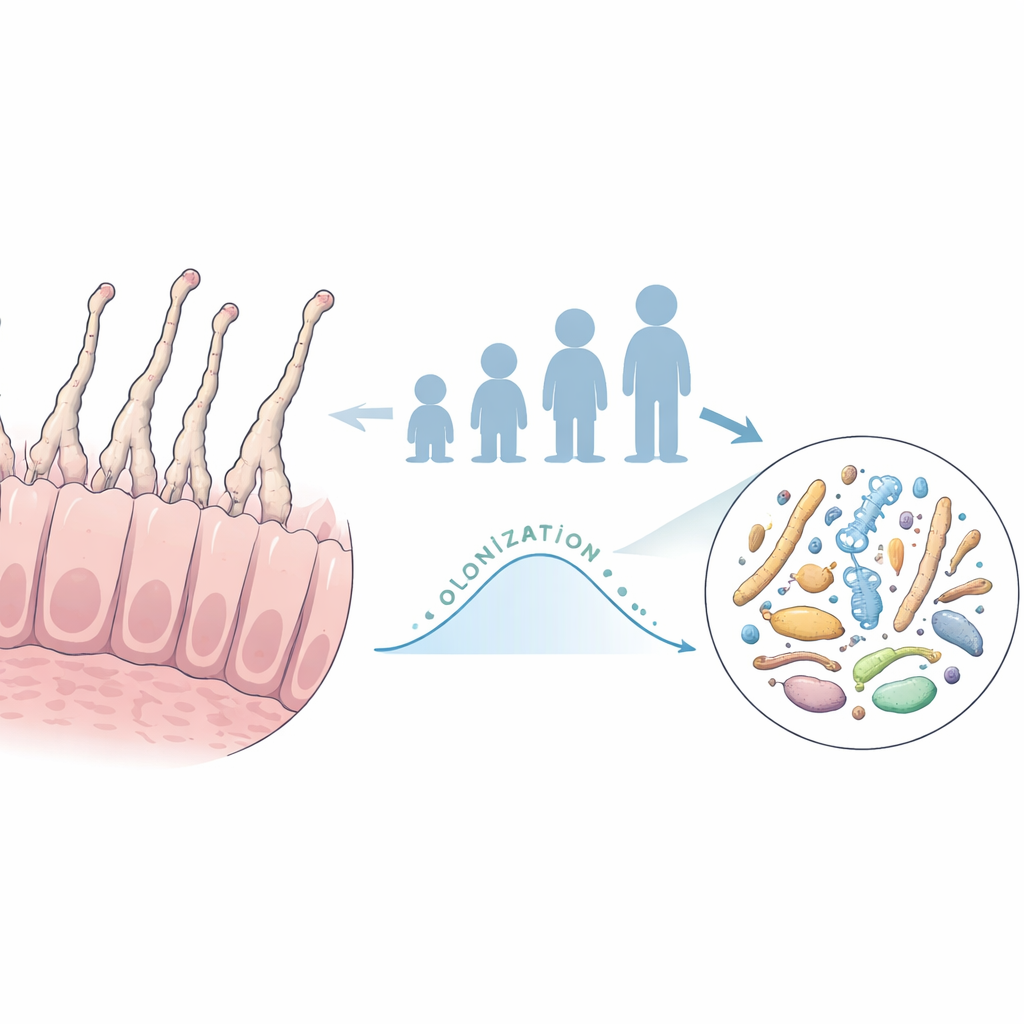
A striking pattern emerges when the authors look at age. Across several long‑term child cohorts in Africa, South America, Europe, and Asia, SFB are rarely seen in infants, surge between roughly one and two years of age—often just after weaning—and then drop back to very low levels. This spike is short‑lived, on the order of a month, but during it SFB can become hundreds to thousands of times more abundant than at other times. In adults, SFB are usually present, if at all, at levels so low that only ultra‑deep sequencing can detect them, though they are relatively enriched on intestinal tissue compared with stool. Analyses of families indicate that children are more likely to carry SFB if their mother does, hinting at mother‑to‑child transmission. Experiments transferring SFB‑rich human stool into germ‑free mice failed to establish SFB there, suggesting that human SFB are choosy about their host.
Why These Rare Bacteria Matter
Although SFB make up only a tiny fraction of the gut microbiota, work in mice shows that they can strongly stimulate immune cells, including those that patrol mucosal surfaces and help fend off infections. The new study establishes that humans harbor multiple SFB species, that these microbes are widespread but generally rare, and that they mount a sharp colonization burst during the sensitive weaning window in early life. Because that same window is critical for training the immune system, human SFB may play an outsized role in shaping lifelong immunity and susceptibility to diseases—from infections to inflammatory disorders. Understanding when, where, and which SFB lineages take hold in the human gut opens the door to exploring how this unusual partner influences health around the world.
Citation: Kiran, S., Cruz, A.R., Daniau, A. et al. Segmented filamentous bacteria are worldwide human gut commensals. Nat Commun 17, 4174 (2026). https://doi.org/10.1038/s41467-026-70010-4
Keywords: gut microbiome, segmented filamentous bacteria, childhood immunity, intestinal microbes, global microbiota diversity