Clear Sky Science · en
Mapping the heritability of disease: a nationwide study
Why family ties matter for health
Why do some people develop certain diseases while others stay healthy, even when they share the same environment? This study looks to family relationships across an entire country to find out how much of our risk for many different illnesses comes from inherited factors versus our surroundings. By using health records from nearly all residents of Denmark, the researchers build one of the most detailed maps so far of how strongly more than a thousand diseases run in families—and what that might mean for future prevention and treatment.
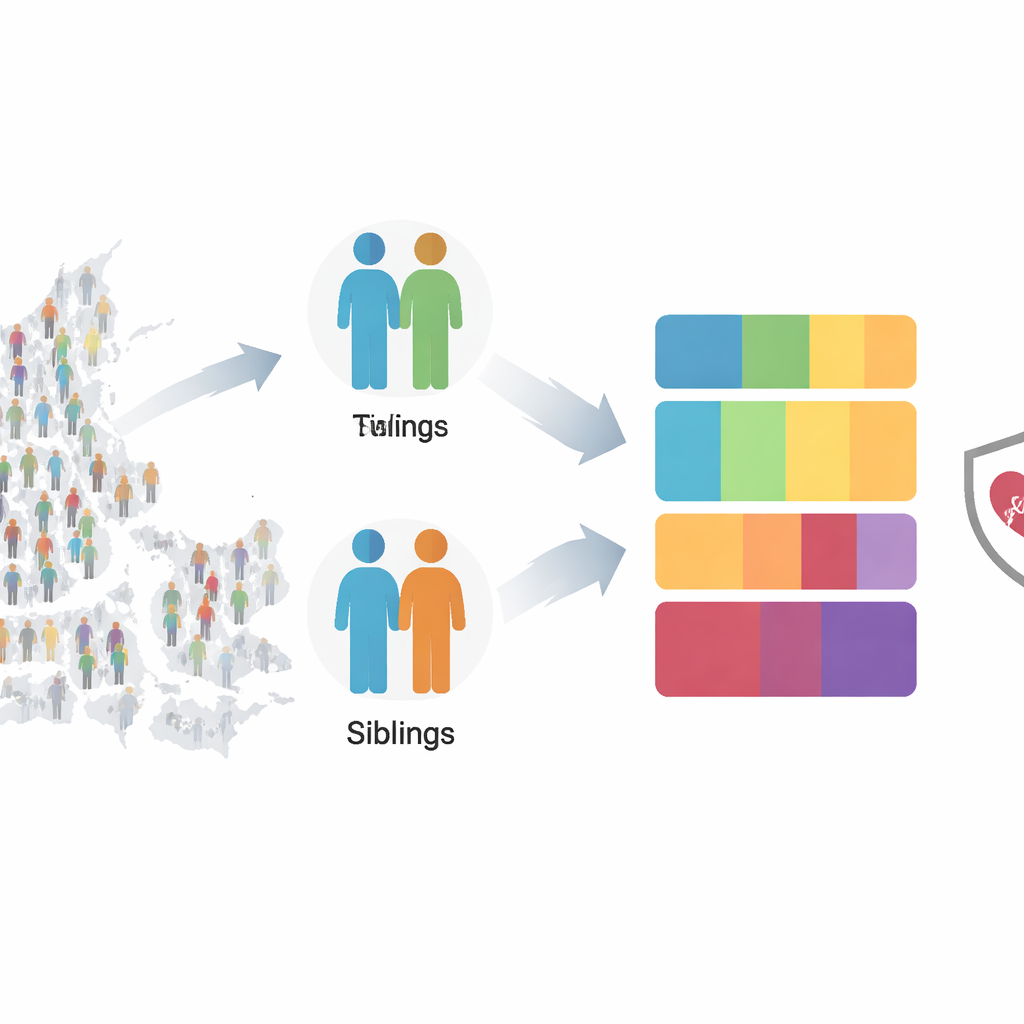
Looking at a whole country as a living laboratory
The team drew on Danish national health and population registries, which track births, family links and hospital diagnoses for more than 10 million people. From these records they identified almost 57,000 twin pairs and over 1.1 million pairs of full siblings born between 1955 and 2021. Because twins and siblings share known amounts of inherited material and early life, comparing how often they develop the same disease lets scientists tease apart inherited influences from shared environment. The researchers focused on diseases that were common enough to study reliably and that affected men and women in roughly similar proportions.
Comparing twins and siblings across life stages
To check whether missing early medical records might distort results, the scientists built two versions of their study groups: one including people born from 1955 onward, and a second including only those born from 1977, when modern electronic records begin. They then estimated how strongly each of hundreds of conditions clustered in twin pairs using a method that groups same-sex and opposite-sex twins instead of needing detailed genetic testing. For diseases that often begin in childhood, they repeated the calculations in the younger birth group. The two sets of estimates matched closely, suggesting that incomplete records from earlier decades have only a small effect on these family-based measures.
Which diseases are most tied to inherited factors?
Across all conditions studied in twins, the average inherited contribution to risk was moderate, but it varied widely by disease type. Problems involving hormones and metabolism, the urinary and reproductive organs, digestion, and the heart and blood vessels showed some of the strongest inherited influence. By contrast, injuries, poisonings and infections tended to be less strongly shaped by inherited factors, pointing to a greater role for environment and chance. When the researchers repeated the analysis using the much larger group of full siblings, they could estimate inherited contributions for more than a thousand conditions. The overall pattern by disease type stayed similar, though the sibling-based numbers were generally a bit higher, likely because siblings share their environment less closely than twins do.
What DNA studies can and cannot see
The study also asked how these family-based estimates compare with what can be seen directly in DNA. Using genetic data from a large Danish project focused on mental and brain-related conditions, the team estimated how much common DNA variants contribute to several neurological and psychiatric disorders. For most of these, especially schizophrenia, autism, bipolar disorder and epilepsy, the DNA-based values were much smaller than the family-based ones. This gap—often called “missing heritability”—suggests that many inherited influences on these conditions may come from rare changes in DNA, complex combinations of variants, or other biological factors that today’s standard genetic tests do not fully capture. Some conditions, such as migraine and febrile seizures, showed a smaller gap, implying that common variants play a larger role there.
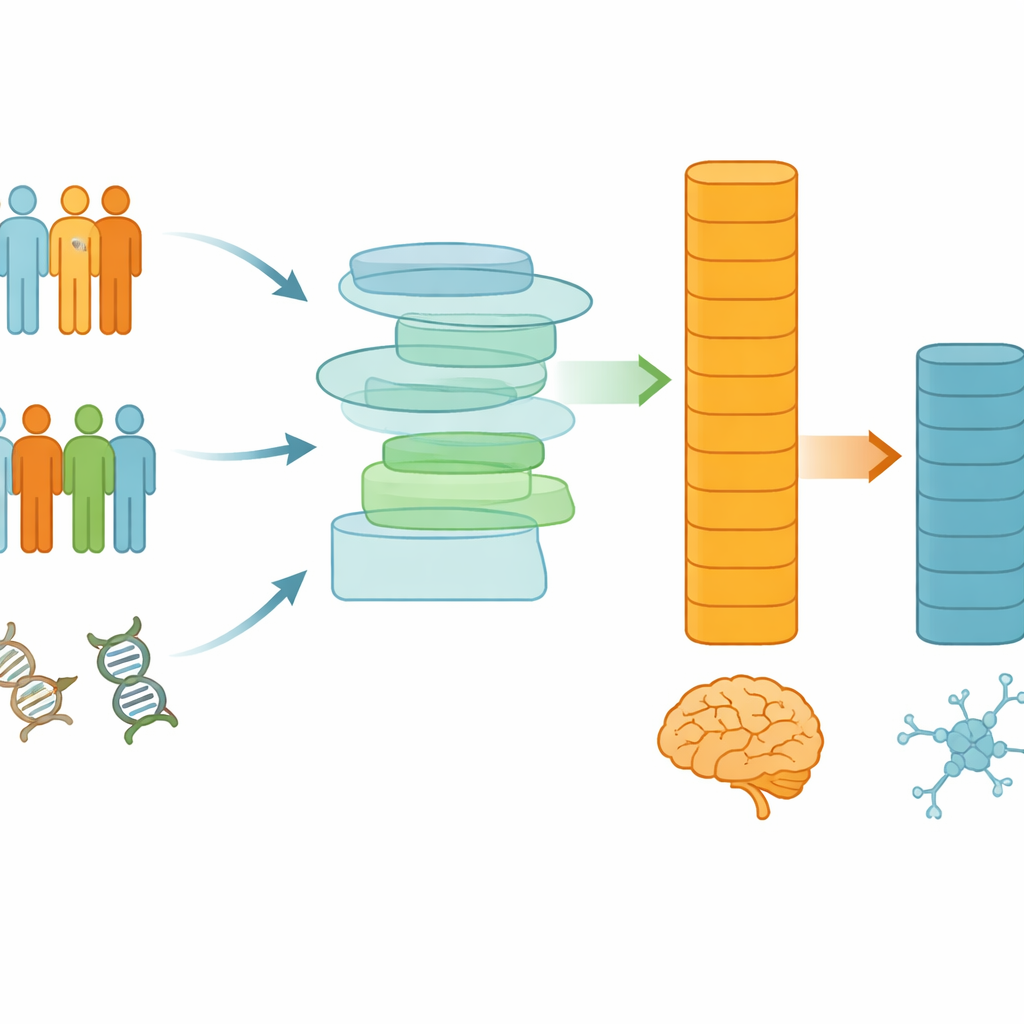
What this means for future health care
Taken together, this nationwide map of how diseases run in families provides a powerful starting point for tailoring health care. Knowing which conditions are strongly shaped by inherited factors can help refine risk prediction tools, guide decisions about screening and early checks, and highlight where genetic studies are most likely to uncover useful clues. At the same time, the differences between twin, sibling and DNA-based estimates remind us that inherited risk is only part of the story, and that environment and life experiences still matter greatly. By combining these insights, health systems may one day better identify people at high risk, intervene earlier and use resources more efficiently to prevent disease before it starts.
Citation: Auning, J., Trabjerg, B.B., Dreier, J.W. et al. Mapping the heritability of disease: a nationwide study. Nat Commun 17, 4080 (2026). https://doi.org/10.1038/s41467-026-69991-z
Keywords: heritability, twins and siblings, genetic risk, disease mapping, missing heritability