Clear Sky Science · en
From nicotine to SARS-CoV-2 antivirals with potent in vivo efficacy and a broad anti-coronavirus spectrum
Why this research matters for everyday life
As COVID-19 continues to circulate and new variants emerge, we still need better antiviral pills that work reliably, are easy to take, and stay effective when the virus mutates. This study describes an unexpected journey that starts with a component of cigarette smoke and ends with two powerful experimental drugs that can stop a wide range of coronaviruses in animals. For non-scientists, the key message is that researchers are learning to design smarter medicines that may protect us not just from today’s coronavirus, but from future ones as well.
From a puzzling smoking signal to a lab clue
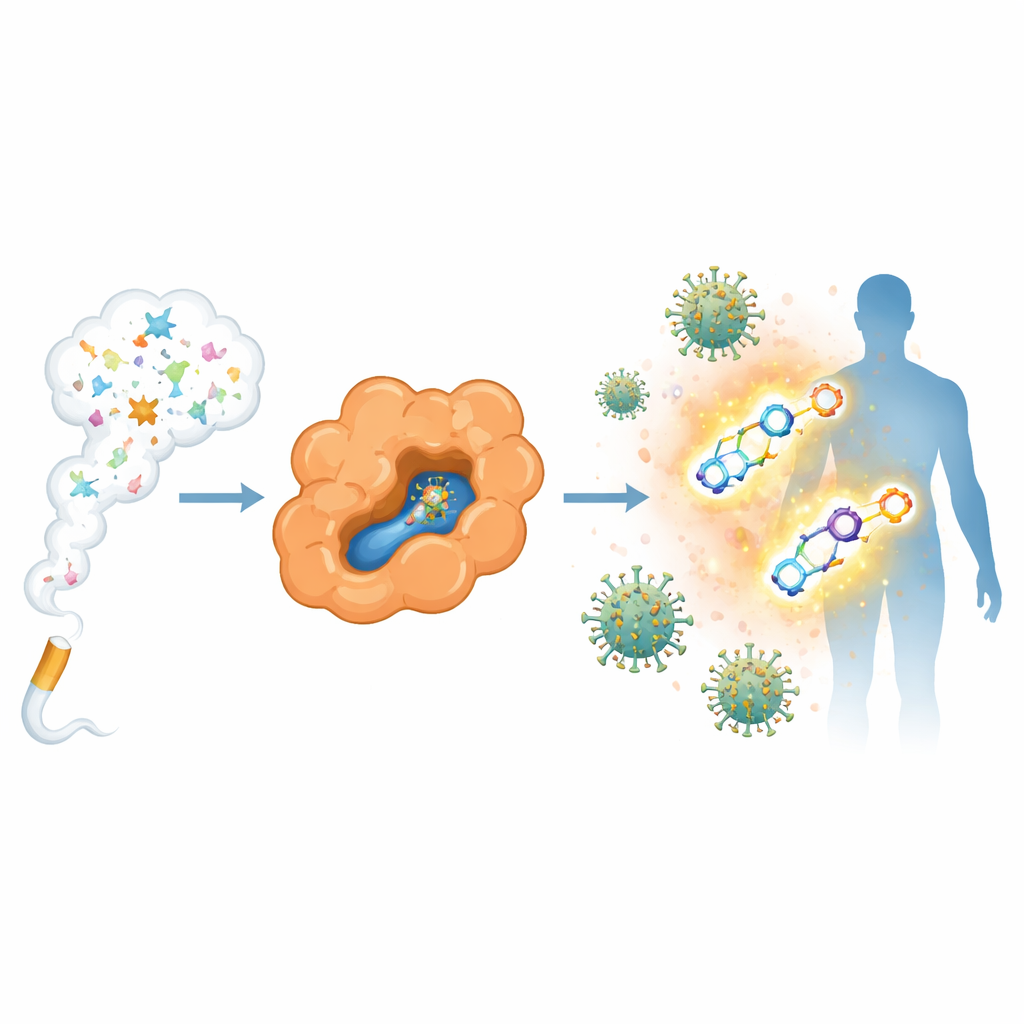
Early in the pandemic, hospital records hinted that there were fewer active smokers among COVID-19 patients than expected. Later work did not support the idea that smoking is protective, and smoking is clearly harmful to health. Still, this odd pattern prompted researchers to ask a narrower question: could any molecules related to nicotine interact with the coronavirus machinery? The team focused on the virus’s main protease, a protein-cutting enzyme that the virus needs to copy itself. They soaked crystals of this protease in high concentrations of nicotine-related molecules and examined them with X-ray crystallography, a method that reveals how small molecules sit inside protein pockets.
Finding a tiny starting piece for a new drug
Among all the tobacco-related compounds they tested, only one—3-vinylpyridine—was seen clearly gripping a key pocket of the viral protease. On its own, this tiny molecule was a weak inhibitor, but it attached in almost the same place and orientation as part of nirmatrelvir, the protease inhibitor used in the COVID-19 drug Paxlovid. Importantly, 3-vinylpyridine did not rely on a specific contact with a protease building block called E166. Many existing drugs need that contact, and when the virus mutates E166, it can become less sensitive to treatment. This raised a hopeful idea: by blending features of 3-vinylpyridine with features of nirmatrelvir, it might be possible to build new drugs that bind tightly without being so vulnerable to those resistance mutations.
Designing stronger and smarter protease blockers
The scientists then entered a medicinal chemistry “tuning” phase. They first built hybrid molecules that combined the reactive core of nirmatrelvir with a pyridine ring positioned where 3-vinylpyridine had been seen to bind. Step by step, they varied several regions of the molecules—changing ring types, adding small groups like fluorine, and swapping side chains—to improve how snugly the compounds fit in the protease pocket and how well they entered and stayed inside cells. They checked each candidate in a series of tests: how strongly it blocked the purified enzyme, how well it protected human cells from protease-induced damage, and how effectively it stopped live coronavirus from multiplying in cell cultures. Through this process, two standout compounds emerged, named YR-C-136 and SR-B-103, both more potent in lab tests than nirmatrelvir and less affected by cellular drug pumps that can weaken some medicines.
Putting the new candidates to the test in animals
Next, the team asked whether these compounds behaved like real drugs inside living bodies. In mice, YR-C-136 and SR-B-103 showed favorable “pharmacokinetics”: they stayed in the bloodstream at useful levels for longer and at similar peak concentrations compared with nirmatrelvir when given by mouth. When female mice were infected with a mouse-adapted SARS-CoV-2 strain and treated orally, both new compounds dramatically lowered the amount of virus in the lungs—by roughly 70- to 120-fold—far more than nirmatrelvir at the same dose. Lung tissue from treated animals showed much less damage and inflammation, indicating that the drugs not only cut viral levels but also helped prevent serious disease-like changes.
Fighting resistance and future coronaviruses
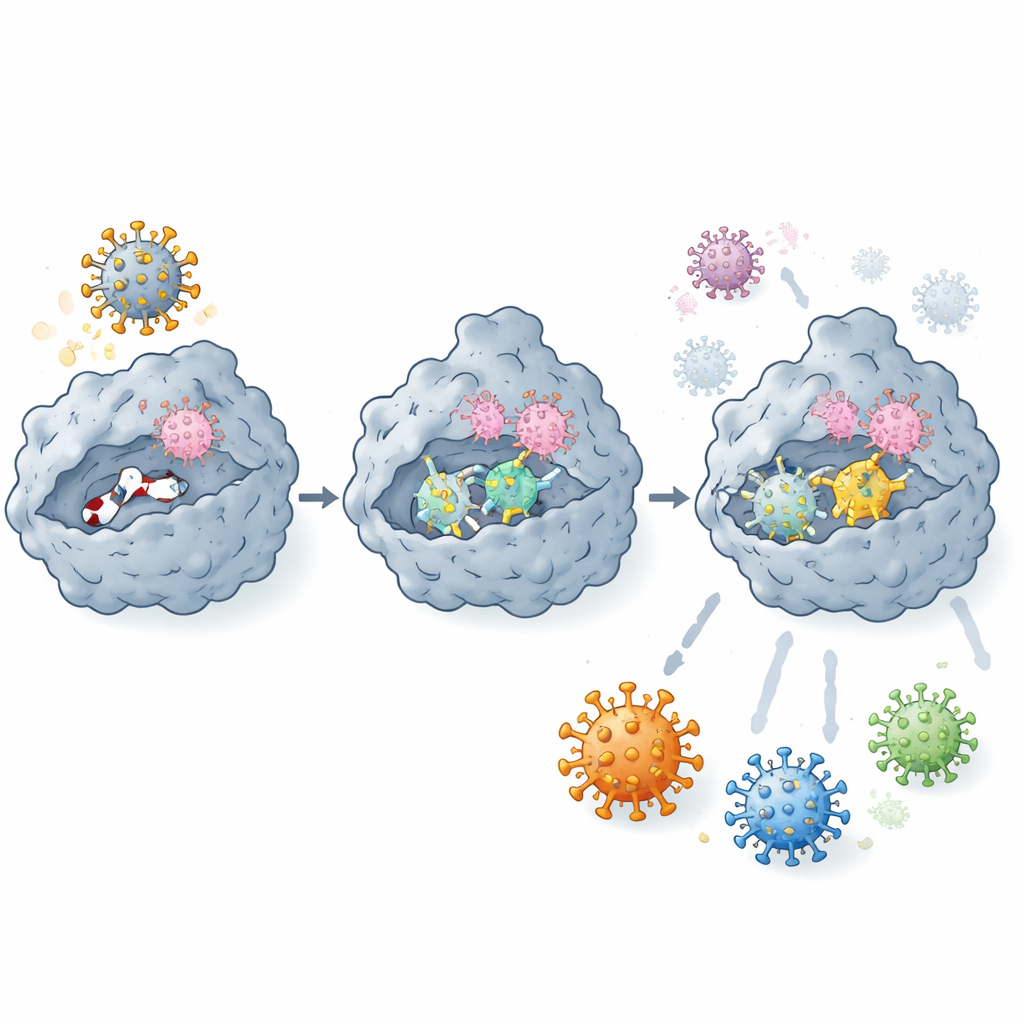
A major concern with any antiviral is that the virus can evolve to escape it. The authors tested their compounds against a protease variant carrying two changes (E166V and L50F) known to make SARS-CoV-2 less sensitive to nirmatrelvir. Both YR-C-136 and SR-B-103 still inhibited this mutant well, losing only two- to threefold in strength, which is modest compared with the loss seen for nirmatrelvir. The team also challenged a panel of different coronaviruses—including multiple SARS-CoV-2 variants such as Delta and Omicron, as well as older human coronaviruses like OC43, 229E, SARS-CoV, and MERS-CoV. In cell cultures, the new compounds blocked all of them, often at very low concentrations, showing broad, “pan-coronavirus” potential.
What this work means for the future
This research does not suggest that smoking is beneficial; rather, it shows how a small chemical fragment related to nicotine, discovered in a very controlled lab setting, can inspire more effective medicines. By carefully mapping how that fragment and existing drugs sit in the viral protease, the scientists built hybrid compounds that are more potent, less prone to known resistance routes, and active against many different coronaviruses in preclinical models. While YR-C-136 and SR-B-103 still need to pass rigorous safety and effectiveness tests in humans, they represent promising prototypes of next-generation antiviral pills that could help treat current COVID-19 infections and serve as important tools when the next coronavirus threat appears.
Citation: Khatua, K., Atla, S., Coleman, D. et al. From nicotine to SARS-CoV-2 antivirals with potent in vivo efficacy and a broad anti-coronavirus spectrum. Nat Commun 17, 2782 (2026). https://doi.org/10.1038/s41467-026-69527-5
Keywords: SARS-CoV-2 main protease, antiviral drug design, coronavirus resistance, fragment-based discovery, broad-spectrum antivirals