Clear Sky Science · en
Investigation of bile salt hydrolase activity in human gut bacteria reveals production of conjugated secondary bile acids
Why Our Gut Chemistry Matters
Every time we eat, our bodies release detergents called bile acids into the intestine to help dissolve fats and ferry vitamins into our bloodstream. These same molecules also act as signals that talk to our hormones, shape which microbes can live in our gut, and have been linked to conditions ranging from high cholesterol to cancer. This study takes a deep look at how many common gut bacteria tinker with bile acids and uncovers a surprising new route by which they create previously overlooked forms that may influence human health.
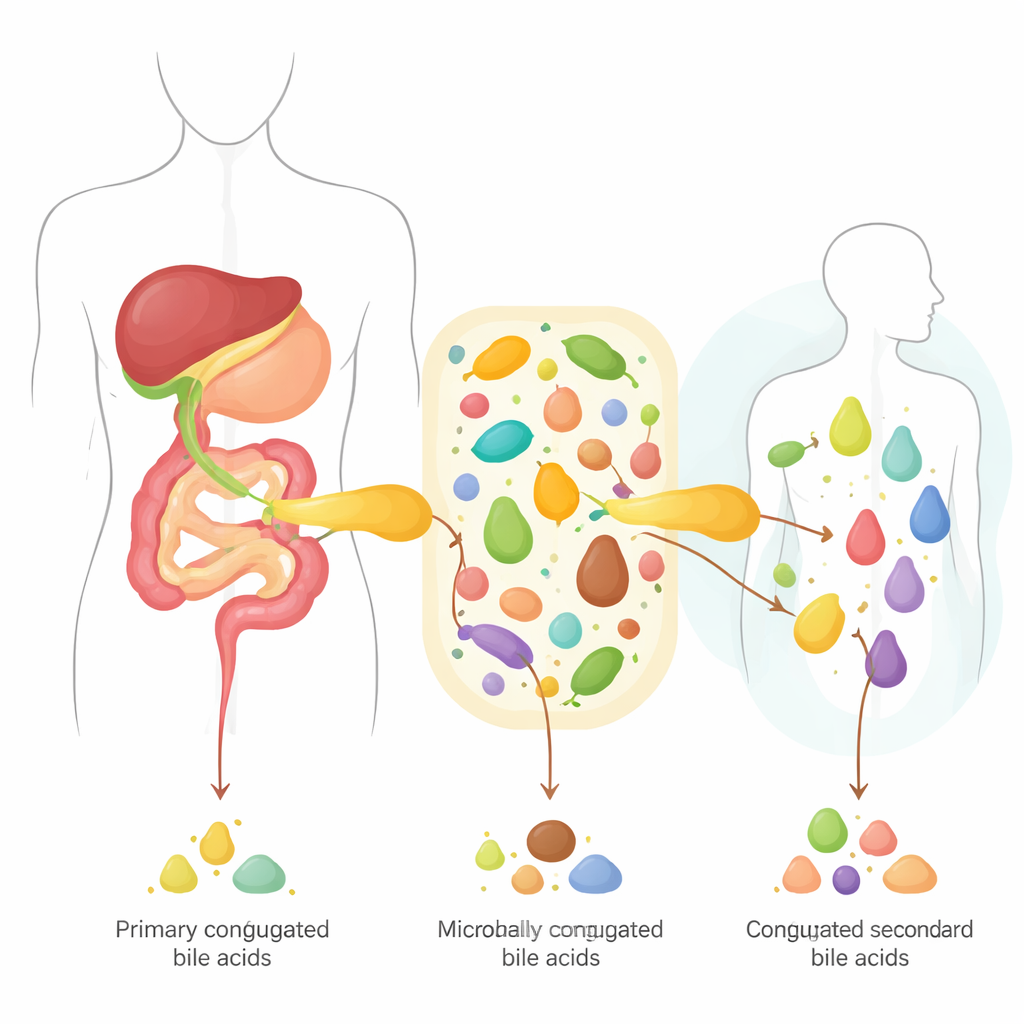
From Simple Detergents to a Complex Chemical Soup
Bile acids start their life in the liver, where they are made from cholesterol and joined to the small molecules glycine or taurine. They are stored in the gallbladder and squirted into the small intestine during a meal, reaching high concentrations before most are reabsorbed and recycled in a loop between gut and liver. The leftovers encounter dense communities of gut bacteria, which can lop off the glycine or taurine group and then further reshape the bile acid core. These transformations turn a simple set of liver-made compounds into a diverse chemical library that can either protect us from disease or promote it, depending on the mix.
How Widespread Bile Remodelling Really Is
The researchers systematically tested 77 bacterial strains, representing major groups commonly found in human intestines, to see how they handle five typical human bile acids. Using advanced chemical analysis, they showed that more than 70 percent of strains could perform the first step, called deconjugation, which removes the glycine or taurine attachment. Activity levels and preferences varied: some strains favored taurine-linked bile acids, others favored glycine, and some processed both. Certain groups, such as bifidobacteria, enterococci, and many Bacteroides species, were particularly good at deconjugation and at producing classic “secondary” bile acids that have long been known to affect metabolism and cancer risk.
New Players: Microbial Add-Ons and Shortcuts
Beyond simply clipping bile acids, many bacteria also reattached them to a wide range of amino acids, creating so‑called microbially conjugated bile acids. This ability tracked closely with strong deconjugation activity. More unexpectedly, the team repeatedly detected “conjugated secondary bile acids” that should not exist under the traditional view of bile chemistry. Careful time‑course experiments and genetic tests revealed that in several species, enzymes known as hydroxysteroid dehydrogenases could work directly on the bile acid core while glycine or taurine was still attached. In one key gut species, Bacteroides thetaiotaomicron, deleting a single such enzyme completely abolished this shortcut, proving that it normally converts a liver‑made bile acid straight into a new conjugated secondary form without passing through a free intermediate.
Gut Microbial Teamwork and Real-World Evidence
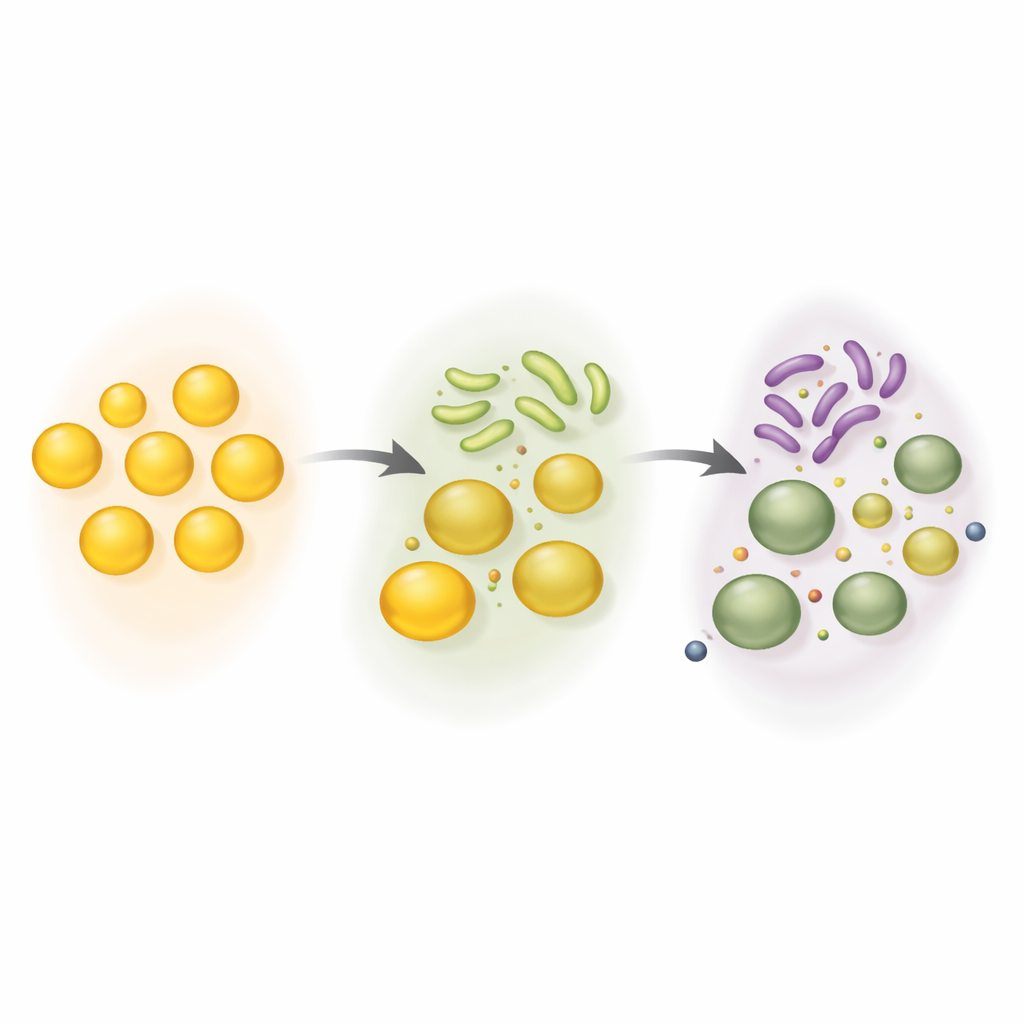
The study also explored how different bacteria cooperate. When strains with strong deconjugation activity were grown together with B. thetaiotaomicron, the combined community could carry out multi‑step conversions that no single species could manage alone, turning simple conjugated bile acids into a cascade of oxidized and epimerized products. To see if these unusual conjugated secondary bile acids are made in animals, the scientists colonized germ‑free mice with either normal or enzyme‑deficient B. thetaiotaomicron and supplied a specific human bile acid in their drinking water. Mice harboring the normal strain accumulated a distinct conjugated secondary bile acid in their feces, while those with the mutant strain did not, strongly supporting that this shortcut pathway also operates in living hosts.
What This Means for Health and Future Treatments
For decades, textbooks have described bile acid metabolism as a one‑way pipeline: liver makes conjugated bile acids, bacteria first strip off their side chains, and only then reshape the core. This work overturns that linear picture, showing instead a branching network where the timing and strength of different microbial enzymes determine whether bile acids become classic secondary forms, microbially reconjugated products, or the newly recognized conjugated secondary variants. Because different bile species can nudge metabolism, immunity, and even cancer risk in opposite directions, mapping this network in detail will be essential for designing diets, probiotics, or drugs that steer bile chemistry toward healthier outcomes.
Citation: Lucas, L.N., Jillella, M., Cattaneo, L.E. et al. Investigation of bile salt hydrolase activity in human gut bacteria reveals production of conjugated secondary bile acids. Nat Commun 17, 3077 (2026). https://doi.org/10.1038/s41467-026-68556-4
Keywords: gut microbiome, bile acids, bile salt hydrolase, microbial metabolism, host microbe interactions