Clear Sky Science · en
Dropless cataract surgery: comparing sub-Tenon’s and topical steroids for postoperative inflammation prophylaxis
Why this matters for everyday eye surgery
Cataract surgery is one of the most common operations in the world, and for many patients it restores the ability to read, drive, and recognize faces. But the weeks after surgery can be challenging: people are often sent home with multiple bottles of eye drops to use several times a day, on a schedule that is easy to mix up. This study asks a simple but important question: can a single dose of medicine placed in the eye at the time of surgery safely replace weeks of steroid drops for controlling inflammation?
Two different ways to protect the healing eye
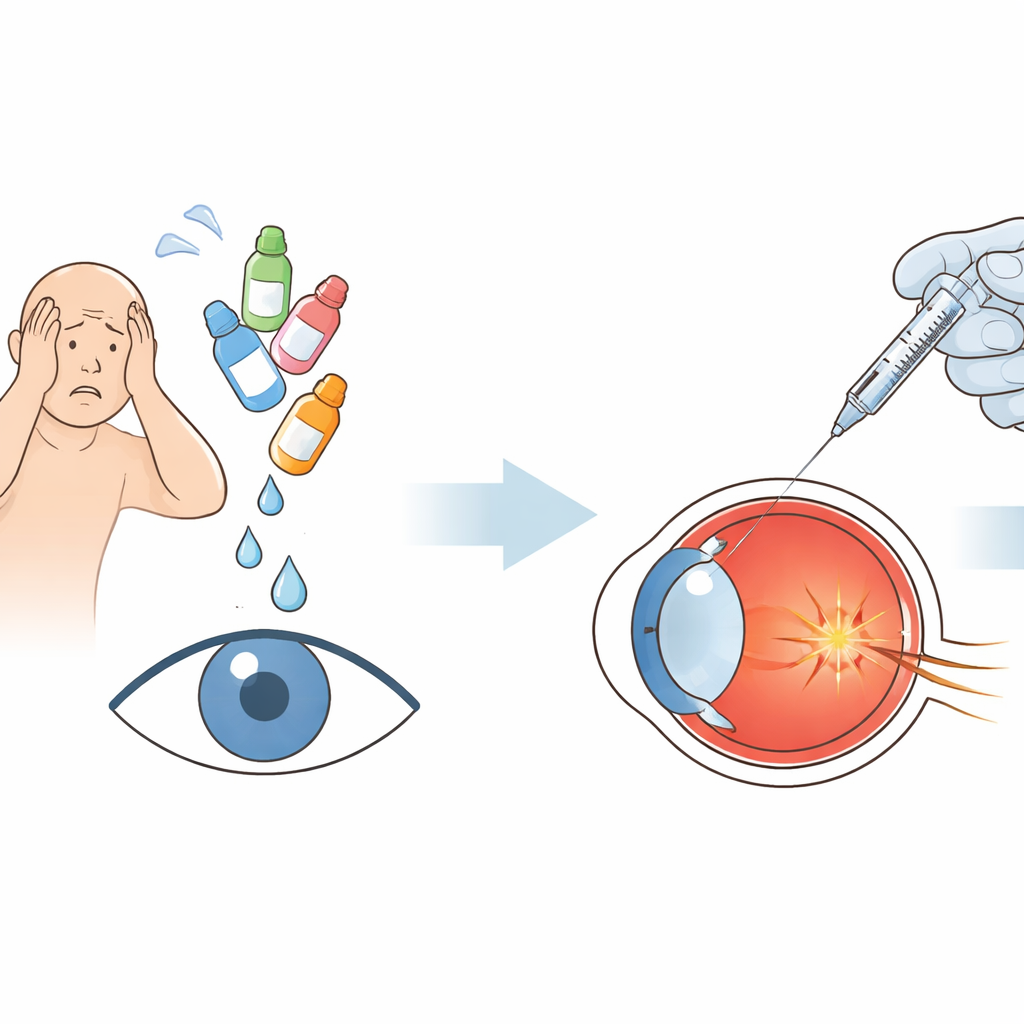
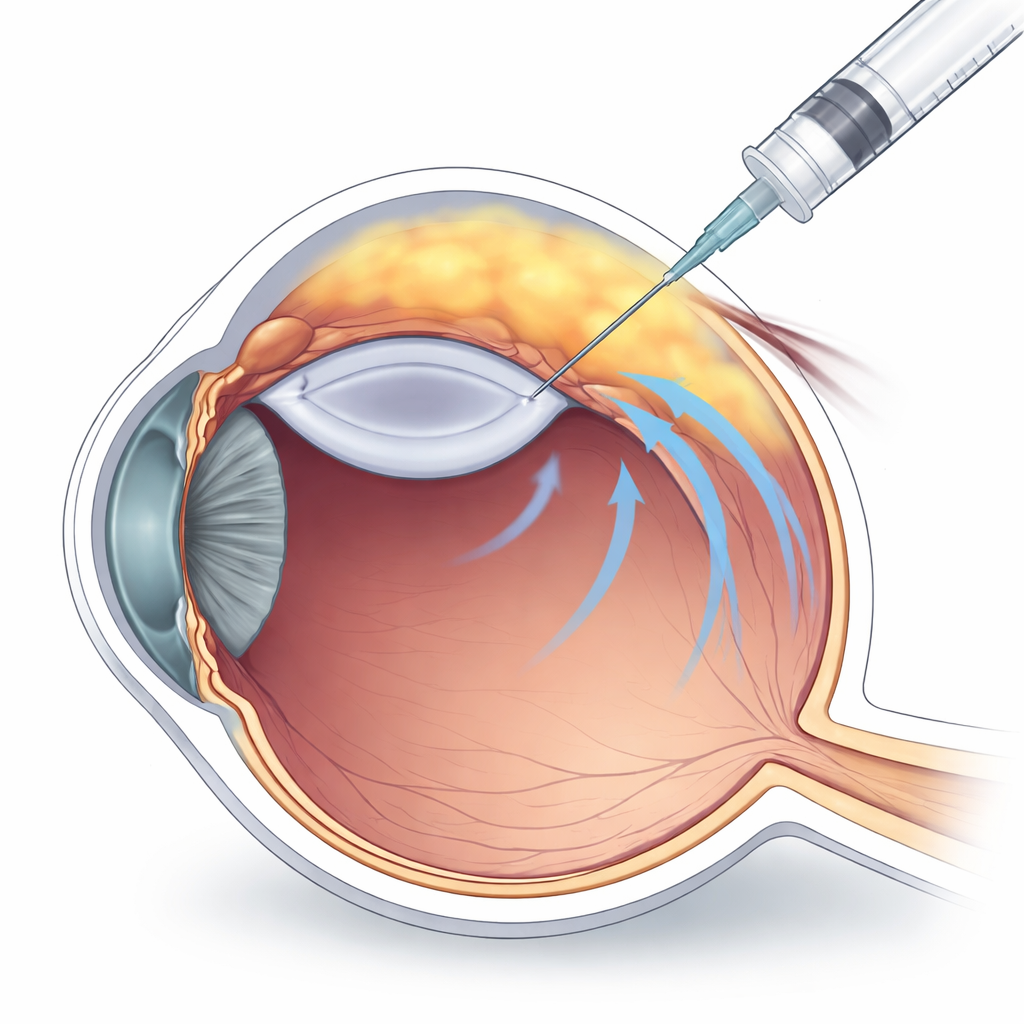
After cataract surgery, doctors routinely give steroid medicine to quiet inflammation inside the eye so that vision recovers smoothly. The traditional method is a tapering course of steroid eye drops that patients put in several times a day and then gradually reduce over three to four weeks. The alternative tested here is a “dropless” approach: during surgery, the surgeon places a small depot of steroid medicine (triamcinolone) just under the outer coating of the eye (the Tenon’s layer). This depot slowly releases the drug over time, aiming to provide the same protection against inflammation without the need for postoperative drops.
Who was studied and how
The researchers reviewed medical records from more than 3,300 cataract operations performed at a large academic eye center in Philadelphia between early 2023 and late 2024. About 9 percent of eyes received the dropless protocol with a sub-Tenon’s steroid injection, while the rest followed the standard steroid drop regimen. The two groups were broadly similar in age, sex, body weight, and other eye conditions, though the dropless group had more patients with diabetes and diabetic eye disease and a higher proportion of Black patients. Vision before and after surgery was measured, and several key complications were tracked over the first three months.
What the doctors were watching for
The team focused on three main outcomes that worry eye surgeons. First, they looked for spikes in eye pressure above a high threshold, which can be triggered by steroids and, if severe, can damage the optic nerve. Second, they checked for cystoid macular swelling, a type of fluid buildup in the center of the retina that blurs central vision. Third, they tracked “rebound” inflammation, where the eye quiets down and then flares again after initial treatment. They also examined whether having diabetes or glaucoma changed the risk of these problems, and whether results differed between patients on dropless versus drop-based care.
What the study found in real-world patients
The main message is reassuring: the dropless injection worked as well as the traditional drop regimen at preventing serious inflammation-related problems. There were no meaningful differences between groups in the rate of high eye-pressure spikes, macular swelling, or rebound inflammation. Eye pressure remained safe in both groups, even though the injection delivers a larger, non-removable steroid depot. Macular swelling and rebound inflammation were somewhat more common in patients with diabetes overall, and the dropless group had more people with diabetes, but the rates stayed within the expected range for modern cataract surgery. Interestingly, patients in the dropless group showed slightly larger average gains in vision, roughly equivalent to one extra line of improvement on a standard eye chart.
Implications for patients and eye care
For many people, especially those with shaky hands, poor memory, limited resources, or difficulty obtaining medications, a simple, dropless plan after cataract surgery could remove a major source of stress. This study supports the idea that a single steroid injection placed under the eye’s outer covering can safely stand in for weeks of steroid drops, at least in this large and diverse urban population. It suggests that dropless cataract surgery may help broaden access to high-quality care and reduce dependence on perfect drop use. However, the authors also note that their analysis was retrospective and that surgeons chose which patients received which treatment. Larger, carefully controlled trials are still needed to pinpoint which patients benefit most from the dropless approach and to refine guidelines that keep vision outcomes excellent while making life after surgery as simple as possible.
Citation: Huang, A.Y., Rao, N., Sulewski, M.E. et al. Dropless cataract surgery: comparing sub-Tenon’s and topical steroids for postoperative inflammation prophylaxis. Eye 40, 848–853 (2026). https://doi.org/10.1038/s41433-026-04309-3
Keywords: cataract surgery, dropless eye treatment, steroid eye medications, postoperative eye inflammation, sub-Tenon’s injection