Clear Sky Science · en
Selective cellular localization of UHRF1 safeguards mammalian zygotic genome activation and early embryonic development
Keeping the Earliest Steps of Life on Track
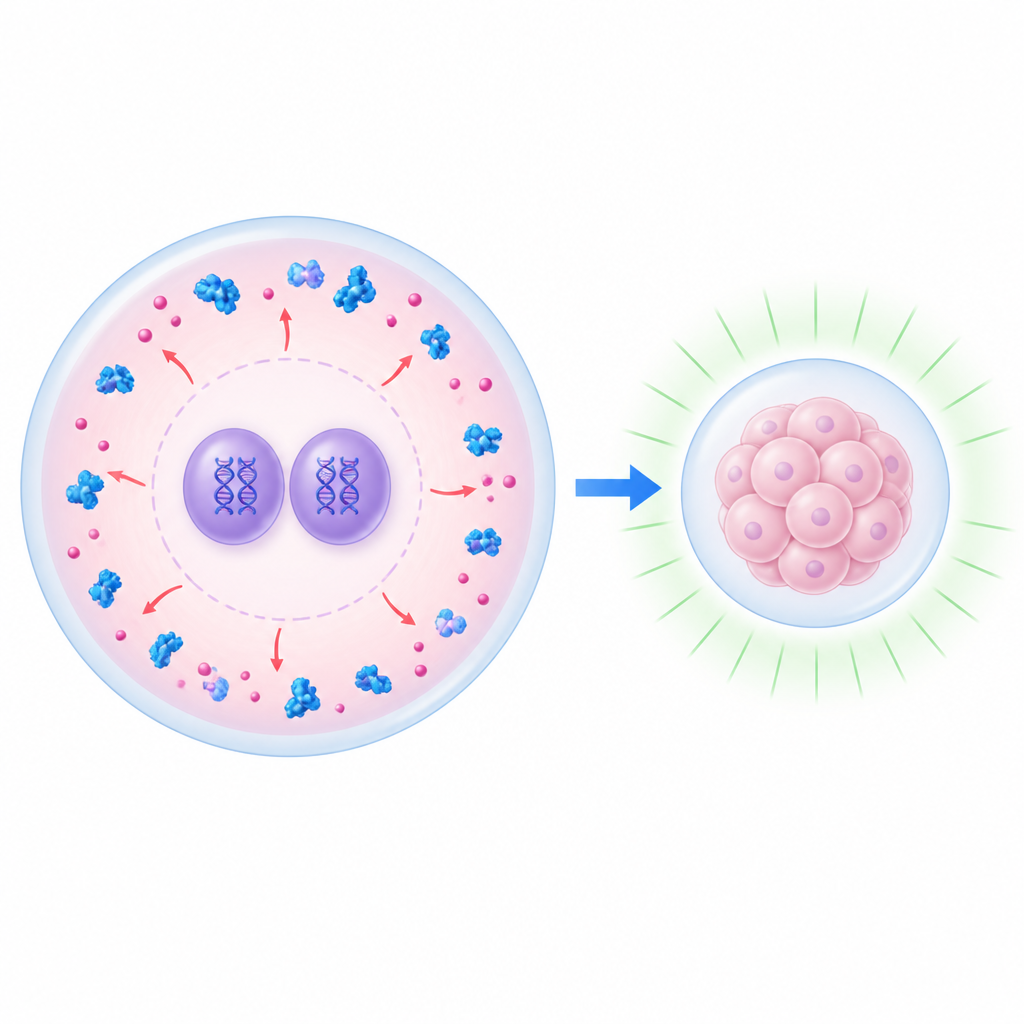
Every mammalian life begins with a fertilized egg that must quickly learn to run its own genetic program. A crucial early milestone is when the embryo first turns on its own genes, a process called zygotic genome activation. This study asks a deceptively simple question: how does the embryo stop certain powerful DNA‑binding proteins from getting in the way at this critical moment? By tracking these proteins in mouse embryos, the researchers uncover a gatekeeping system that keeps them in the right cellular compartment at the right time, helping ensure normal development.
A Gate at the Heart of Early Development
In the very first hours after fertilization, the embryo still relies on molecules left by the mother. Among them are two proteins, UHRF1 and DNMT1, long known for helping maintain chemical tags on DNA that generally keep genes off. Surprisingly, in healthy mouse embryos these proteins are largely kept out of the newly formed nuclei, where the parental genomes reside. The team used mice lacking a maternal factor called NLRP14, which normally helps retain UHRF1 and DNMT1 in the surrounding cytoplasm after fertilization. Without NLRP14, both proteins flood into the nuclei, zygotic genome activation is strongly blocked, and embryos stall at the two‑cell stage, indicating that where these proteins sit inside the cell can make or break early development.
How Misplaced Proteins Lock Down the Genome
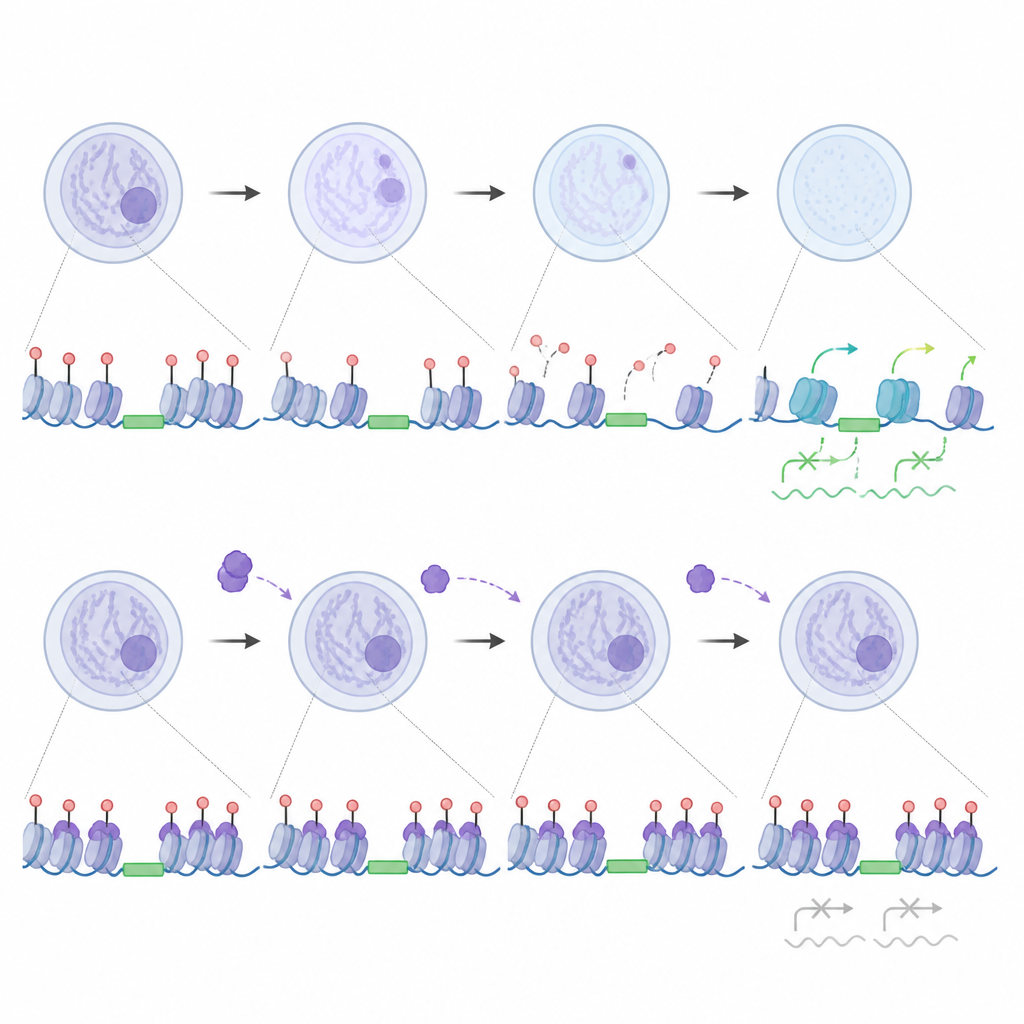
To see what nuclear UHRF1 actually does, the researchers mapped where it binds across the genome and measured how tightly the DNA is packaged. When UHRF1 accumulates in the nuclei of Nlrp14‑deficient embryos, it binds strongly to many repeated DNA sequences, including long interspersed elements known as LINE1 and certain long terminal repeat segments. These spots become less accessible, as if extra locks had been added to the chromatin. At the same time, many early embryonic genes that should become active remain silent. The study shows that this harmful binding depends partly on DNA methylation, a chemical tag that UHRF1 can recognize, suggesting that an overabundance of both the protein and these tags can freeze the genome in a repressed state just when it needs to open.
Separating Cause from Effect
Because NLRP14 might influence many molecules, the authors engineered double‑mutant mice to pinpoint UHRF1’s specific role. Removing UHRF1 along with NLRP14 allowed many embryos to progress beyond the two‑cell block and restored the activity of most early genes, even though much of the DNA methylation that normally gets erased after fertilization remained in place. In contrast, deleting DNMT1 together with NLRP14, or chemically blocking UHRF1’s ability to recognize methylated DNA, eased chromatin opening and revived a large fraction of early genes but did not fully rescue development. These comparisons reveal that excessive nuclear UHRF1, rather than global DNA methylation alone, is the dominant brake on the embryo’s first wave of gene activation.
Tuning Jumping Genes Instead of Silencing Them All
The work also reshapes how we think about so‑called jumping genes. Some mobile DNA elements, especially certain LINE1 families, actually help trigger zygotic genome activation when they are transcribed. The researchers found that when UHRF1 and DNMT1 are excluded from the nucleus, these LINE1 regions lose methylation, remain free of heavy UHRF1 binding, and become active, which in turn supports more open chromatin and proper gene switching. At the same time, a small amount of UHRF1 that normally does enter the nuclei binds specific long terminal repeat subtypes that keep their methylation and stay quiet. In embryos lacking UHRF1, these particular repeats become abnormally active and are linked to subtle changes in chromatin openness, suggesting that the embryo normally uses UHRF1 as a fine‑tuned brake on a select group of elements while allowing others to assist development.
Why This Cellular Gatekeeping Matters
To a non‑specialist, the main message is that early embryos must carefully control not only which proteins they make, but exactly where those proteins go inside the cell. This study shows that excluding UHRF1 and DNMT1 from the nucleus right after fertilization prevents them from over‑tightening the genome and shutting down helpful DNA repeats. At the same time, a small, well‑placed fraction of UHRF1 helps keep a few stubborn repeats quiet. Together, these location‑based rules let the embryo balance genome protection with the need to wake up its own genes. Because UHRF1 and related mechanisms are conserved in many animals, understanding this spatial control may illuminate general principles of fertility, early development, and how epigenetic information is reset at the very start of life.
Citation: Yan, R., Cheng, X., Long, X. et al. Selective cellular localization of UHRF1 safeguards mammalian zygotic genome activation and early embryonic development. Cell Discov 12, 38 (2026). https://doi.org/10.1038/s41421-026-00896-3
Keywords: zygotic genome activation, UHRF1, DNA methylation, LINE1 elements, early embryonic development