Clear Sky Science · en
Lithium ameliorates neural differentiation restoring cell death balance in Cornelia de Lange syndrome 2D and 3D models
Why this research matters
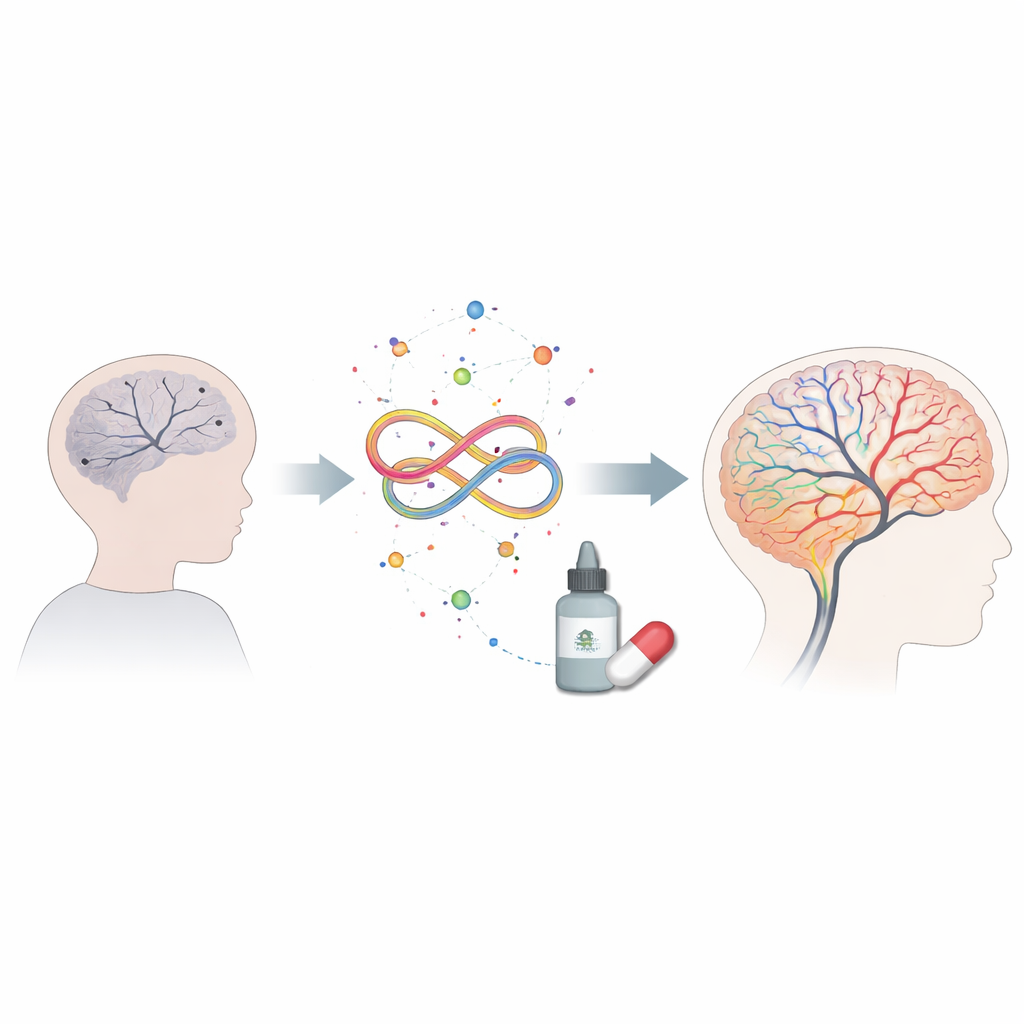
Cornelia de Lange syndrome is a rare genetic condition that can profoundly affect a child’s growth, appearance, and especially brain development, often leading to learning difficulties and autistic-like traits. Families currently have no targeted medical treatment for these brain-related problems. This study explores whether lithium—a long-used mood stabilizer—might help nerve cells from Cornelia de Lange patients grow and survive better in the lab, offering a first step toward future therapies.
A rare condition with many challenges
Cornelia de Lange syndrome affects roughly one in 10,000 to 30,000 births and can involve almost every organ. Children typically have distinctive facial features, small stature, differences in their hands and feet, and varying degrees of intellectual disability. At the root of the condition are faults in a group of proteins called cohesins, which help organize DNA and control when and how genes are switched on. When this control system is disturbed, brain structures do not form normally, leading to smaller brains and changes in areas such as the cerebellum that are important for movement and behavior.
How the team built brains in a dish
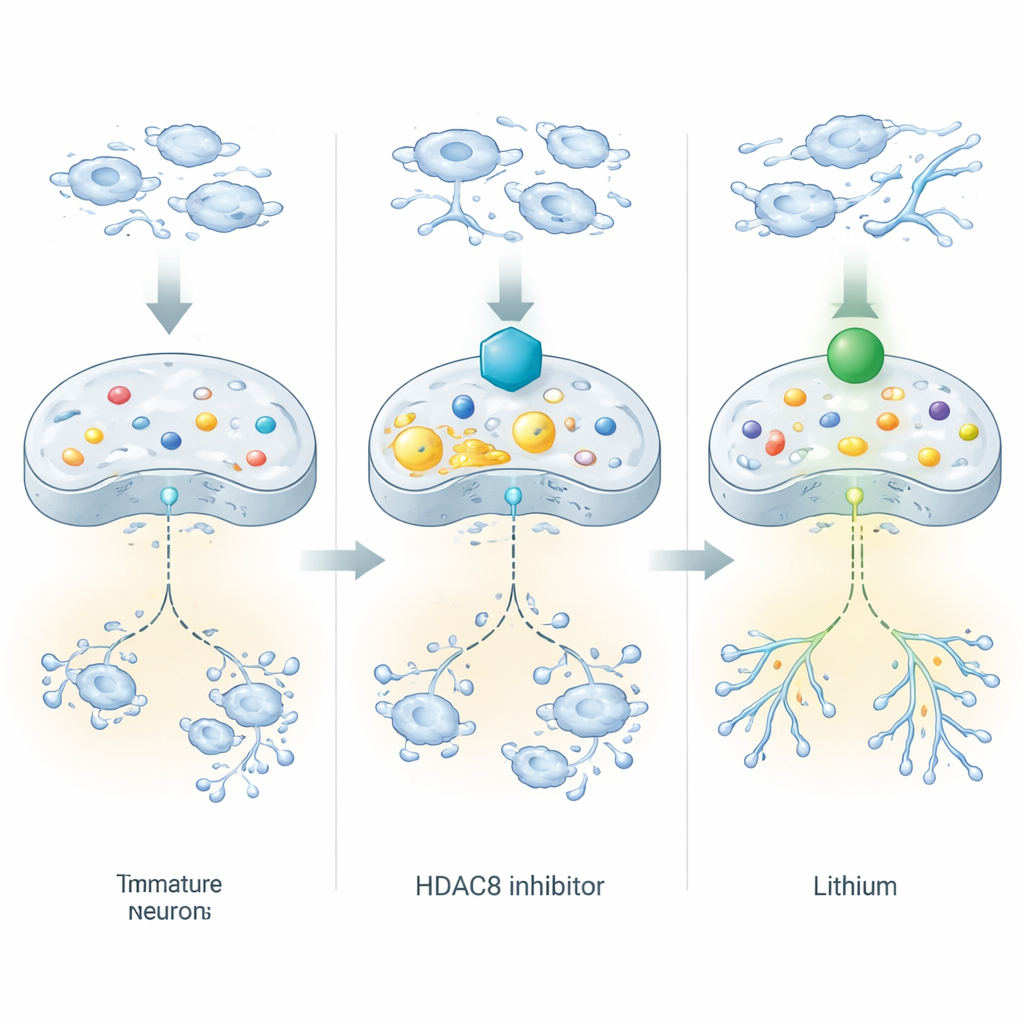
To study the condition safely and in detail, the researchers used human induced pluripotent stem cells—cells that can be turned into almost any tissue. They guided these cells to become neural precursor cells, then into neurons, and also formed three-dimensional “mini-brains” known as brain organoids. To mimic a key Cornelia de Lange defect, they chemically blocked an enzyme called HDAC8, which is needed for proper cohesin function. When HDAC8 was inhibited, precursor cells showed poorer growth, more cell death, and fewer nerve fibers, echoing the impaired brain development seen in patients.
What goes wrong inside developing nerve cells
By reading out the activity of thousands of genes in the brain organoids, the team found that many genes involved in building and maturing neurons were turned down when HDAC8 was blocked. One of the most important affected systems was the WNT pathway, a chain of signals that helps shape the early brain and guides nerve cells as they form. With HDAC8 inhibition, this pathway was suppressed, matching earlier findings in other Cornelia de Lange models and reinforcing the idea that faulty WNT signaling is central to the disorder’s brain symptoms.
Lithium’s surprising helping hand
The scientists then tested lithium chloride, a chemical cousin of the lithium used in psychiatric medicine and a known activator of the WNT pathway. When lithium was added during the conversion of precursor cells into neurons, more cells successfully became young neurons, and their appearance partly returned toward normal even in the presence of HDAC8 inhibition. In brain organoids, lithium shifted gene activity patterns back toward those of untreated controls, suggesting a broad recovery of developmental programs. Measures of cell death confirmed that lithium reduced the excessive loss of cells caused by the Cornelia de Lange–like defect.
The role of brain fats in cell survival
Because certain fats in cell membranes can tilt cells toward life or death, the team also examined molecules called sphingolipids in their neuron cultures. Overall levels of two major lipids, ceramide and sphingomyelin, did not change with the Cornelia de Lange–like treatment. However, one specific molecule, GM3, rose sharply when HDAC8 was blocked. GM3 has been linked to programmed cell death and to dampening WNT signals. Lithium treatment reduced GM3 back toward normal levels, hinting at a three-way connection between gene regulation, signaling pathways, and membrane fats in controlling whether developing neurons live or die.
What this could mean for families
This work does not yet show that lithium is ready to be given to people with Cornelia de Lange syndrome, but it does reveal a promising direction. In carefully constructed two-dimensional cell cultures and three-dimensional brain organoids, lithium could partially restore the balance between nerve cell birth and death and improve neuronal maturation when a key Cornelia de Lange–related pathway was disrupted. By tying together cohesin function, WNT signaling, and lipid metabolism, the study outlines a clearer map of what goes wrong in the developing brain—and suggests that one day, drugs that fine-tune these systems, possibly including lithium or related compounds, might help protect brain development in affected children.
Citation: Parodi, C., Lettieri, A., Grazioli, P. et al. Lithium ameliorates neural differentiation restoring cell death balance in Cornelia de Lange syndrome 2D and 3D models. Cell Death Discov. 12, 203 (2026). https://doi.org/10.1038/s41420-026-03085-z
Keywords: Cornelia de Lange syndrome, lithium, neural differentiation, WNT signaling, brain organoids