Clear Sky Science · en
Protein lactylation: a metabolic signal driving cancer therapy resistance
Why this matters for cancer treatment
Cancer drugs often fail because tumor cells learn to survive them. This article explains how a simple metabolic byproduct, lactate, helps cancer cells resist chemotherapy, radiotherapy, and immunotherapy. By uncovering how lactate alters proteins inside cells, the authors point to new ways to make current treatments work better.
How cancer rewires its fuel use
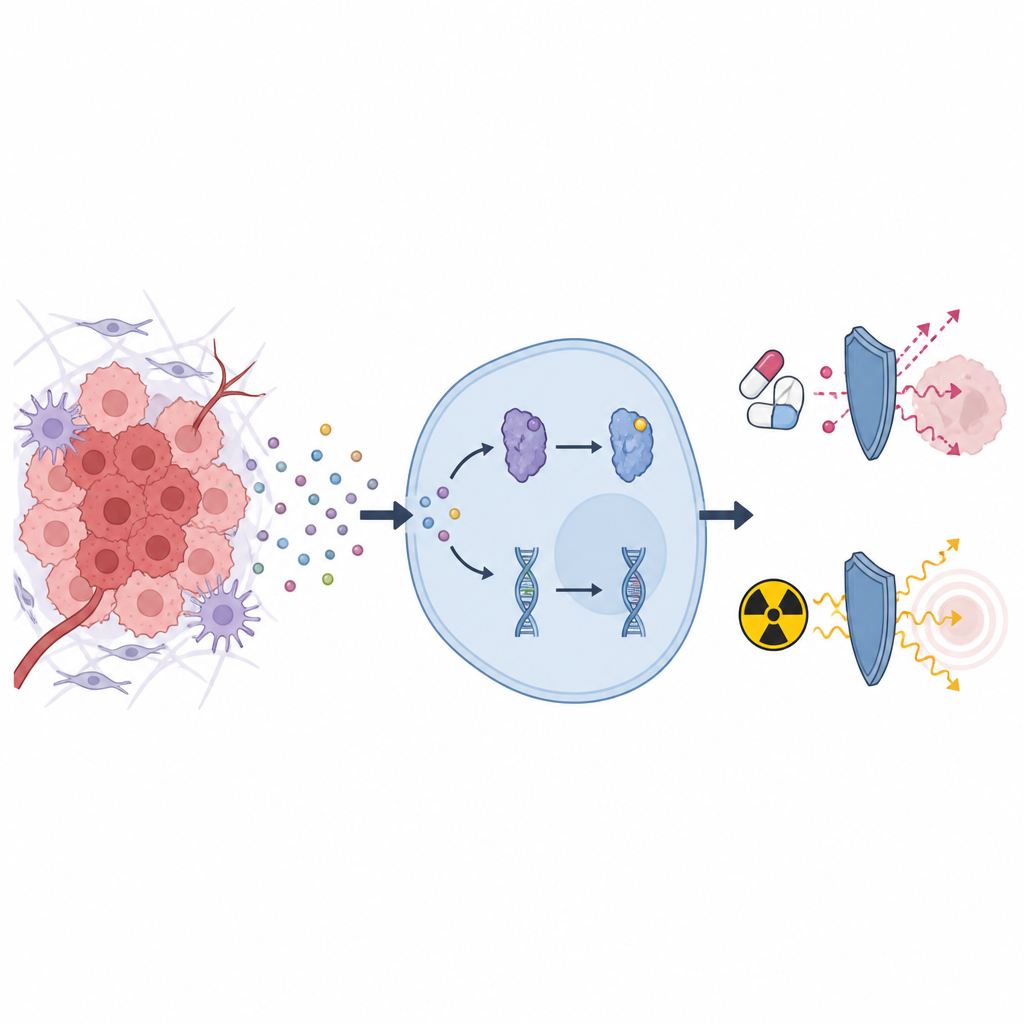
Many cancers shift from slow, efficient energy production in mitochondria to fast, wasteful burning of sugar in the cell fluid. This switch, known as aerobic glycolysis or the Warburg effect, lets tumor cells generate building blocks for rapid growth but also floods the tumor and its surroundings with lactate. Once seen as a useless waste product, lactate is now recognized as a signaling molecule that can modify proteins and DNA packaging, influencing how cancer cells behave and respond to stress.
A new chemical tag on proteins
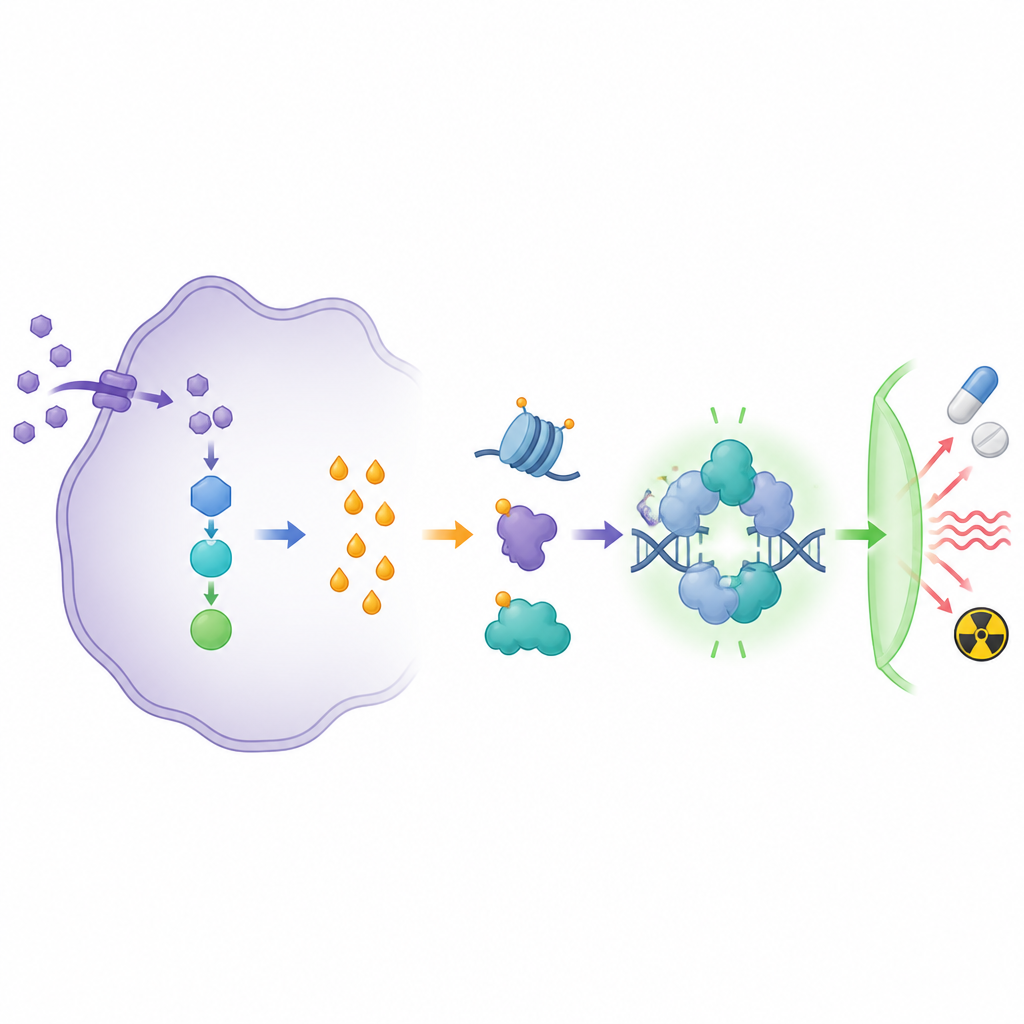
The review centers on a recently discovered chemical tag called protein lactylation. In this process, a piece derived from lactate is attached to the amino acid lysine on proteins. Enzymes can “write,” “erase,” and “read” these tags, much like they do for better known marks such as acetylation or methylation. Lactylation occurs on histones, the proteins that organize DNA, and on many non-histone proteins, including enzymes and DNA repair factors. By changing protein shape, charge, and binding partners, lactylation can tune metabolism, gene activity, and cell survival in response to high lactate levels.
Stronger repair and escape from cell death
A major theme of the article is that lactylation strengthens the ability of cancer cells to repair DNA damage, the very damage many drugs and radiation are designed to cause. Lactylation of specific histone sites opens or reshapes chromatin near genes that control DNA repair, drug transport, and antioxidant defenses, boosting the production of proteins that protect the genome and detoxify harmful molecules. At the same time, lactylation directly alters key repair proteins, such as members of the MRN complex, RAD51, XLF, and XRCC1, making repair steps faster and more efficient. Other lactylated proteins disable cell death pathways or stabilize metabolic enzymes that feed even more lactate into the system, creating self-reinforcing loops that lock in resistance.
Shaping the immune battlefield
Lactylation also helps tumors evade the immune system. Excess lactate in the tumor microenvironment changes how immune cells develop and function, pushing macrophages and other myeloid cells toward suppressive states and blunting the activity of killer T cells and natural killer cells. On the cancer side, histone lactylation increases the production of immune checkpoint molecules such as PD-L1, while lactylation of PD-L1 itself slows its breakdown, raising its levels on the cell surface. These changes make tumors less responsive to immune checkpoint inhibitors. Different forms of lactate and lactylation can either boost or dampen inflammation, suggesting a fine-tuned control of immunity that researchers are only beginning to map.
New levers to improve existing therapies
The authors survey experimental strategies that reduce lactylation or its effects to restore treatment sensitivity. These include blocking lactate production with inhibitors of glycolysis or lactate dehydrogenase, stopping lactate transporters, and targeting specific enzymes that write or erase lactylation marks. In animal models, such approaches can shrink tumors and make chemotherapy, radiotherapy, and immunotherapy more effective, often without major toxicity. Drugs that disrupt lactylation-driven feedback loops or directly inhibit lactylated targets, such as particular repair proteins or metabolic enzymes, also show promise in preclinical studies.
What this means for patients
In plain terms, the article concludes that lactate is not just a harmless exhaust of cancer metabolism, but a key signal that rewires proteins to help tumors repair damage, resist cell death, and hide from the immune system. By understanding and interrupting protein lactylation, future therapies may be able to “take the shield away” from cancer cells, allowing existing treatments to hit harder and last longer. Many questions remain about the full set of enzymes involved, how lactylation interacts with other protein marks, and how best to target it safely, but the pathway offers a clear new handle for overcoming cancer therapy resistance.
Citation: D’amico, S., Giovannini, S., Melino, G. et al. Protein lactylation: a metabolic signal driving cancer therapy resistance. Cell Death Discov. 12, 218 (2026). https://doi.org/10.1038/s41420-026-03050-w
Keywords: protein lactylation, cancer metabolism, therapy resistance, DNA repair, tumor microenvironment