Clear Sky Science · en
Extracellular ATP promotes endocrine resistance in ER+ breast cancer through upregulation of PYGL
Why cancer drugs sometimes stop working
Many women with hormone sensitive breast cancer rely on medicines that block estrogen, such as tamoxifen and fulvestrant. These drugs can keep cancer in check for years, yet tumors often find ways to escape their effects. This study explores how a common energy molecule, ATP, that leaks into the space around tumor cells can quietly help breast cancers dodge hormone based treatments, and points to a metabolic weakness that might be targeted in the future.
The crowded neighborhood around a tumor
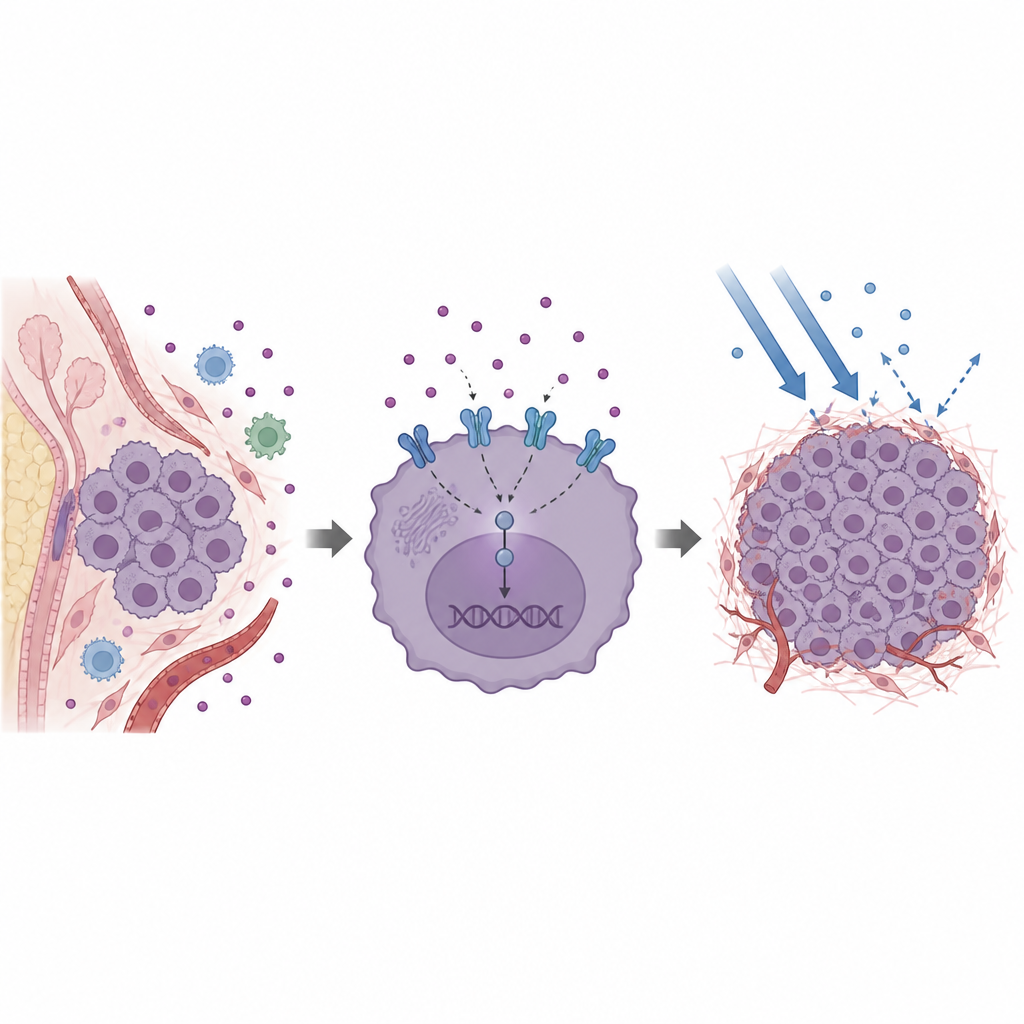
Tumors do not grow in isolation. They sit in a busy neighborhood of blood vessels, support cells, and chemical signals called the tumor microenvironment. Under normal conditions, the amount of ATP outside cells is very low. Inside tumors, however, stress, poor oxygen, and dying cells cause large amounts of ATP to spill into the surrounding space. Earlier work had shown that this “extracellular ATP” can help cancer cells move and resist chemotherapy. The researchers wondered whether the same outside ATP might also blunt the effects of hormone therapy in estrogen receptor positive breast cancer, the most common breast cancer type.
ATP helps cancer shrug off hormone treatment
Using two standard breast cancer cell lines, the team treated cells with tamoxifen or fulvestrant, with or without added ATP. When ATP was present, many more cells survived and kept dividing, even at higher drug doses. Measurements of DNA copying and cell cycle stages confirmed that ATP exposed cells were pushed toward active growth instead of drug induced rest. In mouse experiments, tumors engineered to have less of a certain metabolic enzyme responded much better to tamoxifen, growing more slowly and showing more cell death. This suggested that ATP does not just sit outside the cells; it actively rewires how they cope with hormone therapy.
A sugar breaking enzyme in the spotlight
To uncover what changes inside the cells, the scientists compared gene activity with and without ATP during tamoxifen treatment. One gene, PYGL, which makes an enzyme that breaks down stored glycogen into usable sugar, stood out as strongly increased. When PYGL levels were reduced with genetic tools, cancer cells became more sensitive to both tamoxifen and fulvestrant, and ATP could no longer protect them as effectively. Detailed measurements showed that ATP plus hormone therapy boosted markers of sugar burning, including lactate production and related metabolites, and that this boost depended on PYGL. Blocking glycolysis with a simple sugar mimic also weakened ATP driven resistance. Together, the findings indicate that ATP helps cancer cells tap into their sugar stores to fuel survival under drug pressure.
The signal relay from outside ATP to inner metabolism
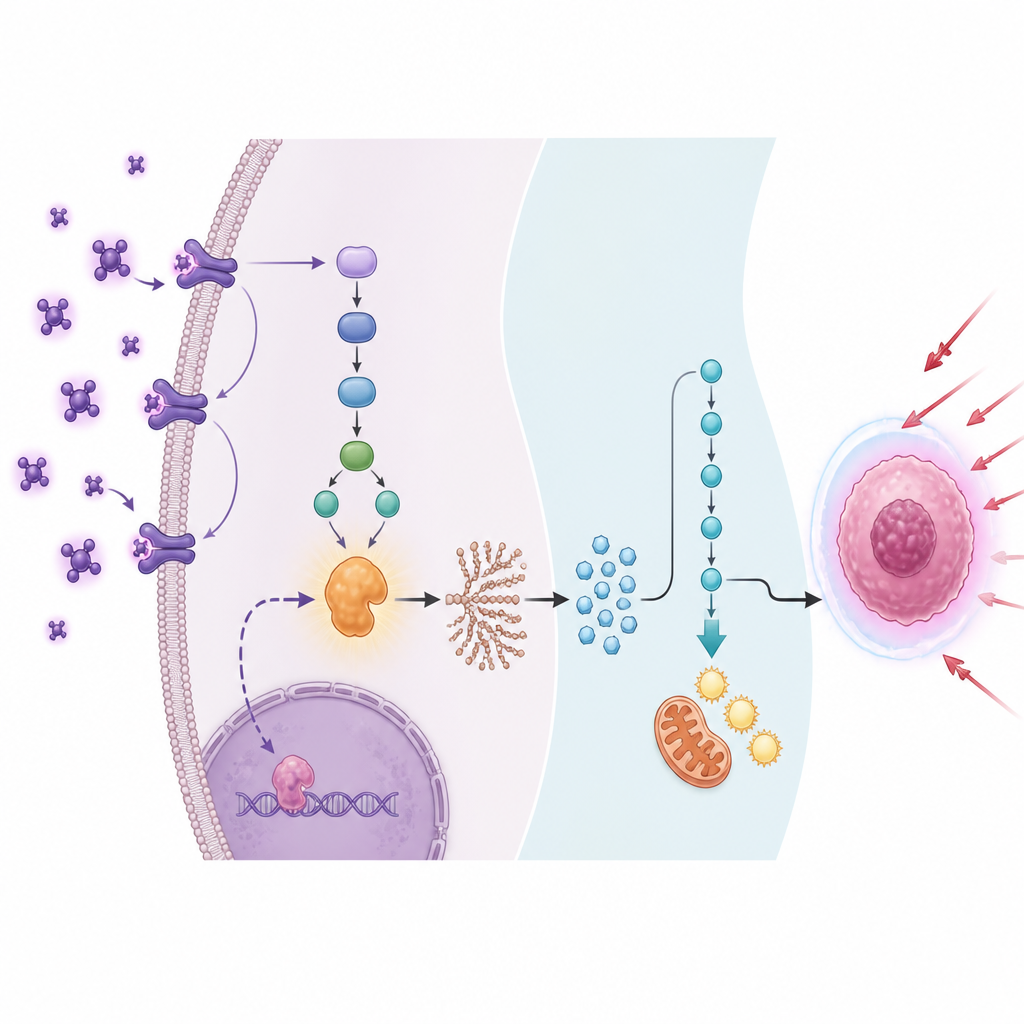
The study then traced how the ATP signal is passed from the cell surface to the PYGL gene. The authors found that ATP activates a specific receptor on the cell membrane, called P2Y12, which in turn increases the activity of a switch inside the cell known as the aryl hydrocarbon receptor (AhR). AhR binds directly to the PYGL gene region and boosts its activity, raising PYGL protein levels. When P2Y12 or AhR were blocked, ATP could no longer drive up PYGL or promote resistance. Importantly, patient derived mini tumors grown in the lab and tumor samples from women whose cancers had come back after hormone therapy often showed higher PYGL, P2Y12, and AhR levels and lower glycogen, linking this pathway to real clinical resistance.
What this means for future breast cancer care
Put simply, this work shows that leaked ATP in the tumor neighborhood can help estrogen driven breast cancers sidestep hormone therapy by flipping on a sugar breaking enzyme, PYGL, through a P2Y12 and AhR signal chain. This metabolic shift allows cancer cells to draw on stored fuel and keep growing despite treatment. While more research and larger patient studies are needed, PYGL and its upstream partners emerge as potential markers of poor response and possible drug targets. Combining hormone therapy with drugs that block this ATP powered sugar pathway might one day help keep sensitive breast cancers under control for longer.
Citation: Yu, YQ., Yu, XY., Li, XF. et al. Extracellular ATP promotes endocrine resistance in ER+ breast cancer through upregulation of PYGL. Cell Death Dis 17, 476 (2026). https://doi.org/10.1038/s41419-026-08736-8
Keywords: breast cancer, endocrine resistance, extracellular ATP, metabolic reprogramming, PYGL