Clear Sky Science · en
Growth hormone-releasing hormone attenuates amyloid deposition and neuroinflammation in Alzheimer’s disease models
Why this study matters for brain health
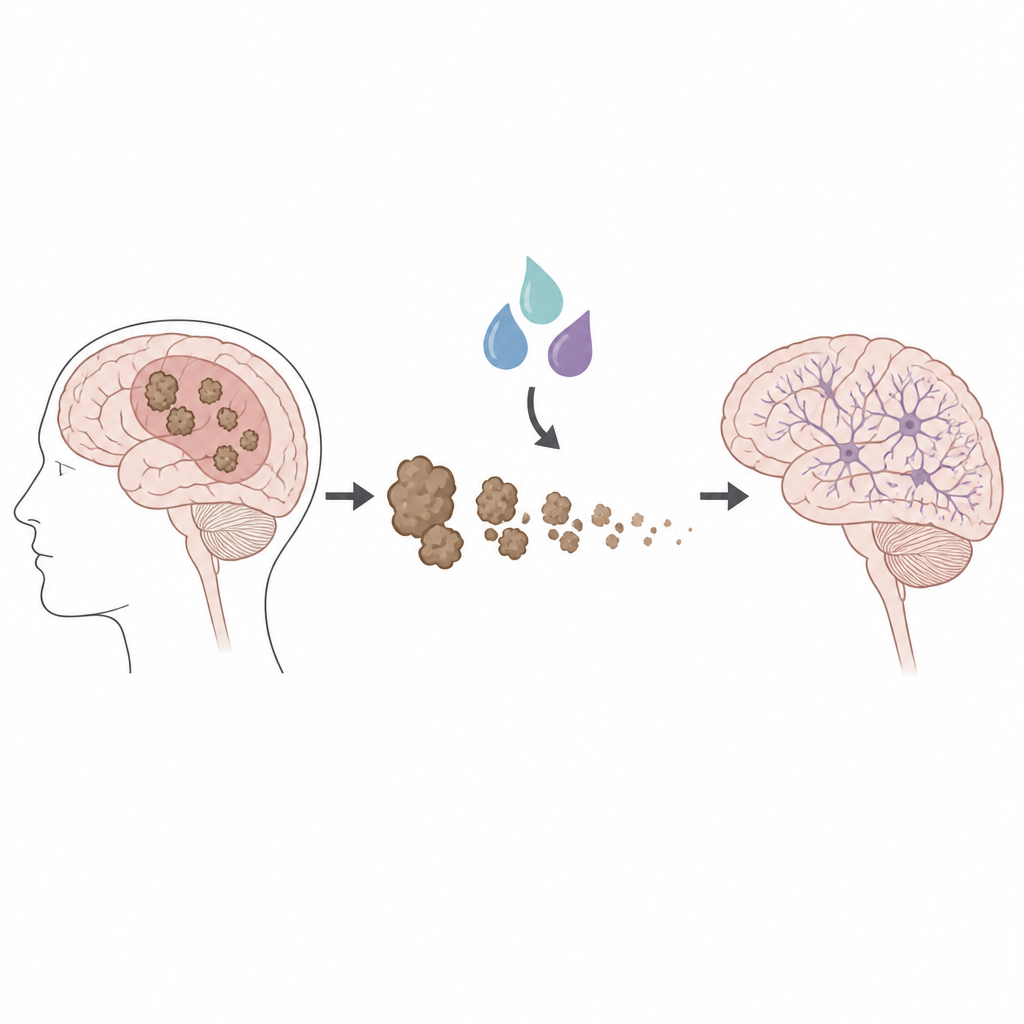
Alzheimer’s disease robs memory and independence from millions of older adults, yet most current drugs offer only limited relief. This study asks a simple but important question: can a natural brain hormone, or a drug that imitates it, protect nerve cells from the damage seen in Alzheimer’s and help preserve thinking and memory, at least in laboratory models?
A brain hormone with hidden talents
The hormone at the center of this work is growth hormone–releasing hormone, or GHRH. It is best known for telling the pituitary gland to release growth hormone, but it is also made and sensed within the brain itself. The authors show that brain stem cells and human nerve-like cells carry receptors for GHRH and respond strongly when exposed to it. In dishes, GHRH helped these cells stay alive, divide, and mature into nerve cells and supporting cells, especially when growth signals were scarce. This suggests that GHRH may act locally in the brain to support the renewal and repair of nerve circuits involved in learning and memory.
Shielding nerve cells from Alzheimer’s injury
Alzheimer’s disease is marked by toxic clumps of amyloid beta protein and abnormal forms of the tau protein, together with chronic brain inflammation. In cell models, the researchers treated brain stem cells and human neuroblastoma cells with amyloid beta to mimic this stress. GHRH reduced cell death, lowered the activity of key suicide enzymes, and shifted the balance toward proteins that favor survival. It also reduced the build-up of harmful, highly modified tau and restored helpful signals inside the cell that promote resilience, growth, and healthy gene activity. At the same time, GHRH calmed inflammatory signals and supported molecules important for synapses, the contact points where nerve cells talk to one another.
Testing a GHRH-mimicking drug in Alzheimer’s mice
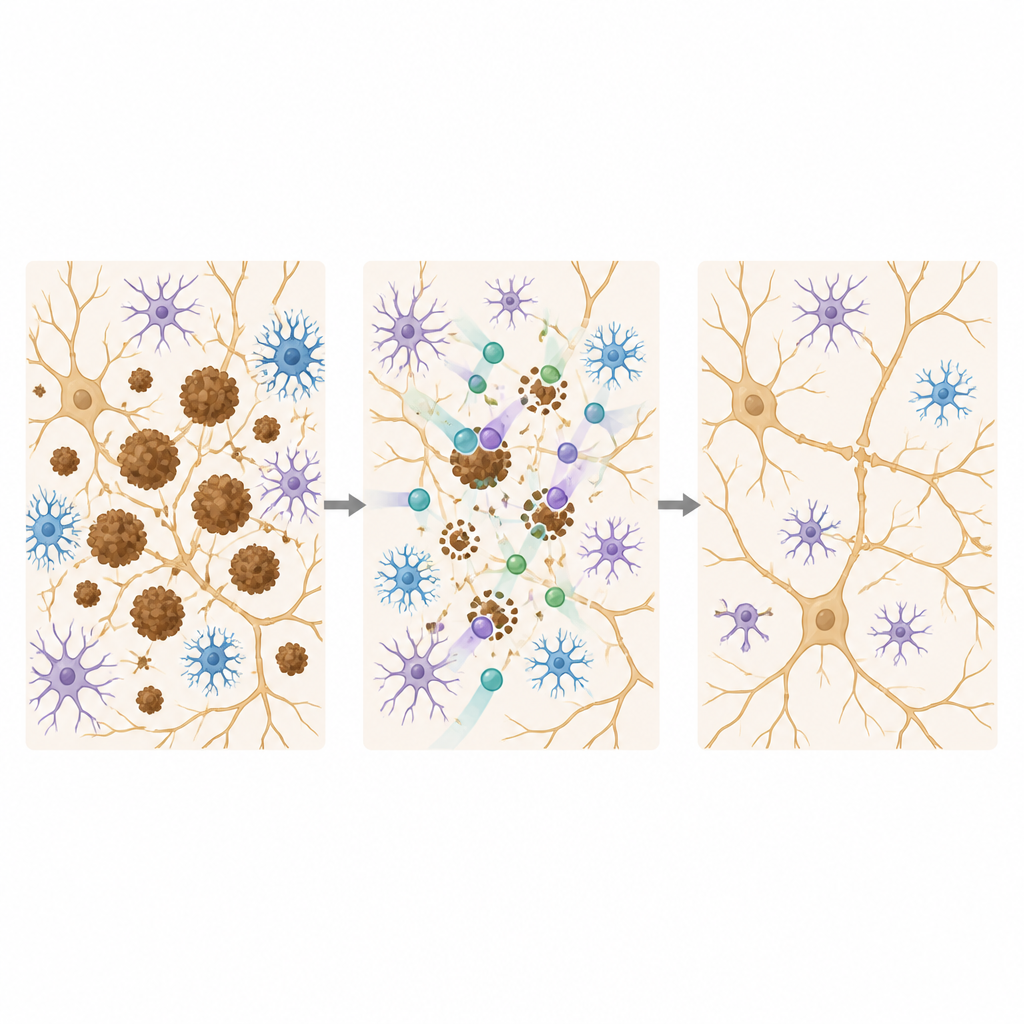
To move beyond the dish, the team turned to 5xFAD mice, a well-established model that rapidly develops heavy amyloid deposits, brain inflammation, nerve cell loss, and memory problems. For three months, some of these mice received daily under-the-skin doses of MR-409, a long-lasting GHRH agonist, while others received a neutral solution. MR-409 did not raise circulating growth hormone or IGF1, showing that its effects did not depend on revving up the whole body’s growth system. Yet in the brain, treated mice had fewer and smaller amyloid plaques, lower levels of the enzyme that makes amyloid from its precursor, and less abnormal tau. Microscopy revealed reduced activation of brain immune cells, fewer reactive support cells, and stronger signals linked to antioxidant defenses.
Preserving connections and memory in diseased brains
Beyond these microscopic changes, MR-409 also helped protect the structure and function of nerve networks. Treated mice showed higher levels of a marker for surviving neurons and increased markers of synapses in memory-related brain regions. Signals tied to cell survival and to growth factors such as BDNF and NGF were boosted, indicating a more nurturing environment for nerve cells. When the animals were tested in behavioral tasks, those given MR-409 spent more time exploring new objects and a new arm of a maze, signs of better recognition and spatial memory. Together, these results suggest that reinforcing GHRH-like signaling can counter several destructive processes at once in this aggressive Alzheimer’s model.
What this could mean for future treatments
This work does not yet offer a therapy for people, but it highlights a promising direction. By tapping into a hormone system already present in the brain, GHRH agonists like MR-409 were able to reduce amyloid buildup, abnormal tau, inflammation, oxidative stress, and loss of neurons and synapses in experimental models, without disturbing whole-body growth hormone levels. For a layperson, the key message is that a single class of compounds might one day help the brain resist many aspects of Alzheimer’s damage at once, potentially leading to more effective, multi-target approaches to preserving memory and cognition.
Citation: Pedrolli, F., Morello, G., Gesmundo, I. et al. Growth hormone-releasing hormone attenuates amyloid deposition and neuroinflammation in Alzheimer’s disease models. Cell Death Dis 17, 494 (2026). https://doi.org/10.1038/s41419-026-08699-w
Keywords: Alzheimer’s disease, growth hormone releasing hormone, neuroinflammation, amyloid beta, neuroprotection