Clear Sky Science · en
NSUN2 mediates intestinal stem cell expansion and colorectal tumour initiation via MAPK/ERK signalling
How a Tiny RNA Mark May Help Spark Colon Cancer
Colon cancer often begins long before any symptoms appear, when a few stem cells deep in the gut quietly start misbehaving. This study explores a subtle chemical mark on RNA—the messages that tell cells which proteins to make—and shows how it can push intestinal stem cells toward uncontrolled growth. Understanding this hidden layer of control could open doors to earlier detection and gentler, more targeted treatments for colorectal cancer.
Stem Cells at the Root of Colon Tumors
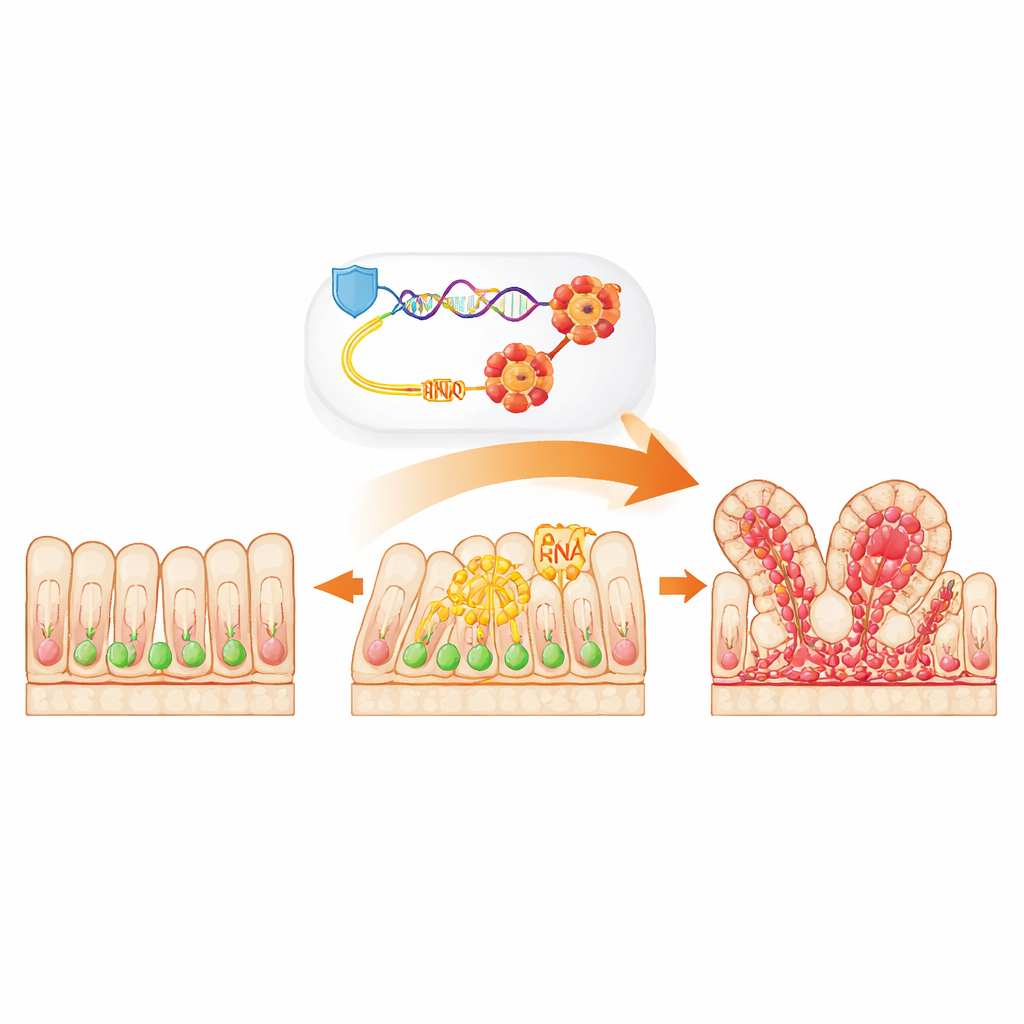
The lining of our intestines is constantly renewed by specialized stem cells tucked away in tiny pockets called crypts. Under normal conditions, these cells divide just enough to replace worn-out tissue. In most colorectal cancers, however, an early hit to a guardian gene called APC upsets this balance, causing stem cells to multiply excessively and form the first abnormal growths. The researchers focused on this earliest phase of tumor initiation, asking why some stem cells, once APC is lost, become especially prone to driving cancer.
An RNA "Writer" That Turns Up Cell Growth
The team homed in on NSUN2, a protein that chemically modifies RNA by adding a small tag known as m5C to certain cytosine bases. By mining existing data and examining mouse intestines and human tumor samples, they found that NSUN2 levels rise sharply when APC is lost and in established colorectal cancers. Patients whose tumors have more NSUN2 tend to have worse outcomes. In 3D mini-intestines grown from mouse stem cells, reducing NSUN2 sharply cut the cells’ ability to form new organoids, shrank organoid size, and lowered activity of classic stem cell markers—strong signs that NSUN2 helps sustain a cancer-like stem cell state.
Essential for Cancerous Growth, Dispensable for Normal Repair
To see how NSUN2 behaves in living tissue, the scientists engineered mice in which they could delete NSUN2, APC, or both specifically in the intestinal lining. Removing APC alone triggered the expected burst of cell division and a surge in stem cell gene activity. Strikingly, when NSUN2 was also removed, this hypergrowth was largely blunted: fewer cells were dividing, and stem cell markers were far less abundant. Yet in healthy intestines without APC loss, deleting NSUN2 made little difference to tissue structure, cell turnover, or stem cell gene expression. This contrast suggests NSUN2 is particularly important for diseased, APC-deficient stem cells, while normal gut maintenance can proceed without it.
Decoding the Molecular Chain Reaction
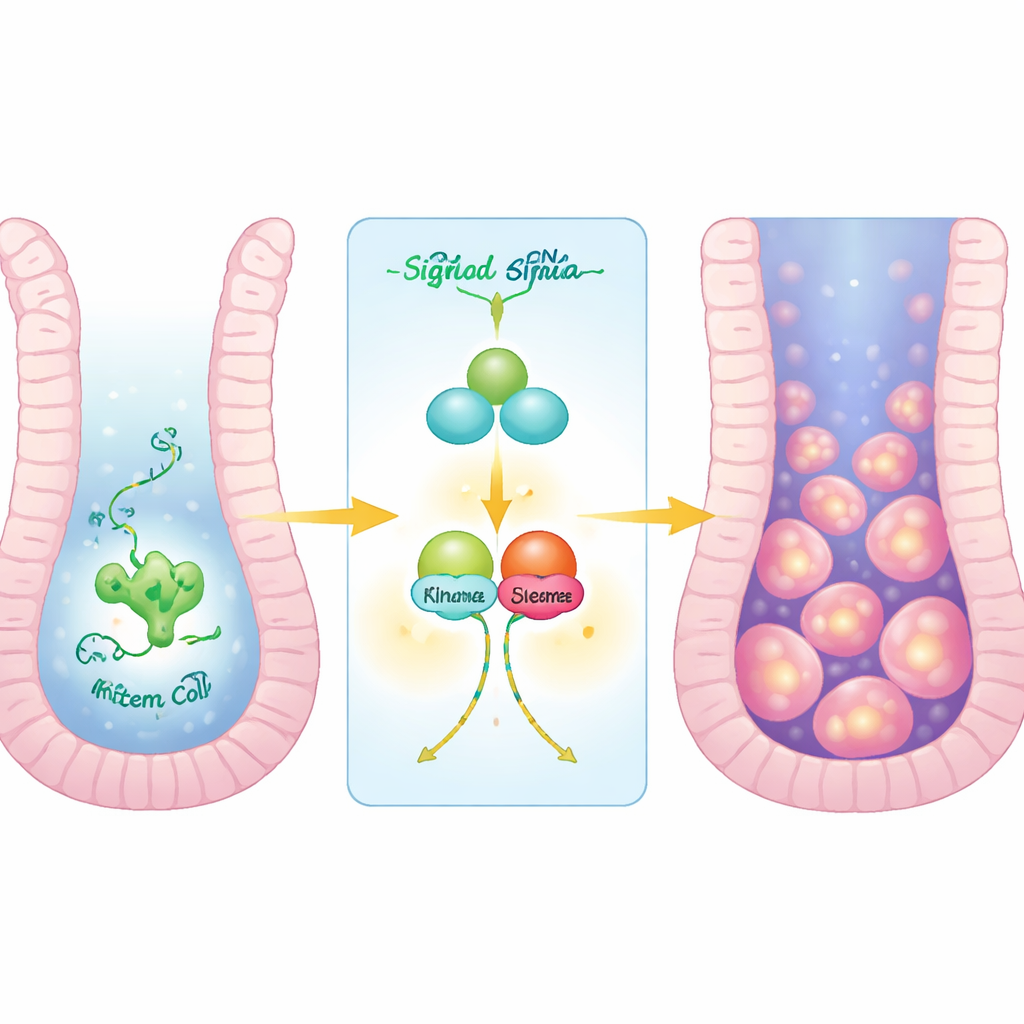
To uncover how NSUN2 exerts its effects, the researchers mapped m5C marks across the messenger RNAs of both mouse intestines and organoids. Loss of NSUN2 caused specific RNAs to lose this mark, especially those involved in RNA handling, stem cell control, and a major growth pathway known as MAPK/ERK. These hypomethylated RNAs also tended to drop in abundance, hinting that the m5C mark helps stabilize or efficiently use them. When NSUN2 was removed, the active, phosphorylated form of ERK—a key switch in the MAPK/ERK pathway—fell in APC-deficient models, along with stem cell traits. But introducing a permanently active version of another signaling protein, KRAS, restored ERK activity and rescued stem cell expansion, even in the absence of NSUN2. This places NSUN2 upstream of MAPK/ERK in the chain of events that drives early tumor growth.
What This Means for Future Cancer Prevention
Taken together, the work positions NSUN2 as a crucial molecular go-between that links RNA chemistry to the runaway signaling that transforms normal intestinal stem cells into cancer stem cells. Because healthy gut tissue can tolerate loss of NSUN2, while APC-mutant cells cannot readily initiate tumors without it, NSUN2 or its m5C marks may offer an attractive target for therapies aimed at stopping colorectal cancer before it fully takes hold. In short, a tiny chemical tweak to RNA appears to have an outsized influence on who stays healthy and who develops a potentially deadly disease.
Citation: Bastem Akan, A., Billard, C.V., Chen, SY. et al. NSUN2 mediates intestinal stem cell expansion and colorectal tumour initiation via MAPK/ERK signalling. Cell Death Dis 17, 322 (2026). https://doi.org/10.1038/s41419-026-08560-0
Keywords: colorectal cancer, intestinal stem cells, RNA methylation, NSUN2, MAPK ERK signaling