Clear Sky Science · en
Faecal haemoglobin-based referral and investigation prioritisation is associated with colorectal cancer-specific survival in symptomatic patients: a retrospective observational study
Why this bowel test matters to everyday patients
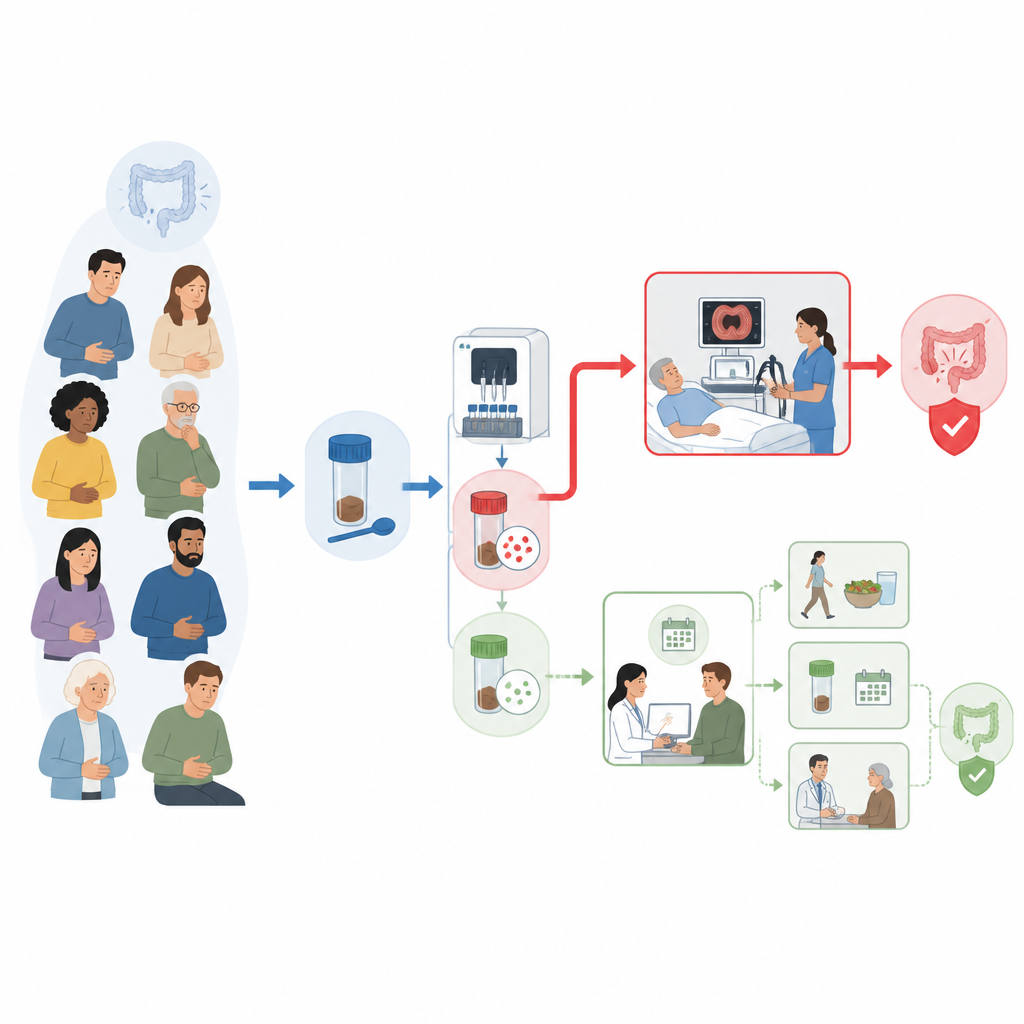
Most people with new bowel symptoms do not have cancer, yet health services must quickly find the few who do. This study looks at whether a simple stool test that measures tiny traces of blood can safely help doctors decide who needs rapid hospital checks for possible bowel cancer, and who can wait or be managed in primary care, without harming survival.
A simple sample that guides urgent care
The test used is a faecal immunochemical test, which measures faecal haemoglobin, or hidden blood in a stool sample. In the United Kingdom, guidance suggests that if the measured level is at or above a certain cut off, patients with new ongoing bowel symptoms should be given a fast track hospital assessment, while lower levels can justify a slower referral or continued care with the general practitioner. Until now, there has been little information on whether this approach changes how long people with colorectal cancer live.
A huge real world pathway under the microscope
Researchers examined records from more than 126,000 adults in one large Scottish health board who had bowel symptoms between late 2018 and early 2023. Almost all provided at least one stool sample in primary care, and some were also sent directly to hospital clinics, scans, or colonoscopies. The team tracked who later developed colorectal cancer within three years and who died from it, linking laboratory, referral, scan, and cancer registry data to build a picture of each person’s journey from first test to outcome.
Who did worst and why
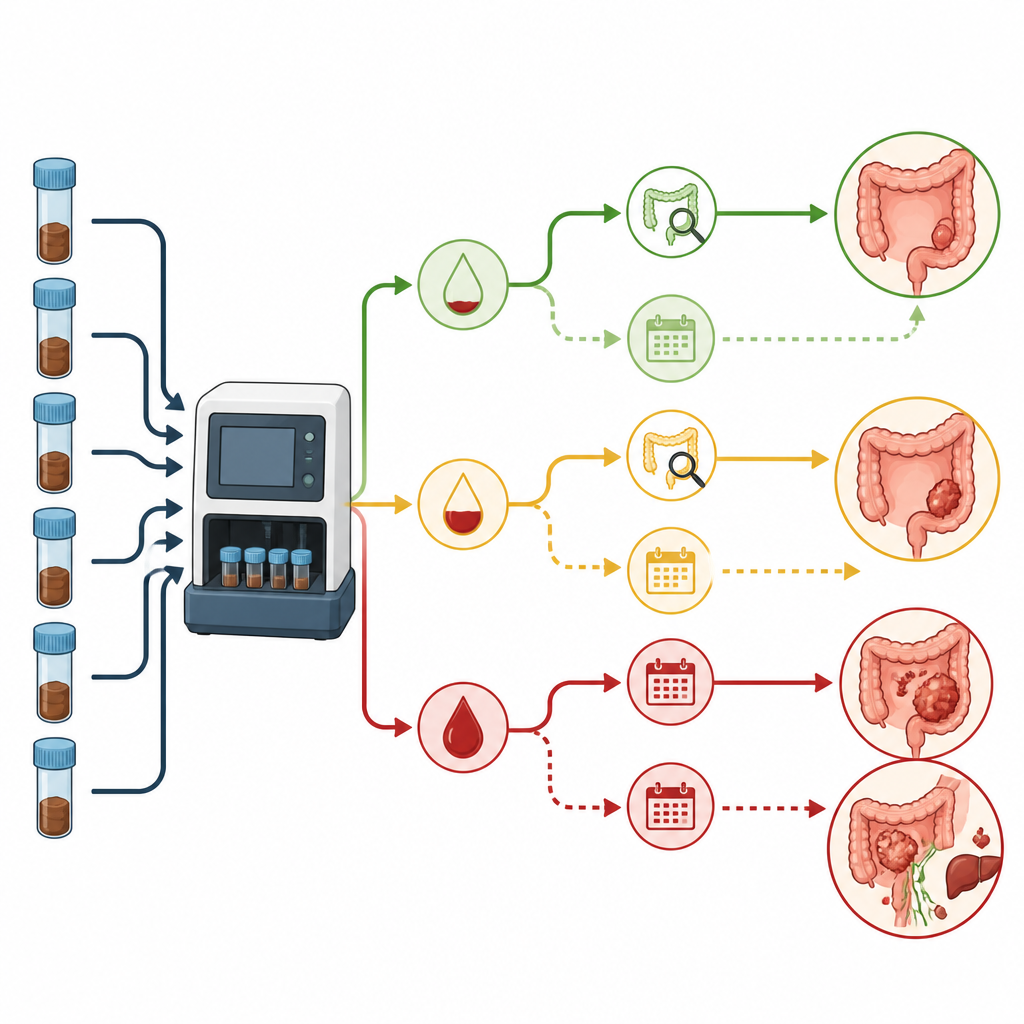
About one in a hundred patients were diagnosed with colorectal cancer during follow up. As expected, cancers were far more common in people whose samples contained higher amounts of blood, and these patients were usually referred urgently and investigated quickly. However, the most striking finding was that people referred urgently without any stool test at all, and those whose high blood levels were not followed by the recommended cancer focused hospital pathway, had poorer survival from colorectal cancer, even after taking cancer stage into account. In contrast, among patients whose referrals and investigations matched what their stool result suggested, survival did not differ meaningfully between higher and lower test results.
Balancing speed, safety and limited resources
The study also explored what might happen if the cut off for a “positive” stool test were raised to ease pressure on busy endoscopy services. Using a higher threshold would miss slightly more cancers at first, but the overall number of cancers below either the current or proposed thresholds remained very low. The work hints that careful use of the test, possibly together with blood tests for anaemia and repeat samples, can help direct scarce colonoscopies toward those most likely to have cancer, without clearly shortening life for those with lower results.
What this means for patients and health services
For patients, the findings suggest that giving a stool sample when a doctor requests it is important, and that having a low result usually means the chance of bowel cancer is small. For health services, the message is that following faecal blood levels to set referral speed is broadly safe in terms of bowel cancer specific survival, but only if everyone with a high result is firmly “safety netted” into the right specialist pathway. Skipping the test or failing to act on a high result, rather than the test itself, appears to carry the greatest risk.
Citation: McSorley, S.T., Burton, P., Chantler, D. et al. Faecal haemoglobin-based referral and investigation prioritisation is associated with colorectal cancer-specific survival in symptomatic patients: a retrospective observational study. Br J Cancer 134, 1580–1591 (2026). https://doi.org/10.1038/s41416-026-03378-1
Keywords: colorectal cancer, faecal immunochemical test, stool blood test, diagnostic pathways, cancer survival