Clear Sky Science · en
Management of hematological toxicities after BCMA-directed CAR-T cell therapy
Why this matters for people with blood cancer
For people with multiple myeloma, a hard-to-treat blood cancer, new “living drugs” called CAR-T cells have offered hope when other treatments stop working. But along with their impressive cancer-fighting power comes a serious downside: many patients’ blood counts crash and stay low, leaving them vulnerable to infections and frequent transfusions. This study asks a practical question that patients and doctors both care about: can we predict who is most at risk for these blood problems and plan better day-to-day care around that risk?
A score that flags fragile blood systems
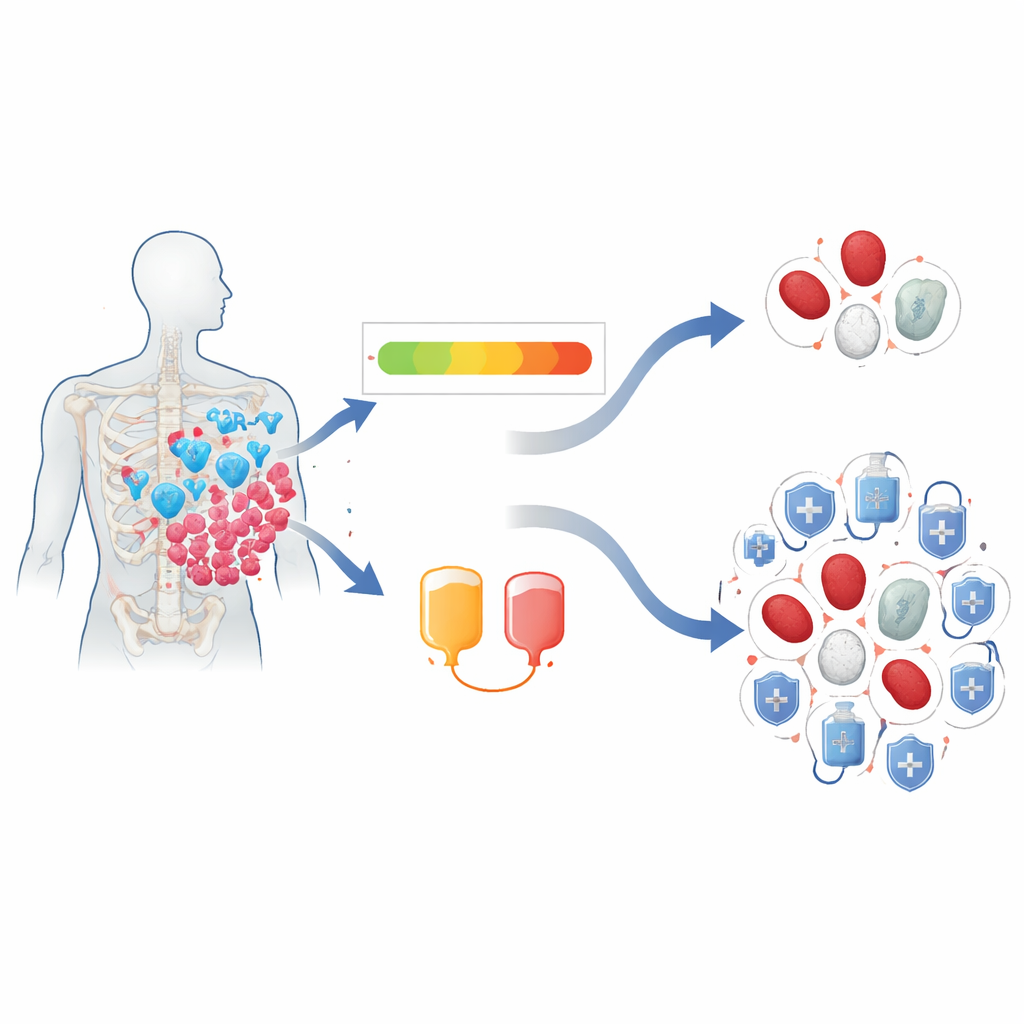
The researchers focused on a tool called the CAR-HEMATOTOX (CAR-HT) score, which is calculated just before CAR-T treatment using routine blood tests and markers of inflammation. They reviewed the records of 224 adults with relapsed or refractory multiple myeloma who received BCMA-directed CAR-T therapy at Mayo Clinic between 2016 and 2024. Patients were grouped into “low” and “high” CAR-HT scores, reflecting how robust or fragile their bone marrow—the factory that makes blood cells—appeared to be. The team then tracked how often and how severely patients developed low red cells, white cells, and platelets, how long it took to recover, what supportive treatments were used, and whether any of this changed long-term survival.
Who struggles most after CAR-T
High CAR-HT patients started out with weaker blood counts and went on to experience far more serious drops after CAR-T. They had roughly twice the rate of severe, long-lasting blood count crashes, a complication now called immune effector cell–associated hematotoxicity (ICAHT). Compared with low-score patients, they were much more likely to develop bad anemia and very low platelets, and they needed many more transfusions of red cells and platelets over the six months after treatment. A small subset accumulated a striking number of transfusions, revealing just how intense the burden can be for the most vulnerable group. Infections—especially bacterial and certain viral infections—were also more frequent in high-score patients, reflecting the prolonged periods when their immune systems were weakened.
What support treatments really do
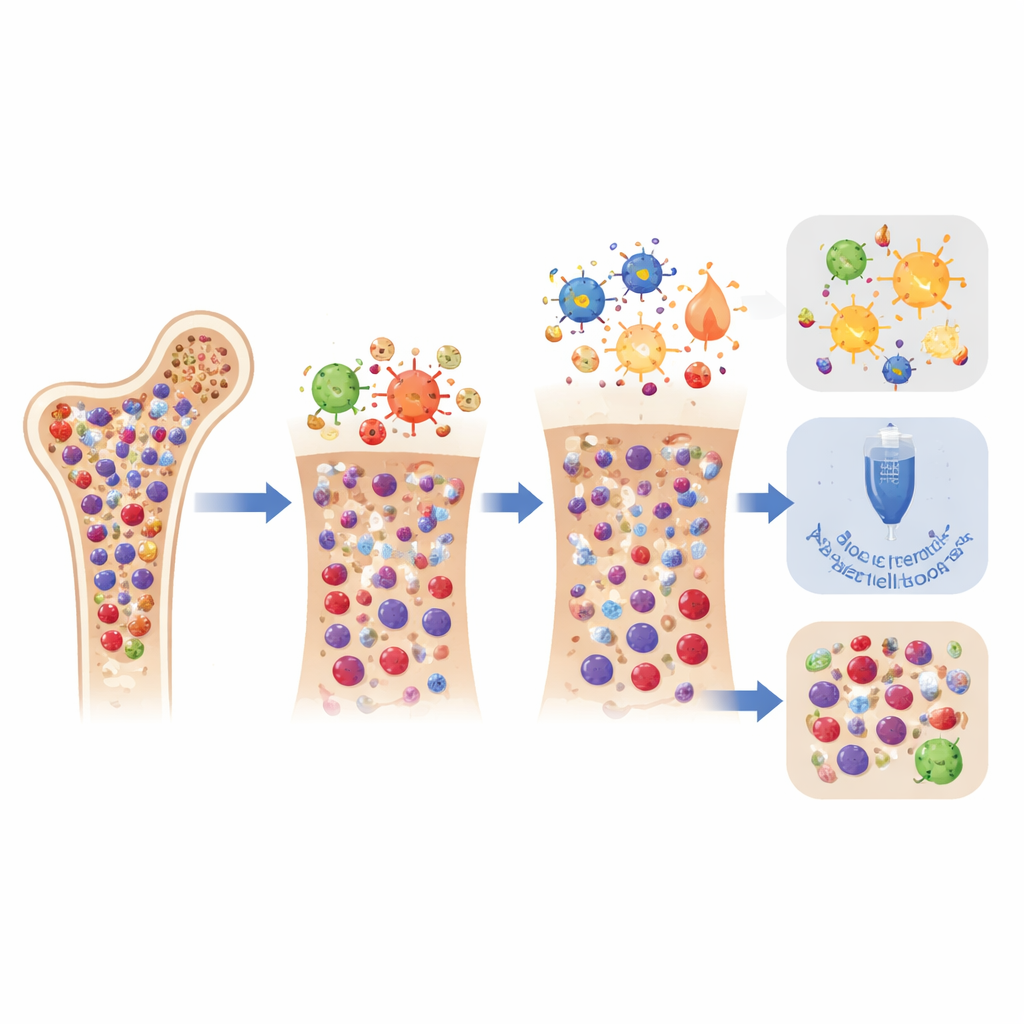
To manage these problems, doctors used several different strategies. Many patients received a white blood cell–stimulating shot (G-CSF); a few received drugs that encourage platelets to grow; and a small number with very stubborn multi-lineage low counts received an extra infusion of their own previously collected stem cells, called a stem cell “boost.” The stem cell boosts—used in only about 4% of patients—were especially effective, leading to recovery of all three major blood cell types within a few weeks. In contrast, platelet-stimulating drugs often failed when the underlying myeloma was progressing, signaling that persistent low platelets can be a warning sign that the cancer is returning rather than just a side effect.
Risk does not mean worse survival
Despite the heavier load of transfusions, infections, and supportive care, high-score patients did not have clearly worse progression-free or overall survival than low-score patients in this study. The same was true for the different support strategies: whether patients needed only transfusions, growth factors, or a stem cell boost, these measures did not appear to shorten or lengthen how long the CAR-T therapy kept the cancer in check. This suggests that the CAR-HT score acts mainly as a warning for how rough the recovery period will be, rather than as a predictor of how well the cancer treatment will work.
What this means for patients and their doctors
In plain terms, this work shows that a simple score calculated before CAR-T therapy can reliably flag who is likely to face tougher blood-related side effects and heavier transfusion needs. Knowing a patient’s CAR-HT score can help teams prepare: arranging closer monitoring, planning earlier use of growth factors, considering stem cell back-up, and counseling patients about what to expect during recovery. At the same time, the good news is that even those with high scores can still gain similar overall benefit from CAR-T against their cancer. The score is less about whether CAR-T will work, and more about how much support a person’s bone marrow will need along the way.
Citation: Cook, J., Gupta, S., Abdallah, N. et al. Management of hematological toxicities after BCMA-directed CAR-T cell therapy. Blood Cancer J. 16, 49 (2026). https://doi.org/10.1038/s41408-026-01455-5
Keywords: CAR-T therapy, multiple myeloma, cytopenia, supportive care, stem cell boost