Clear Sky Science · en
Self-perception of dental aesthetics and social media influence among students at a Palestinian dental school
Why smiles and screens matter
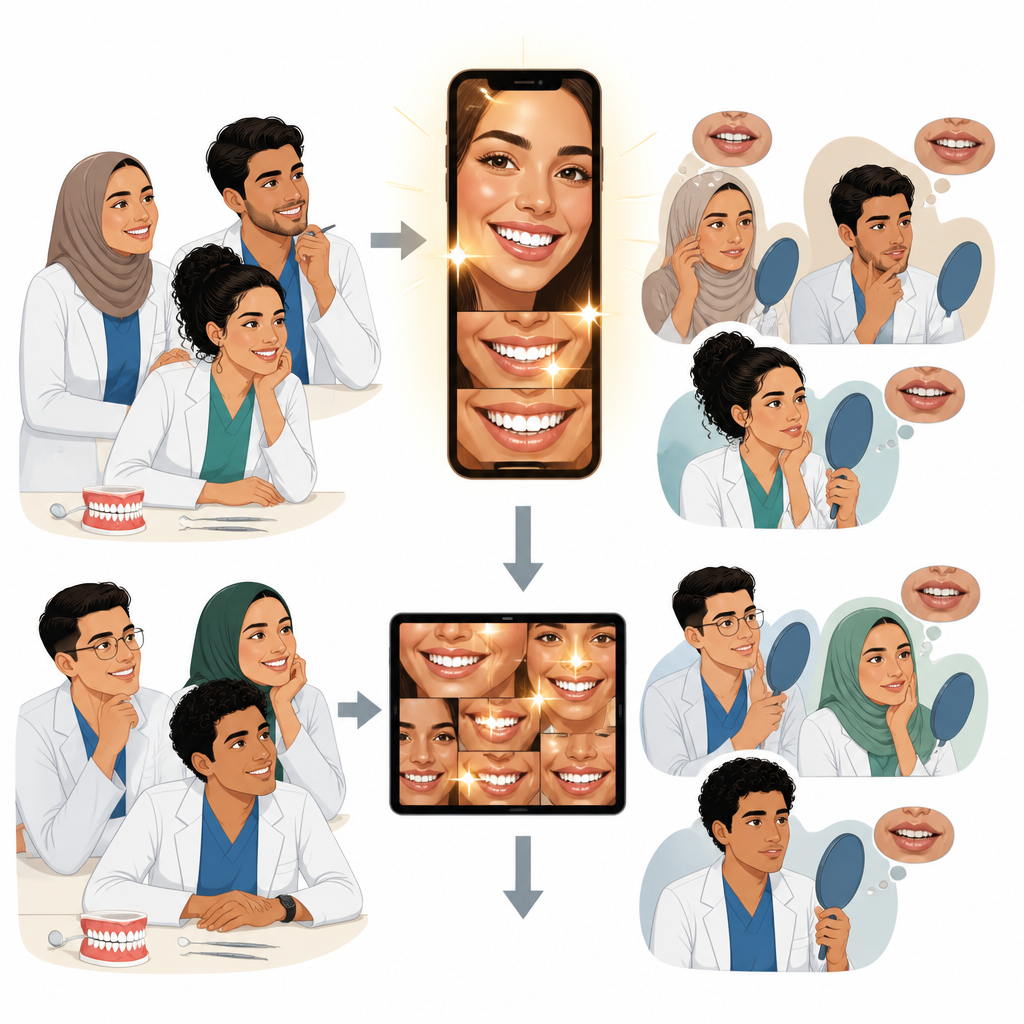
Many of us judge our own smiles in the mirror and online, comparing them with polished photos that fill our social feeds. This study looks at how dental students in Palestine see their own teeth, what kinds of cosmetic treatments they find appealing, and how strongly social media shapes their sense of the “ideal” smile. Because these students will soon be treating patients, their views offer a window into how future dentists may balance fashion, personal image, and realistic care in the age of Instagram.
Who took part and what was asked
The researchers surveyed 246 undergraduate dental students at a Palestinian university, drawn from all five years of training. Using an online questionnaire, they asked about satisfaction with tooth color, shape, and gums, what treatments students would choose for themselves, how often they see dental content on social media, and how believable they find those online results. The team also compared answers between men and women and between students in the early “preclinical” years and those already treating patients in the clinic.
How students feel about their own smiles
Overall, students reported feeling quite positive about their smiles. Most were satisfied with the look of their gums, tooth shape, and tooth color, even though many still noticed small flaws such as gum irregularities or tooth display they considered less than ideal. Only about half said they visited a dentist regularly for routine care, hinting at a gap between knowing what a healthy, attractive smile looks like and acting on that knowledge. Women were more likely than men to feel unhappy about how much gum showed when they smiled, and students who were already in the clinic tended to spot more subtle gum problems and nonideal tooth display, likely reflecting their growing professional eye.
What “good looking” teeth mean to them
When asked about preferred treatments and materials, most students favored a natural look rather than extreme makeovers. Composite resin fillings, which can match tooth color, were strongly preferred over darker metals for back teeth, and nearly four in five chose natural white shades for front teeth instead of very bright, celebrity-style whiteness. Teeth whitening was the single most popular cosmetic treatment they would choose for themselves, while more invasive work was less commonly desired. Clinical-stage students were even more likely to favor tooth-colored fillings and natural white shades, suggesting that hands-on experience reinforces a taste for realistic, conservative improvements.
Life online and the “ideal smile”
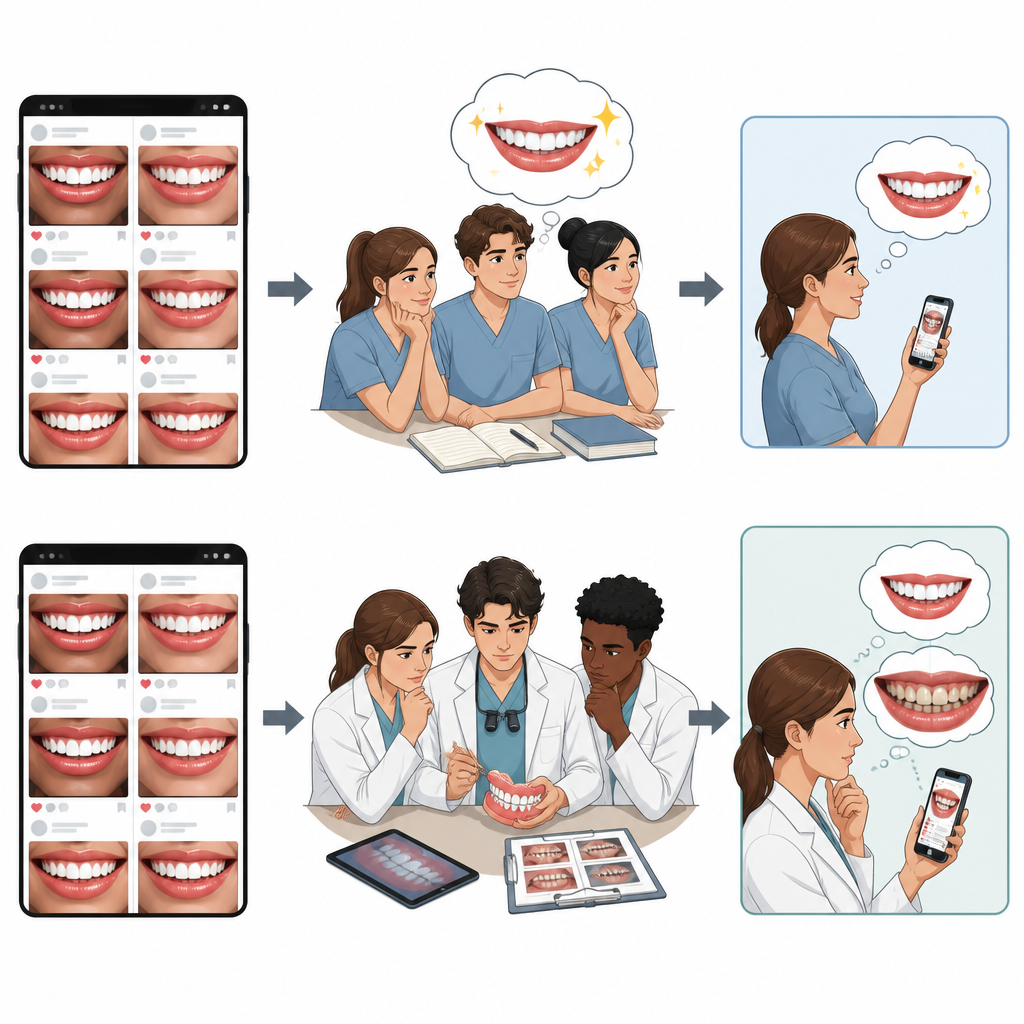
Social media played a major role in shaping how these students think about smiles. Instagram was by far the most common place they encountered aesthetic dental content, and most said they viewed such material at least sometimes. Around seven in ten felt that social media had a moderate to very strong influence on their idea of an ideal smile, and nearly half had considered getting a cosmetic procedure after seeing online results. Many searched the internet for more information or tutorials. At the same time, students with clinical experience were more likely to judge the picture-perfect results shown online as not actually achievable in everyday practice, reflecting a growing ability to separate polished images from biological and technical limits.
How they see themselves as future professionals
Most students believed that a dentist’s own smile and facial appearance could affect whether patients trust them, and more than half said they might seek cosmetic treatment to enhance their professional image. Those in clinical years were more often asked for opinions on “ideal smiles” and felt more confident explaining the gap between realistic outcomes and digitally enhanced photos. Despite noticing flaws in their own smiles, many reported little impact on their social, academic, or professional confidence, although the simple questions used may not capture subtle effects.
What this means for patients and teaching
The study shows that future dentists in this Palestinian school generally like their own smiles, prefer natural-looking results, and spend a lot of time absorbing polished dental images online. As they gain clinical experience, they become more critical of what social media promises and more aware of what can truly be achieved for real mouths. For patients, this means tomorrow’s dentists may be well placed to explain the difference between filtered smiles on a screen and healthy, realistic outcomes in the chair. For dental educators, it highlights the value of teaching students to question online images and to communicate clearly about what modern dentistry can and cannot deliver.
Citation: Arandi, N.Z., Qtait, F. Self-perception of dental aesthetics and social media influence among students at a Palestinian dental school. BDJ Open 12, 53 (2026). https://doi.org/10.1038/s41405-026-00445-w
Keywords: dental aesthetics, social media, dental students, cosmetic dentistry, self perception