Clear Sky Science · en
The relationship between parental mental health and early childhood caries: a meta-analysis and systematic review
Why Parents’ Feelings Matter for Little Teeth
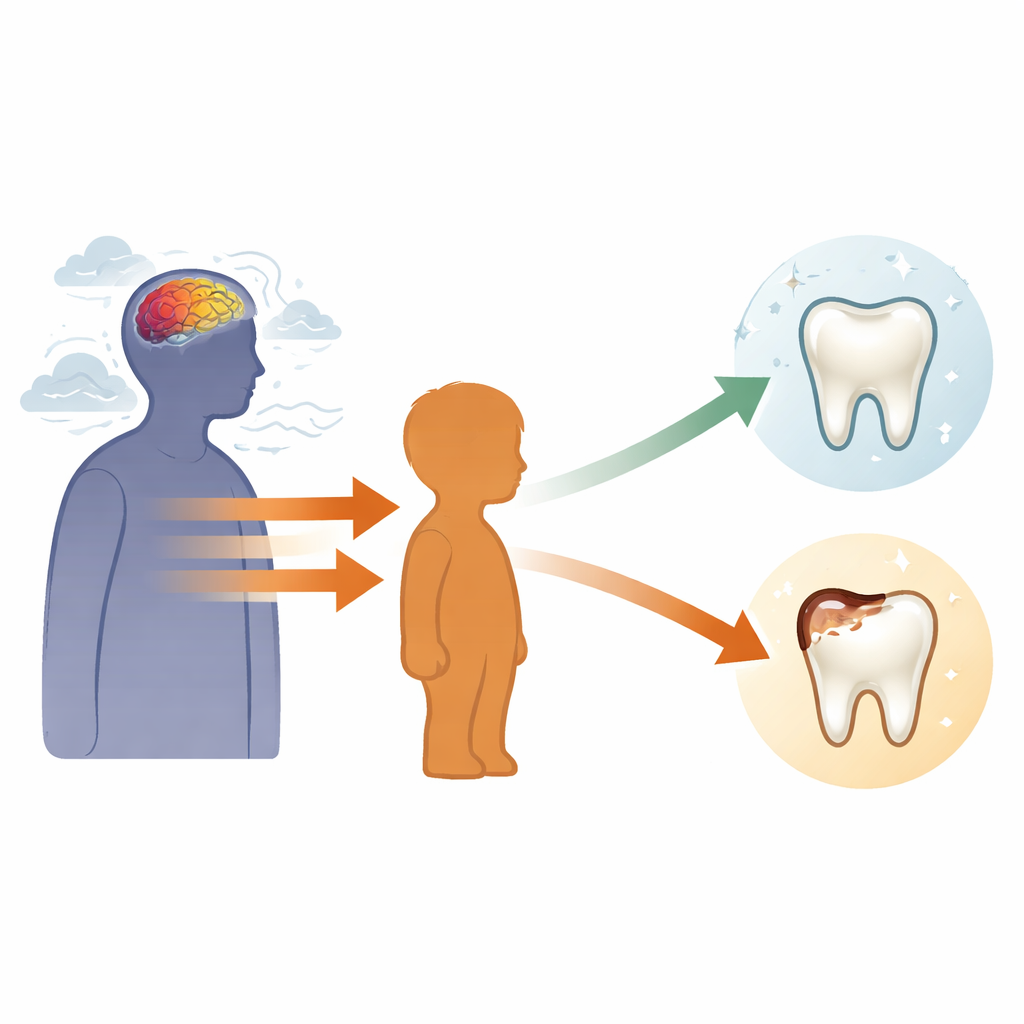
Tooth decay in toddlers and preschoolers—known as early childhood caries—affects millions of children around the world, often causing pain, infections, and costly dental work. This study asks a question that many parents and health workers might not think to connect: can a parent’s mental health, including anxiety, depression, and stress, quietly shape a child’s risk of getting cavities? By pulling together data from thousands of families, the researchers show that caring for parents’ minds may help protect children’s mouths.
A Common but Often Untreated Childhood Problem
Tooth decay in the first years of life is far from rare. In some countries, more than half of 3- to 5‑year‑old children have at least one decayed, missing, or filled baby tooth. Treatment rates, however, are strikingly low, especially in developing regions. Untreated decay can disturb how permanent teeth grow in and can harm a child’s sleep, nutrition, self‑confidence, and overall well‑being. Dentists already know that sugar, bacteria, and poor brushing contribute to cavities. But children do not manage their mouths alone—parents decide what foods enter the home, whether teeth are brushed, and when a dentist is seen. This makes the home environment, and parents’ own health, a crucial piece of the puzzle.
Looking Across Studies for a Clearer Picture
The authors conducted a systematic review and meta‑analysis, which means they searched major medical databases for all studies up to October 2025 that examined links between parents’ mental health and early childhood caries in children up to 6 years old. From 2,889 papers, only 12 met strict criteria for inclusion, together covering 10,329 children. Most were cross‑sectional snapshots, with three following families over time as cohort studies. These studies measured parents’ depression, general anxiety, dental anxiety (fear related to dental care), or stress using standard questionnaires, and assessed children’s teeth using internationally accepted methods. The team then pooled the numbers to see whether children of parents with mental health problems had more cavities than those whose parents did not report such difficulties.
What the Numbers Reveal
When all eligible studies were combined, children with a parent who had a mental health condition were more likely to have early childhood caries, and they tended to have more affected teeth. On average, parental mental health problems increased the odds that a child would have cavities by about half, and were linked to a modest but meaningful rise in the number of decayed, missing, or filled teeth. When the researchers looked more closely, two parental conditions stood out: dental anxiety and depression. Higher levels of either were consistently tied to more cavities in children. In contrast, parental stress did not show a clear, reliable link with decay once other factors were taken into account, and only one study examined general anxiety specifically, so evidence there remains thin.
How Feelings May Turn into Cavities
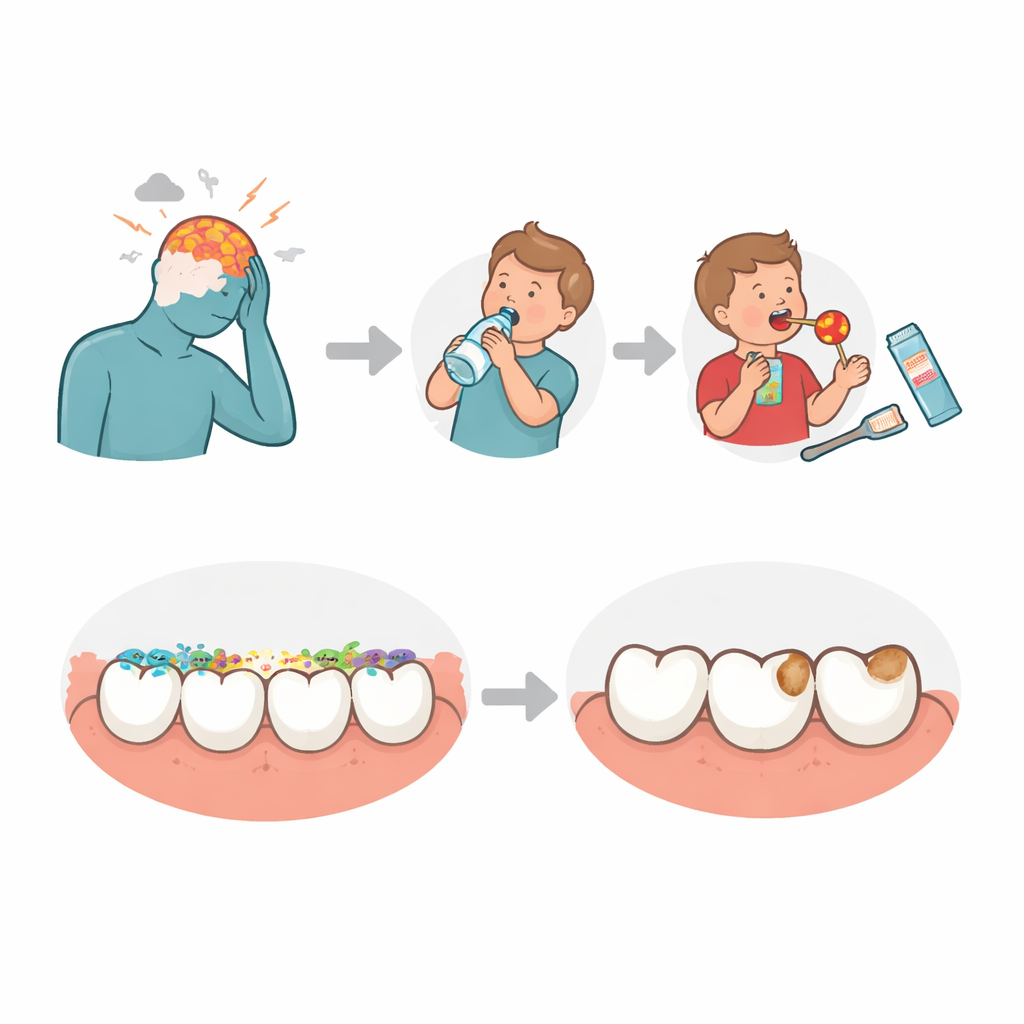
Why might a parent’s emotional state affect a child’s teeth? The authors discuss several possible pathways suggested by recent research. Parents who are anxious about dental care or struggling with low mood may find it harder to keep routines like twice‑daily brushing, limiting sugary snacks, or scheduling regular check‑ups. They may also avoid the dentist themselves, sending a powerful message that dental visits are something to fear or delay. Biological factors may also play a role: long‑lasting mental health problems can disturb the mix of bacteria in the mouth, potentially boosting cavity‑causing species that can be passed from parent to child through shared utensils or kisses. Stress and depression during pregnancy may subtly interfere with how a baby’s tooth enamel forms, leaving teeth more vulnerable once they erupt. And families facing mental health challenges may be more likely to experience malnutrition or unstable living conditions that further raise cavity risk.
What This Means for Families and Caregivers
For parents, the take‑home message is not one of blame, but of connection. This study suggests that supporting parents’ mental well‑being—especially around mood and fear of dental care—may also help protect their children from early tooth decay. While the evidence is still limited and mostly based on observational research, the pattern is consistent: when parents feel better and are less fearful of dental settings, children are more likely to brush regularly, eat fewer sugary foods, and see a dentist in time to catch problems early. At the same time, simple steps like helping young children brush, avoiding frequent sugary snacks and drinks, and establishing positive, routine dental visits can offer protection even when life feels stressful. Addressing mental health and oral health together may be a powerful way to give children a healthier start.
Citation: Ma, L., Jia, L., Han, K. et al. The relationship between parental mental health and early childhood caries: a meta-analysis and systematic review. BDJ Open 12, 40 (2026). https://doi.org/10.1038/s41405-026-00429-w
Keywords: early childhood caries, parental mental health, dental anxiety, maternal depression, children’s oral health