Clear Sky Science · en
Alkaline phosphatase activity in gingival crevicular fluid during orthodontic treatment with different extraction protocols for maxillary canines: a randomized controlled trial
Why This Matters for People Getting Braces
When people start orthodontic treatment with braces, dentists sometimes remove teeth to make room for crowded ones. But should those extractions happen before, after, or at the same time as putting on braces? This study looks inside the tiny fluid around teeth to see how the gums and bone react to different timing of extractions. Understanding these hidden biological changes may help orthodontists plan treatments that are more efficient and gentler on the supporting tissues.
A Closer Look at the Hidden Fluid Around Teeth
Our teeth are surrounded by a narrow groove where a small amount of clear fluid, called gingival crevicular fluid, naturally seeps out. This fluid carries enzymes and other molecules that reflect what is happening in the nearby gum and bone. One of these enzymes is alkaline phosphatase, which is closely linked to bone building and repair. When bone is actively remodeling, as it does during orthodontic tooth movement or healing after an extraction, the level of this enzyme tends to rise.
How the Researchers Set Up the Comparison
The researchers enrolled 60 young adults who all needed upper first premolars removed to treat moderate crowding. They were randomly assigned to one of three approaches. In the first group, braces were started right away but extractions were postponed for six weeks. In the second group, only the extractions were done during the six-week study period, with braces delayed. In the third group, extractions and the first phase of alignment were carried out in the same visit. Each week for six weeks, the team collected tiny samples of fluid from the front and back sides of the upper canines and measured how active alkaline phosphatase was using standard laboratory techniques. 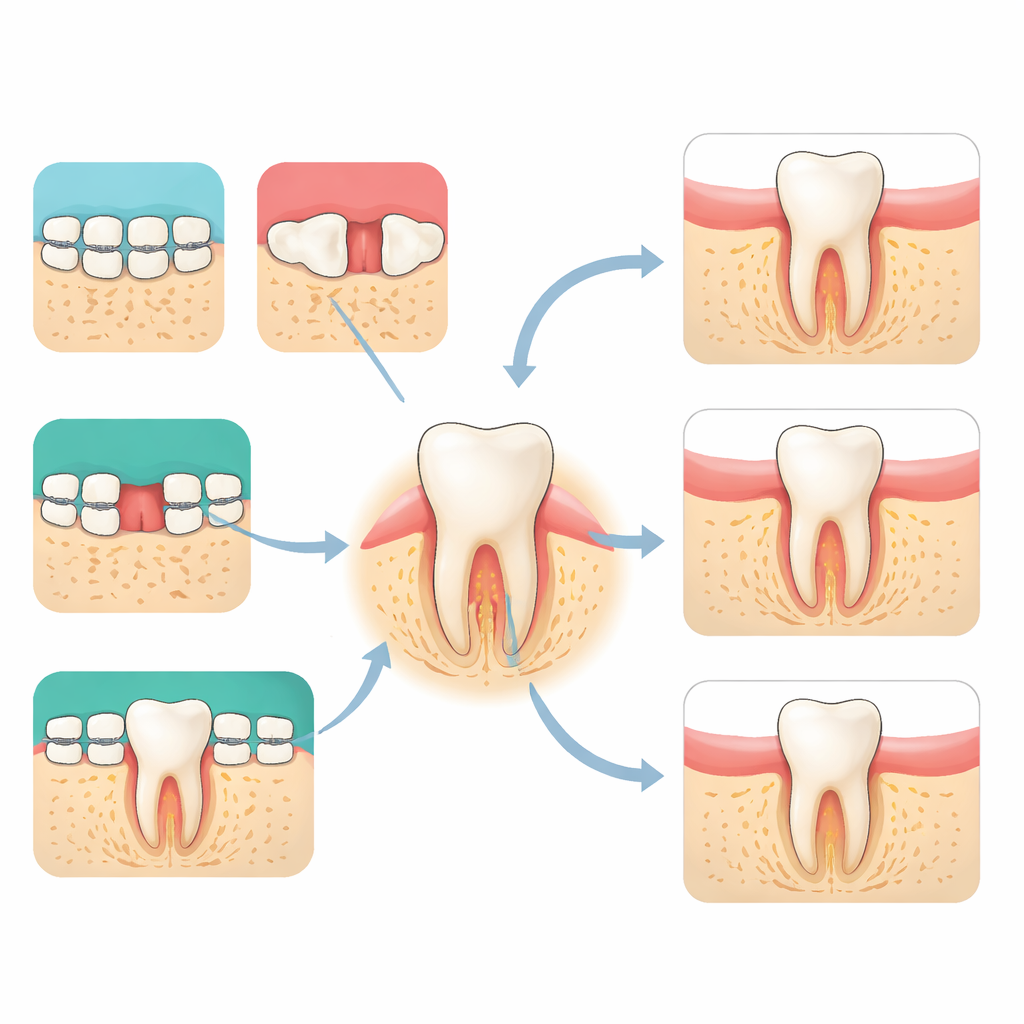
What Happened in the Bone During Those First Weeks
The three treatment approaches produced clearly different patterns of enzyme activity. The group that had only teeth removed, without braces yet, showed the highest and earliest rise in alkaline phosphatase, especially in the first three weeks. This reflects a strong bone healing and remodeling response to the extraction itself. The group that had both extraction and alignment together showed a moderately increased response, sitting between the extraction-only group and the braces-only group. The group that had only early alignment, with extractions delayed, showed the lowest overall activity, with smaller and less stable changes over time.
Front vs. Back of the Tooth: Local Differences
The researchers also compared the front (mesial) and back (distal) sides of the canines. The side closer to the extraction space tended to show stronger early enzyme increases, particularly in the extraction-only group. This suggests that the closer the bone is to the tooth socket that is healing, the more intense the local biological response becomes. Even when braces were used, the pattern of forces and proximity to the extraction site appeared to shape how strongly the tissues reacted, highlighting that these changes are highly localized rather than uniform around the whole tooth. 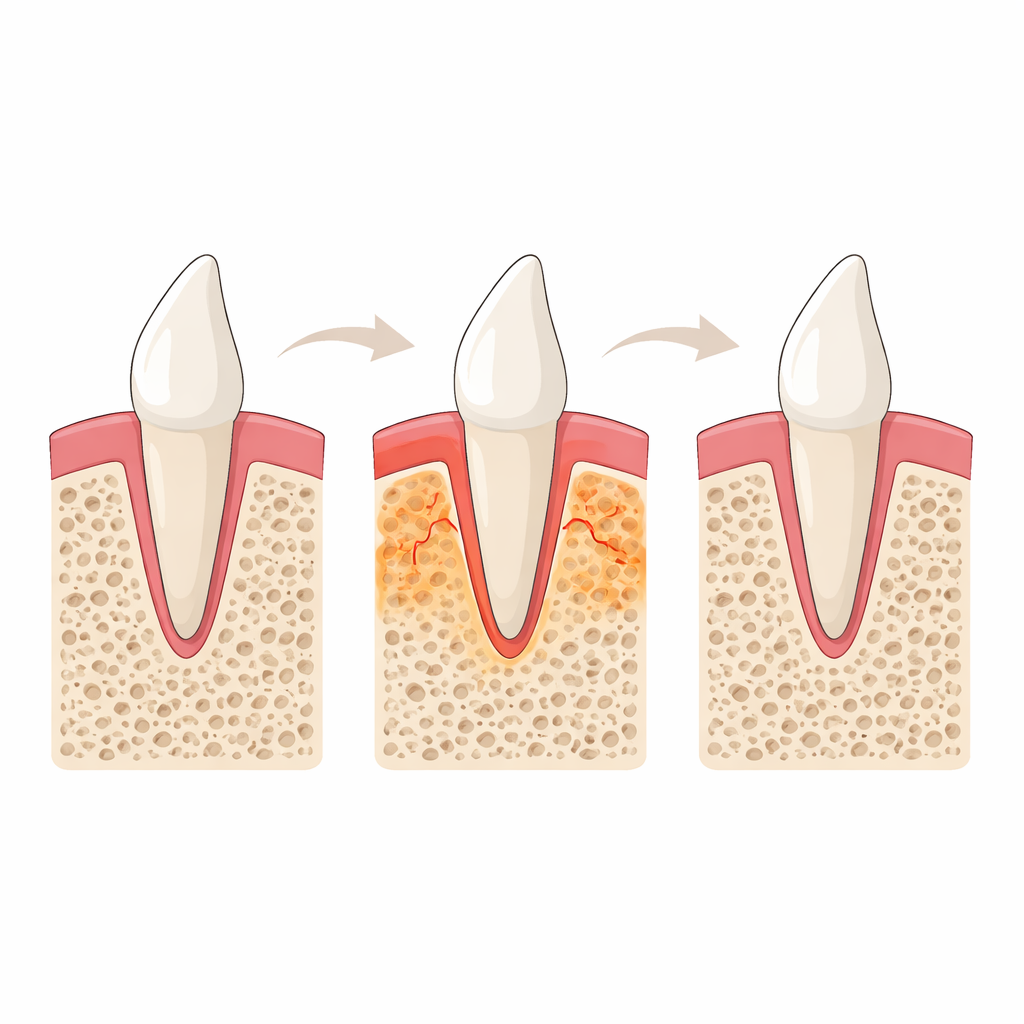
What This Means for People in the Dental Chair
Overall, the study shows that the timing of tooth removal in relation to the start of braces clearly alters the early activity of the bone and gum tissues, as reflected by alkaline phosphatase in the surrounding fluid. Extractions alone caused the strongest boost in this marker of bone remodeling, while combining extraction with alignment produced an intermediate effect and alignment alone produced the weakest. For patients, this means that when teeth are removed is not just a scheduling issue but a biological one: extraction timing can subtly tune how the tissues respond in the early phase of treatment. While this study did not measure how fast teeth actually moved, it suggests that future treatment planning may increasingly consider not just mechanics and space, but also the underlying tissue biology.
Citation: Dakdouk, Y., Sultan, K. & Azzawi, S. Alkaline phosphatase activity in gingival crevicular fluid during orthodontic treatment with different extraction protocols for maxillary canines: a randomized controlled trial. BDJ Open 12, 45 (2026). https://doi.org/10.1038/s41405-026-00425-0
Keywords: orthodontic extraction timing, gingival crevicular fluid, alkaline phosphatase, bone remodeling, maxillary canine crowding