Clear Sky Science · en
Tau accumulation increases the susceptibility to effective seizures of electroconvulsive therapy
Why this study matters
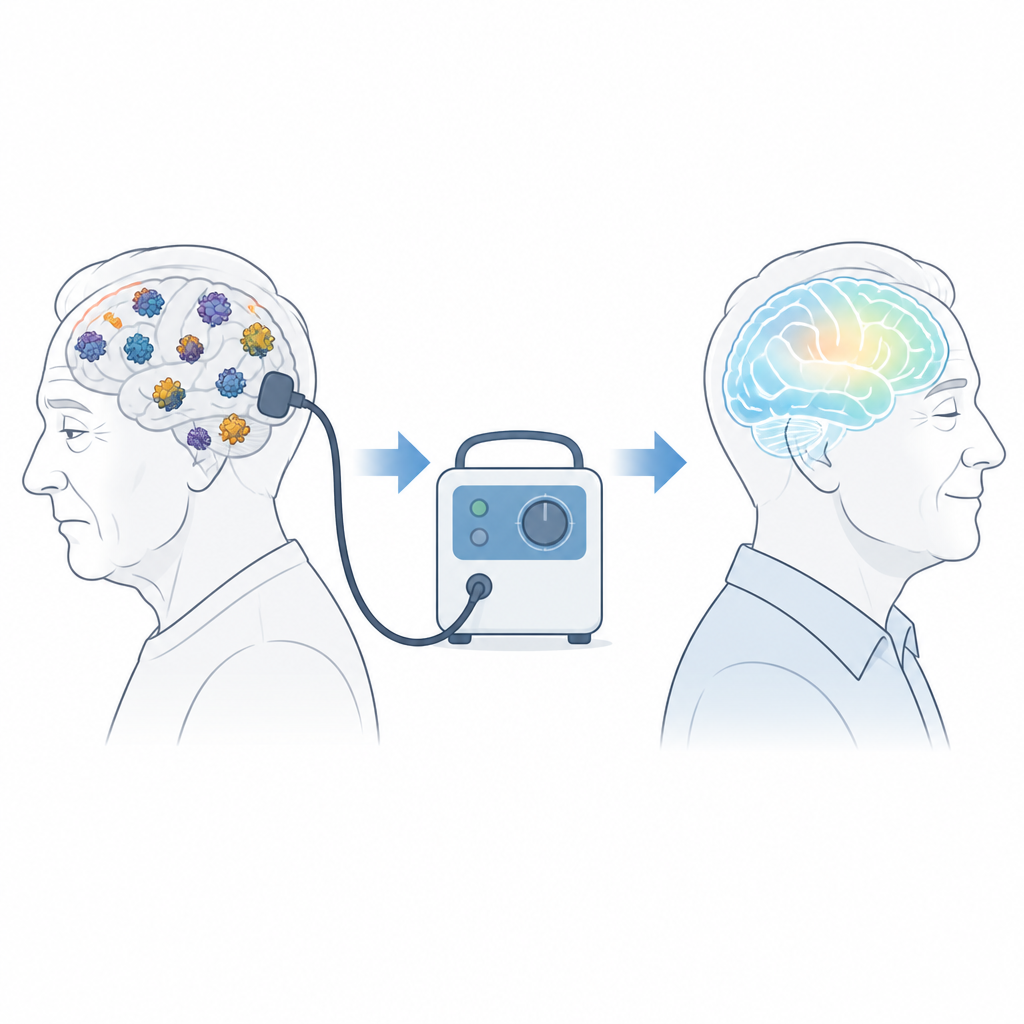
Electroconvulsive therapy, or ECT, is one of the most effective treatments for severe depression in older adults, especially when medicines fail. Yet doctors still struggle to predict who will respond best. This study looks inside the brain using advanced scans to ask a surprising question: does the buildup of a protein linked to Alzheimer’s disease actually make ECT work more smoothly?
Looking at brain changes in late life depression
Many older people with depression also have age related brain changes, including those seen in Alzheimer’s disease. One key change is the buildup of a protein called tau, which forms tangles inside nerve cells. Separate research has shown that people with more tau in the brain are more likely to have seizures. Because ECT works by triggering a brief, controlled seizure, the authors wondered whether higher tau might make it easier to produce the kind of seizure that gives antidepressant benefits.
How the researchers studied the brain
The team examined 14 inpatients aged 62 to 88 who received ECT for depression or bipolar disorder at a hospital in Tokyo. Before or after their ECT course, each patient underwent a specialized brain scan known as tau PET. The scan used a tracer called florzolotau that attaches to tau deposits, allowing the researchers to estimate how much tau was present across the outer layers of the brain. They also carefully recorded details of every ECT session, including how often an “effective” seizure was achieved, how long seizures lasted, and how strong the electrical stimulation needed to be.
Linking protein buildup to seizure quality
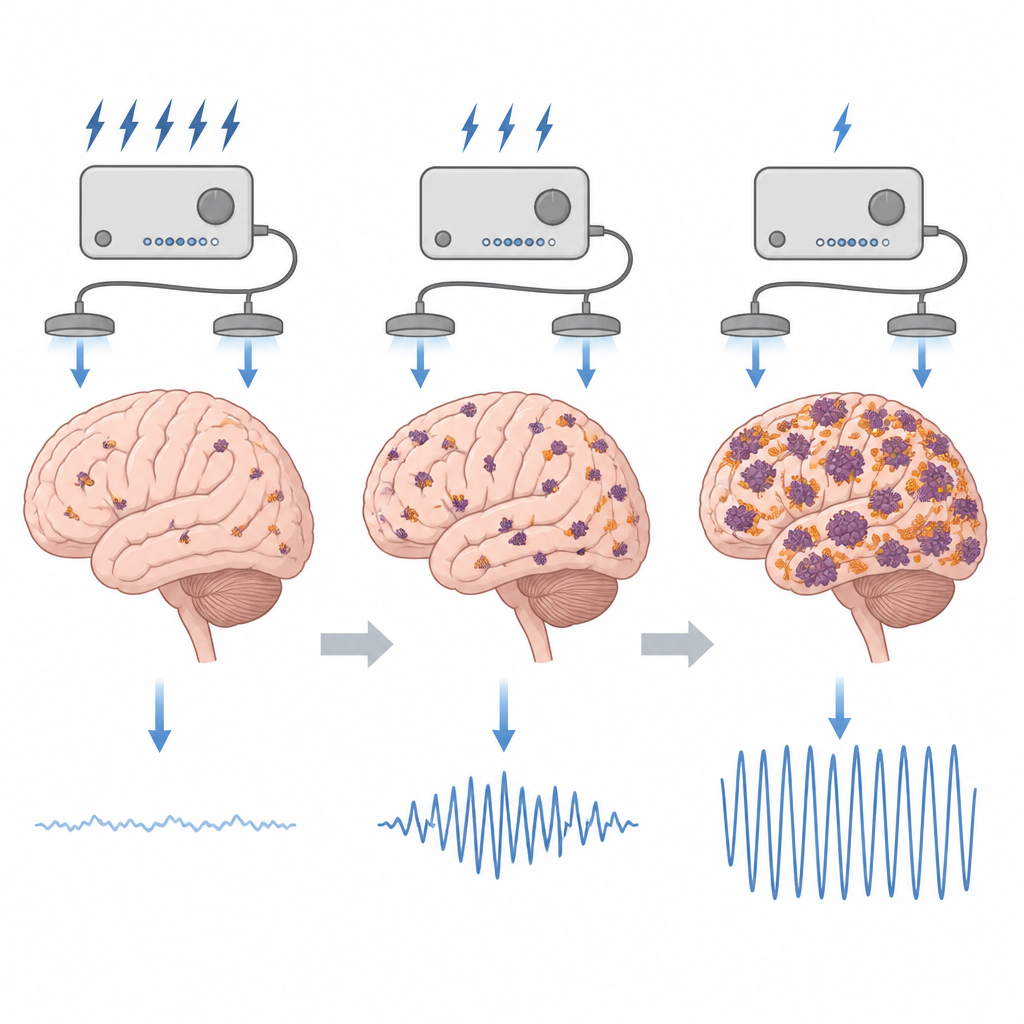
When the researchers compared brain scans with ECT records, a clear pattern emerged. Patients with higher levels of tau in the cortex had a greater proportion of effective seizures during their ECT course. They were also more likely to show postictal suppression, a quiet period in brain activity that is considered a sign of a strong therapeutic seizure, and tended to have longer seizure durations. At the same time, these patients required fewer total ECT sessions and lower average electrical doses to reach those effective seizures, suggesting their brains were more easily driven into the desired seizure state.
When standard ECT is not enough
In some patients, it becomes difficult over time to trigger effective seizures, so clinicians use “augmentation” steps such as changing the anesthetic drug, moving the electrode position, or altering the pulse width. In this study, patients who needed such extra measures actually showed lower tau levels on their brain scans than those who did not. This supports the idea that tau accumulation increases the brain’s tendency toward seizure activity, which in the setting of carefully monitored ECT can translate into more reliable treatment sessions without additional adjustments.
What this could mean for patients
The findings suggest that older adults with depression who also have degenerative brain changes, such as those seen in Alzheimer’s disease, may still be good candidates for ECT and might even be more likely to show strong seizure responses. The study is small and does not prove that tau levels directly determine how much mood improves, and the brain scans and ECT sessions were not always close in time. Still, this work hints that a protein usually viewed as harmful could, in this specific clinical setting, make it easier for doctors to deliver an effective ECT treatment, helping guide future choices for people with depression and underlying brain degeneration.
Citation: Ohya, T., Arakawa, R., Sakayori, T. et al. Tau accumulation increases the susceptibility to effective seizures of electroconvulsive therapy. Transl Psychiatry 16, 272 (2026). https://doi.org/10.1038/s41398-026-04016-3
Keywords: electroconvulsive therapy, tau protein, late life depression, Alzheimer’s disease, PET brain imaging